Show summary Hide summary
On Nov. 19, the Greater Oklahoma City Chamber held its board meeting inside a newly opened virtual production studio, underscoring how local tech investment and Olympic planning are shaping the city’s national profile. The gathering linked preparations for the LA 2028 Games with a creative facility that could change how Oklahoma City attracts film, events and commerce.
Team OKC readies for an international spotlight
Michael Byrnes, who took the helm of the Chamber’s LA 2028 planning effort — known locally as Team OKC — outlined the city’s role in next summer’s Olympic program. Oklahoma City will stage two full sports for LA28: slalom paddle at RIVERSPORT and softball at Devon Park. Organizers expect 26 competition sessions over 16 days, bringing global athletes, media and visitors to the city.
OKC Olympic future in focus: Chamber board weighs plans, One Set Studio debuts innovations
Lead azide detonation at Iowa plant set for Wednesday: Army to destroy explosive stockpile

Byrnes framed the work as more than logistics: hosting Olympic events can be a catalyst for business exposure, tourism and long-term investment. He argued that the Games offer a platform for local companies to showcase capabilities to a worldwide audience.
One Set Studio: a local production hub
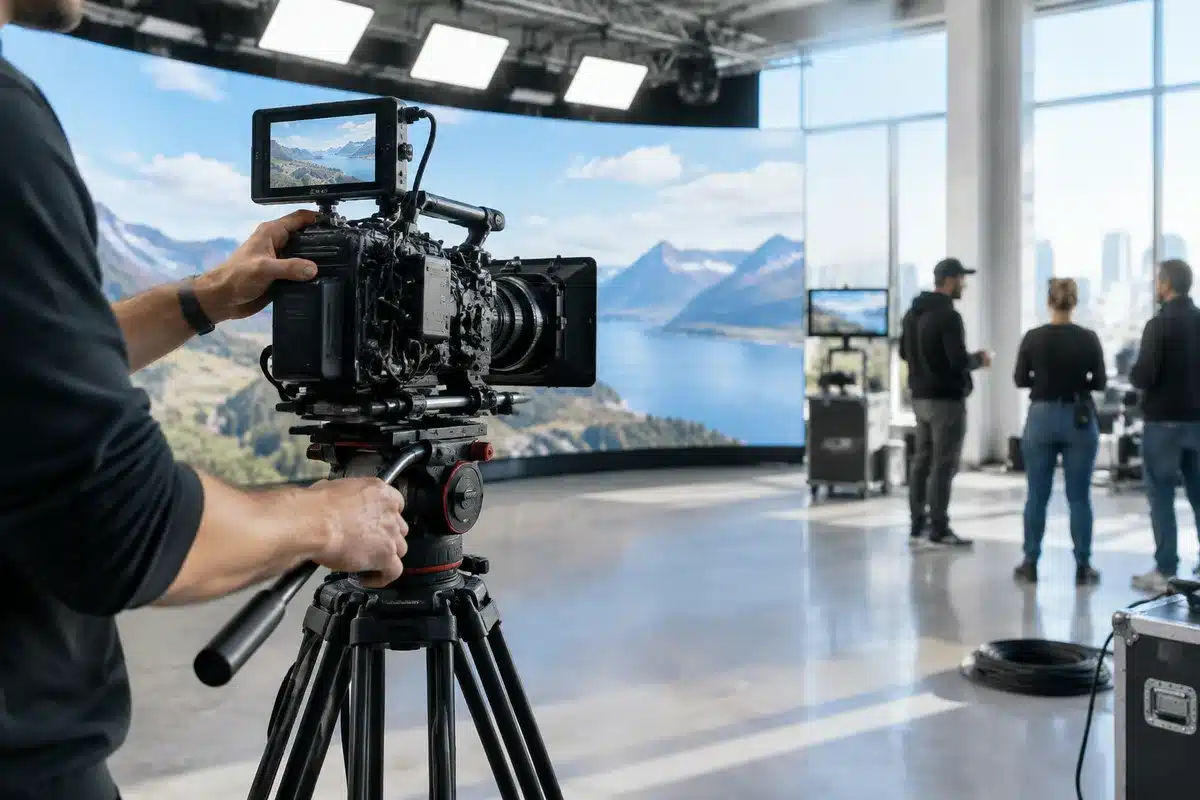
One Set Studio opened in 2024 as the state’s first purpose-built virtual production facility using Disguise technology and is certified as an Oklahoma soundstage. The studio’s core is a curved LED volume with a large wall, overhead LED ceiling and an adjustable panel that lets creators quickly reshape virtual environments.

The site also includes more than 4,000 square feet of rentable production and support space — from a green room to office suites and a broadcast-grade LiveU setup — allowing teams to stage shoots and events without leaving downtown.
The studio’s director says clients often arrive expecting a traditional soundstage and leave with entirely new concepts, from simulated stadiums to immersive brand experiences. Public Strategies, the firm behind the initiative, views the venue as a tool to amplify Oklahoma storytelling and attract out-of-state projects.
- Facility highlights: 40-by-13-foot LED wall, LED ceiling, 10-by-11-foot movable wall, 4,000+ sq ft support space.
- Production types supported: feature films, commercials, documentaries, corporate events and live broadcasts.
- Recent work: an Oklahoma Lottery spot staged as a neon nightclub, the feature film “The One” (majority local crew), and content for the Oklahoma City Thunder and state agencies.
- Community impact: local talent employment, new event revenue streams, and enhanced capabilities for marketing and training.
Projects already underway
Since opening, One Set has hosted a variety of productions. A recent commercial turned the stage into a packed nightclub through synchronized lighting, choreography and digital crowd augmentation. The studio’s first feature attracted established talent while relying heavily on Oklahoma-based crew and vendors, signaling new production capacity in the region.
Beyond film and TV, the space doubles as an event venue for product launches, workshops and corporate gatherings. Regional agencies have used the studio to produce award-winning digital content, and local sports programming has tapped the volume for documentary storytelling.
Planners and creatives say the key advantage is speed and flexibility: virtual production lets teams create a range of locations and atmospheres on demand, reducing travel and set-building costs.
Why this matters now
With the Olympics on the horizon, the intersection of event hosting and modern production tools gives Oklahoma City an immediate story to sell. Visit numbers and media attention during LA28 could translate into sustained business, new productions, and broader recognition for the city’s creative ecosystem.
For local companies, the combination of high-profile sporting events and in-town production capacity offers tangible opportunities: hospitality bookings, vendor contracts, marketing tie-ins and longer-term investments in film and media services.
The Nov. 19 meeting demonstrated how municipal planning and private-sector innovation are aligning to create both short-term gains for 2028 and a potential foundation for ongoing economic development.