Show summary Hide summary
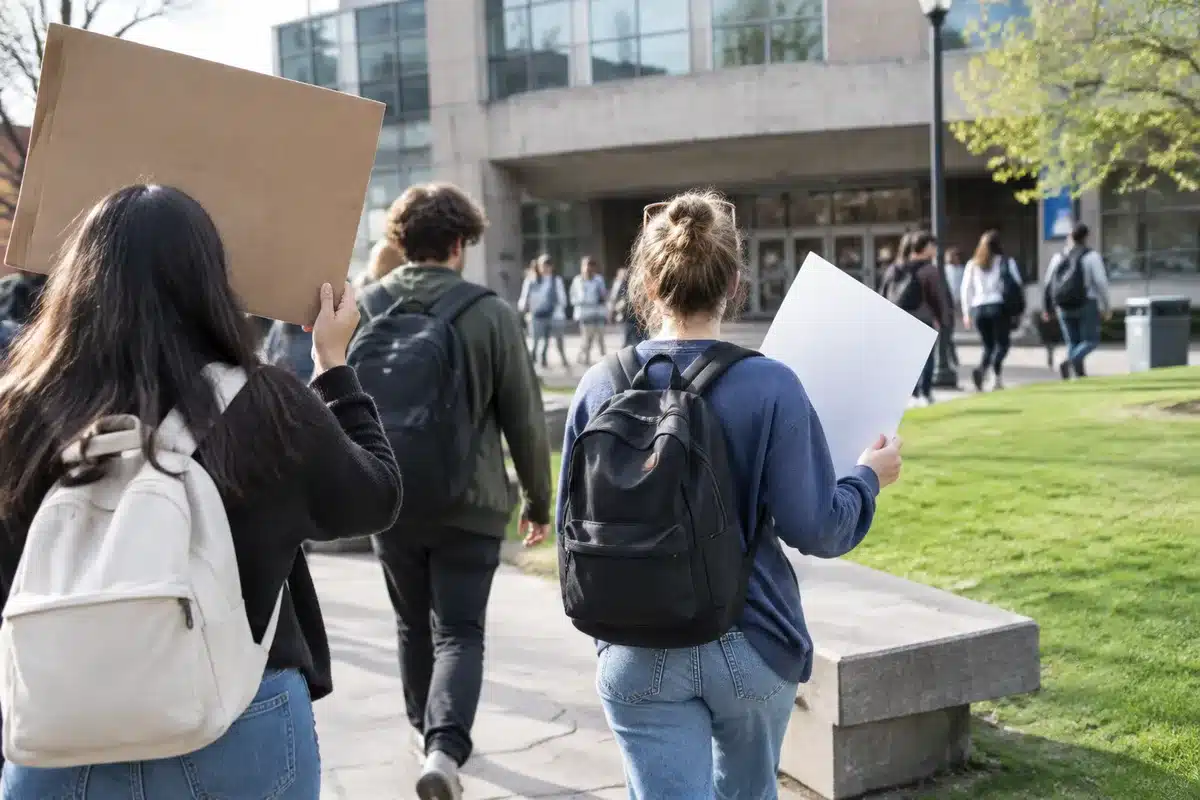
About 40 students at Cal Poly walked out on Oct. 20 to protest a multi‑million dollar agreement between the California State University system and OpenAI, arguing the deal was negotiated without student input and diverts campus resources. The demonstration underscored growing campus unease over generative AI contracts and how universities allocate funding for digital tools.
The rally, organized by Tech for Liberation, Social Justice for Palestine and the Young Democratic Socialists of America, gathered on Dexter Lawn at 11 a.m. and moved to the University Union. Participants carried handmade signs and chanted in opposition to the systemwide partnership that gives students access to ChatGPT EDU.
What protesters said
Organizers said the walkout was intended to spotlight a lack of democratic process around the contract. Tobias Halpern, a freshman studying business administration and an event coordinator with Tech for Liberation, told reporters students were not consulted before the agreement was finalized.
Honda recalls 800,000 vehicles for dangerous airbag inflators: owners told to stop driving
Cal Poly students stage walkout over Cal State OpenAI deal

Speakers criticized not only the financial terms of the deal but also the apparent political associations of the AI company’s leadership. Some chants explicitly targeted Sam Altman and expressed broader distrust of placing significant public money into private AI platforms.
Joshua Milton, a freshman in wine and viticulture who is active in the Young Democratic Socialists of America, said departments with limited use for AI—like music and the arts—lose out when campuswide subscriptions are purchased centrally. He argued academic units should have more say in where institutional funds are spent.
Contract details
| Date | Agreement | Value | Notes / Source |
|---|---|---|---|
| January 2025 | Initial 18‑month agreement | $17 million | Reported by EdSource |
| May 2026 | Three‑year systemwide contract | $39 million | Provides access to ChatGPT EDU (EdSource) |
| — | Total committed | $56 million | EdSource aggregation |

Why this matters now
The protest highlights several immediate stakes for students and faculty. Central purchasing of AI services can reduce departmental autonomy, shift budgets away from smaller programs and lock campuses into long‑term relationships with commercial vendors. For students, the concerns are both practical—who controls classroom tools—and political: whether campus communities can influence decisions that shape teaching and learning.
- Governance: Students say they were not consulted before the contract was approved.
- Budget allocation: Central subscriptions may reallocate funds away from departments with limited AI needs.
- Academic impact: Faculty and students worry about how widespread AI tools could change instruction and assessment.
Protesters called on the CSU administration and President Jeffrey Armstrong to acknowledge student concerns and open a dialogue about how the system decides on large technology purchases. The demonstration did not include an immediate response from university leaders.
As more campuses sign agreements with AI vendors, the Cal Poly walkout reflects a broader conversation on campuses nationwide about oversight, transparency and the trade‑offs involved in adopting generative AI at scale.