Show summary Hide summary
Protesters in San Luis Obispo have joined a worldwide campaign urging drivers to avoid Chevron stations, linking the oil major’s stakes in Israeli offshore gas fields to funding for the government and military. The demonstrations, held during evening rush hour, aim to translate distant geopolitical conflict into a local consumer choice.
Organizers say Chevron holds interests in the Leviathan and Tamar gas fields off Israel’s coast, operations that critics argue generate revenue for the Israeli state. Activists aligned with the Boycott, Divestment and Sanctions movement maintain those funds indirectly support military activity in Gaza, a claim the company disputes.
On the corner of Foothill and Cabrillo
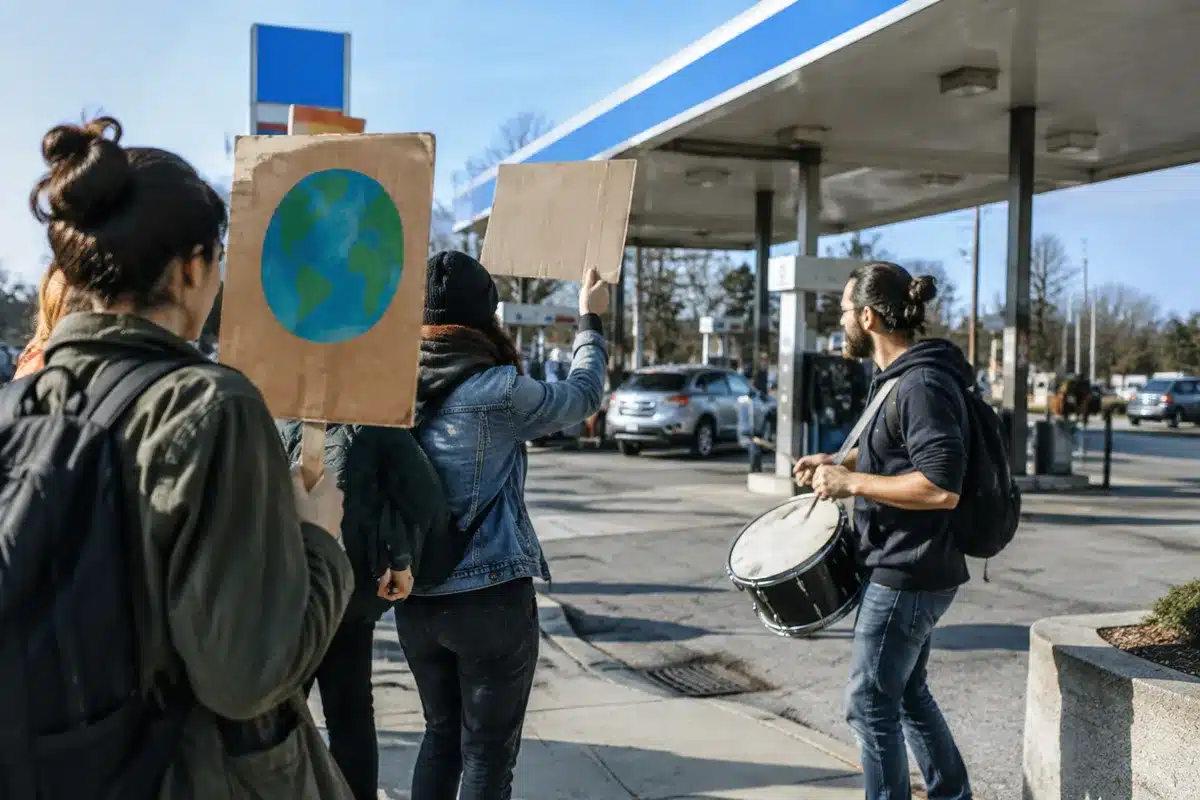
Each weekday, a small group gathers outside a Chevron station where commuters slow or stop. The picket typically combines signs and conversation; at times a drummer plays to draw attention, turning a routine commute into a moment of political notice.
Oklahoma City military community: city unveils major plan to boost veteran services
Richard Glossip: court records outline alleged role in 1997 killing

Carolyn Krueger, co-chair of the Central Coast Anti-War Coalition, described the effort as an attempt to give passersby an immediate option beyond sympathy—an economic response they can enact while driving. Jehan Mirzaei, who performs on the corner, said music helps catch people’s attention and opens space for discussion.
Protesters emphasize two linked aims: to spotlight the corporate ties they view as enabling conflict, and to build local solidarity with Palestinians. For many involved, the action is also shaped by earlier experiences in other social movements and immigration-related protests, which they say inspired participation now.
What protesters are asking and what it would mean
- Target: Chevron’s commercial role in Israel’s gas sector—specifically interests in Leviathan and Tamar.
- Claim: Activists contend revenues from those assets flow to state coffers and contribute to military spending.
- Action: A consumer boycott of Chevron stations, combined with weekly pickets and public outreach.
- Local impact: Organizers argue a boycott signals community opposition and can influence company reputations and investor pressure over time.
Chevron has not been quoted at the scene; corporate statements on similar campaigns have previously emphasized that energy projects are commercial ventures governed by local laws and contracts. Independent analysts caution that attributing complex budgetary flows to a single company’s revenue stream can be difficult to verify publicly.

The dispute highlights a broader tension between global corporate activity and local civic response. For residents, the protest reframes a distant conflict as a matter of ordinary consumer choice: where to fill up, and whether a purchase constitutes tacit support for contested policies.
Voices from the street
Not everyone driving by stops, but participants say the visibility matters. “We want to offer something people can actually do,” one organizer explained, adding that seeing neighbors take a stand can reassure those who are concerned but unsure how to act.
Music and signs are intended to invite conversation rather than shut it down. Protesters report both supportive honks and skeptical reactions; organizers say they welcome debate but insist their focus remains on sustained, nonviolent pressure.
For ongoing updates, the Central Coast Anti-War Coalition posts information about the weekly demonstrations on its Instagram account, listed under the group’s name.