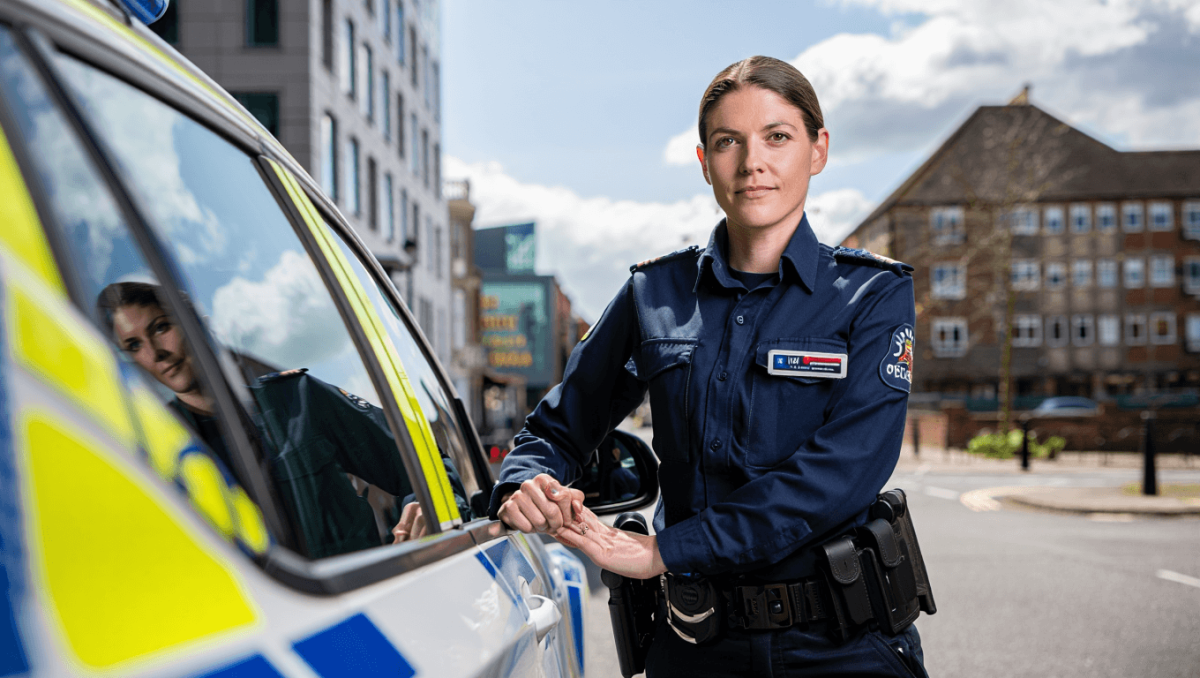
A woman who once navigated her own mental health crisis now helps steer Oklahoma City’s response teams toward calmer, more effective encounters — and her perspective is reshaping how the city responds to people in distress. Her work underscores a larger shift in urban safety: treating behavioral health emergencies as medical and social challenges rather than solely law-enforcement problems.
Her path to this role
She arrived at the program not as a career responder but as someone who had been through the system — emergency rooms, police interactions and community services. That lived experience became the bridge between people in crisis and the professionals sent to help them, giving her a unique credibility with clients and colleagues alike.
Colleagues say her background changes routines. Instead of defaulting to containment or arrest, teams she joins prioritize conversation, safety planning and connecting individuals to long-term care. Her presence often shortens tense encounters and reduces repeated emergency calls, officials and advocates report.
Christa Pike released from hospital after failed execution, attorneys say
Dolly Parton tribute drives Madonna Inn crowds: steakhouse unveils limited menu
Why this matters now
Cities nationwide are retooling emergency responses; Oklahoma City’s model reflects that trend. As budgets and public expectations shift toward alternatives to policing, the practical knowledge of people who have walked similar paths becomes a critical resource. For residents, that can mean fewer traumatic police responses and more timely access to treatment.
How her experience shapes everyday practice
– She models language that de-escalates: simple, respectful phrases that validate feelings without minimizing risk.
– She helps teams spot service gaps, from transportation hurdles to paperwork barriers that block access to care.
– She supports post-crisis follow-up, encouraging plans that reduce the chance of repeat emergencies.
– She trains new responders in the limits and strengths of peer-based support, balancing empathy with safety protocols.
Operational impacts and measurable outcomes
Teams that include peers or staff with lived experience often report:
– Faster rapport-building during field calls
– Lower rates of use-of-force incidents
– Improved rates of successful referral to outpatient services
A day in the field
One typical call might begin with a neighbor reporting someone yelling in their yard. When the team arrives, she first listens — to the person in distress and to the environment. She asks questions aimed at identifying immediate needs: sleep, medication, shelter. When appropriate, she offers a short safety plan and schedules a follow-up visit, rather than defaulting to transport to an emergency department.
Challenges remain
Work is not a cure-all. Limited housing, gaps in long-term mental health care and uneven funding can blunt the benefits of even the most skillful response. Staff burnout and emotional strain are also real concerns when team members repeatedly engage with severe distress.
A pragmatic human touch
Her story is a reminder that policy changes on paper depend on people who understand both systems and suffering. By translating her experience into practical tactics, she helps colleagues make choices that preserve dignity and reduce harm. For Oklahoma City residents, that translates into a response system more likely to get people the right help at the right time — and to keep communities safer in the long run.