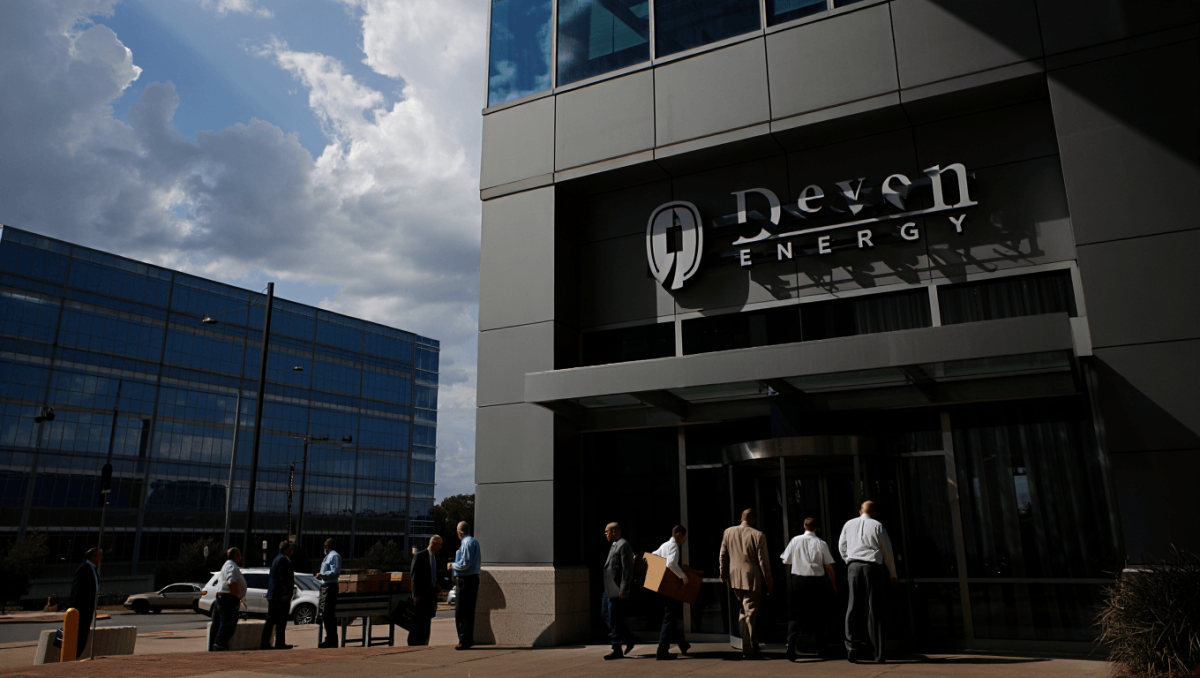
Devon Energy posted weaker-than-expected first-quarter results as a slump in Permian natural gas prices and ongoing pipeline congestion weighed on revenue — and the company is moving its headquarters to Houston as it completes a major merger. That combination matters now because it reshapes investor expectations and could accelerate strategic changes at one of the United States’ largest shale producers.
Shares fell modestly in after-hours trading after Devon reported an adjusted profit below consensus, a sign that commodity price swings are still dictating near-term performance even as oil markets remain volatile.
The quarter was dominated by a sharp drop in natural gas receipts tied to persistent regional bottlenecks. At the center of the pressure is the Waha Hub in the Permian Basin, where spot prices have spent a record number of consecutive days in negative territory as takeaway capacity lags production.
Christa Pike released from hospital after failed execution, attorneys say
Dolly Parton tribute drives Madonna Inn crowds: steakhouse unveils limited menu
Devon’s average realized price for natural gas tumbled roughly a third from a year earlier, reducing the company’s overall per‑boe revenue despite a strong environment for crude globally. While global oil benchmarks have rallied this year, Devon reported a lower combined realized price after accounting for cash settlements and mix effects.
- Adjusted EPS: $1.04 for Q1, versus $1.06 expected (LSEG consensus)
- Natural gas realized price: $1.68 per thousand cubic feet, down about 32%
- Total realized price: $38.94 per barrel of oil equivalent, down roughly 8%
- Production (Q1): 387,000 barrels of oil per day (slightly below last year’s 388,000 bpd)
- Q2 production guidance: 851,000–868,000 boe per day
- Merger close: All‑stock deal with Coterra is set to close May 6, 2026; combined enterprise value around $58 billion
- Waha run: Record stretch of negative pricing in the Permian region
Investors and activist shareholders are already pressing for changes. In April, investment firm Kimmeridge urged the incoming board to accelerate asset sales, tighten capital allocation and overhaul executive compensation to lift returns after the merger with Coterra.
The deal itself — an all-stock merger that will relocate Devon’s headquarters from Oklahoma City to Houston — creates scale but also raises near-term governance and integration questions. Management has said a fuller outlook for the year will arrive in mid‑June, leaving a multi-week window where market watchers will focus on guidance and any board decisions.
Operationally, the company reported flat oil output year-over-year for the quarter, and management reiterated mid‑year production expectations that reflect combined assets post-merger. Still, the Permian’s stuck gas has an outsized effect on cash flows because it depresses realized prices and can complicate hedging and settlement results.
What to watch next:
- Devon’s mid‑June full‑year guidance and any revisions to capital spending.
- Statements and strategic moves from the newly constituted board after the Coterra merger closes.
- Developments at the Waha Hub — pipeline projects or market fixes that could restore gas prices in the Permian.
- Any announced asset sales or changes to dividend/return-of-capital policy driven by activist pressure.
The company’s immediate outlook will depend on a handful of moving parts: whether Permian takeaway capacity improves, how management prioritizes cash deployment after the merger, and whether global oil market drivers sustain higher crude realizations. Until those pieces settle, Devon’s results are likely to be read through the twin lenses of commodity volatility and corporate restructuring.