Show summary Hide summary
City leaders from Oklahoma City told a global audience this week that carefully staged partnerships between government, businesses and cultural organizations have been central to the city’s downtown revival — a model that other mid-sized cities are watching as they plan their own recovery and placemaking projects.
Speaking at the International Downtown Association’s 72nd Annual Conference in Toronto, a panel of Oklahoma City representatives framed the conversation around how collaborative investments and intentional public space design can reshape downtowns and attract both visitors and private activity.
Lessons from the podium
Lindsay Vidrine, the Greater Oklahoma City Chamber and Visit OKC’s chief marketing officer, joined Jennifer Nakayama, president and CEO of the Downtown OKC Partnership, and Joseph O’Connell, founder and artistic director of Creative Machines, to outline the city’s strategy. Their session, titled “How Public-Private Collaborations Help Districts & Downtowns Thrive,” focused on practical steps communities can take to turn public investment into visible results.
Christa Pike released from hospital after failed execution, attorneys say
Dolly Parton tribute drives Madonna Inn crowds: steakhouse unveils limited menu

Panelists traced Oklahoma City’s approach back to the voter-approved Metropolitan Area Projects program, known as MAPS. Launched in 1993, MAPS used a local funding model that avoided long-term borrowing and financed major civic projects directly — from the Bricktown Canal and the Paycom Center to Scissortail Park and the convention center — creating anchors that made further private development more viable.
Public art as a test case
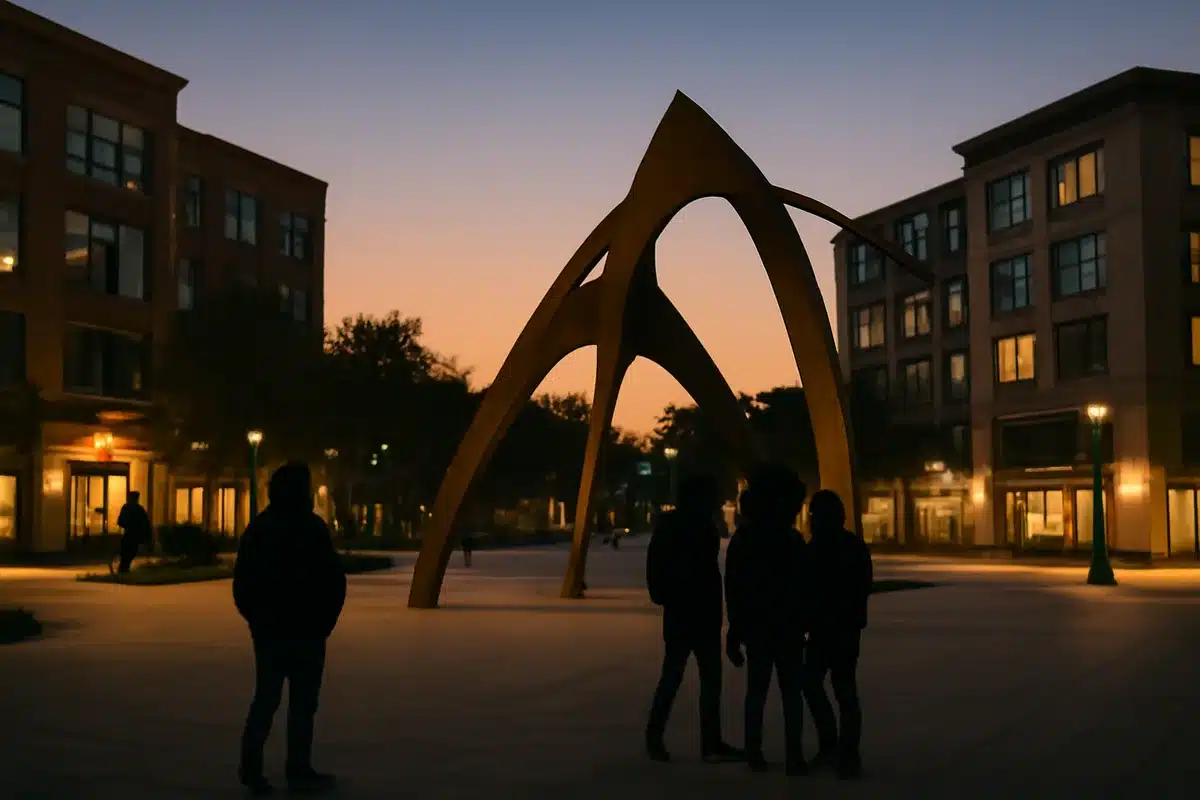
One example highlighted was the Bricktown plaza installation, Cloud Embrace, which the panel presented as a compact case study in partnership-driven placemaking. Organizers walked attendees through how public agencies, private donors and creative teams negotiated design, funding and timelines to move the project from concept to completion.
The initiative produced measurable early outcomes: a year-over-year visitation uptick of about 9% at the plaza between March and June, and roughly 400,000 social media impressions tied to the artwork. Notably, almost two-thirds of those social posts came from everyday users rather than project partners, signaling authentic community engagement rather than a campaign driven solely by institutions.
- Collaborative funding: Blending public dollars with private contributions can reduce financial risk for individual stakeholders while accelerating delivery.
- Early stakeholder input: Bringing diverse voices into design conversations helps anticipate conflicts and builds broader buy-in.
- Measure impact: Tracking visitation and organic social reach offers concrete evidence for the return on placemaking investments.
- Long-term relationships: Ongoing trust among developers, nonprofits and city agencies matters more than any single project.
Speakers stressed that the value of a project extends beyond immediate metrics. Successful placemaking often serves as a catalyst: visible improvements can change public perception, encourage private investment, and create new patterns of use that support restaurants, retail and cultural activity.
For other cities, the Oklahoma City case underscores two practical implications. First, funding mechanisms that are locally controlled and transparent can jump-start visible work without saddling municipalities with long-term debt. Second, design processes that prioritize community voices and credible measurement strengthen the political durability of projects — making it easier to sustain and scale placemaking over time.
As downtowns across North America seek to recover foot traffic and economic activity after shifting work and leisure patterns, Oklahoma City’s presentation offered a reminder: coordinated public action, paired with imaginative design, can still move the needle — if partners commit to building trust, measuring outcomes and treating each project as a step toward broader, durable change.