Show summary Hide summary
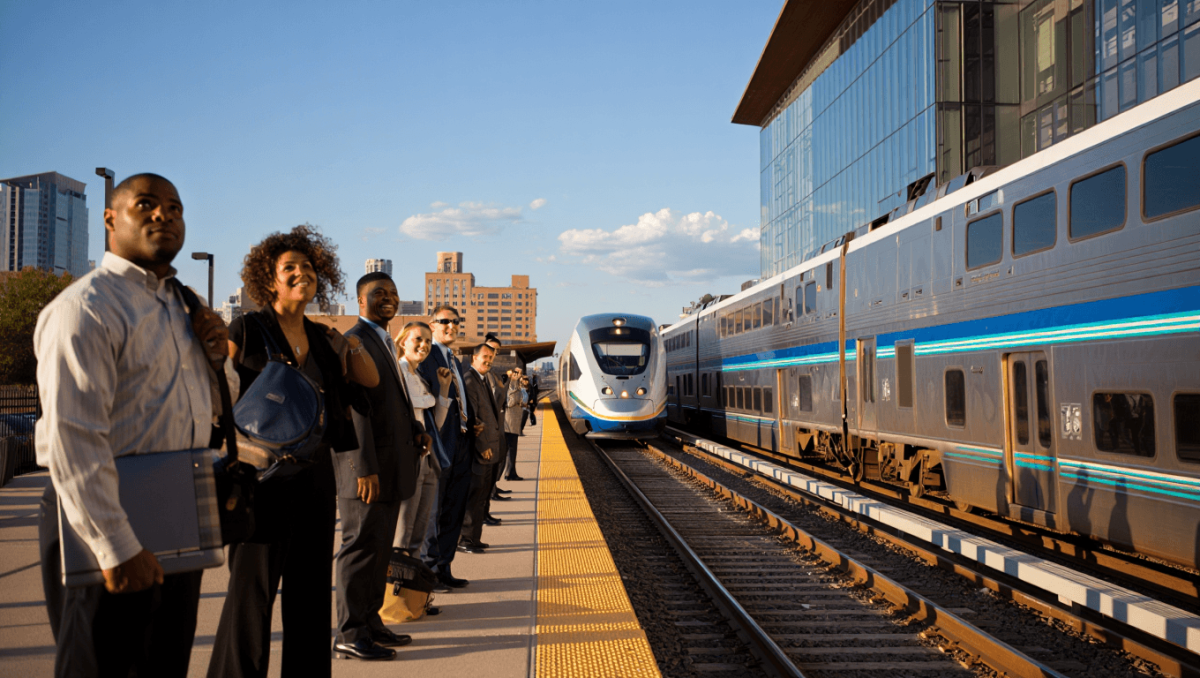
Regional transportation leaders say a proposed commuter rail line linking Oklahoma City with Edmond and Norman could reshape the local economy and rival — or even exceed — the combined effects of past MAPS investments. With consultants being hired and planners aiming for a vote within the next nine to 12 months, officials argue the decision will have immediate consequences for growth, development and how residents move across the metro.
Project snapshot
The plan centers on a proposed 38-mile passenger route using the BNSF freight corridor, connecting university communities and downtown Oklahoma City. Board members at ONE Transit — the agency formerly known as the Regional Transportation Authority of Central Oklahoma — have estimated capital costs in the **$700–$800 million** range, with expectations the final tab will remain **under $1 billion**.
Christa Pike released from hospital after failed execution, attorneys say
Dolly Parton tribute drives Madonna Inn crowds: steakhouse unveils limited menu
| Item | Planned/Estimated |
|---|---|
| Route length | 38-mile corridor (BNSF) |
| Daily service | 24 trains (12 round trips) |
| Capital cost | $700–$800 million (board estimate) |
| Federal funding anticipated | Roughly 50% from the Federal Transit Administration |
| Public vote | Ballot measure expected within 9–12 months |
Why this matters now
Officials say the timing is driven by fast regional growth and constrained highway options. The Oklahoma City metro is forecast to reach about two million residents by 2040, while Norman alone is projected to approach 175,000. According to ONE Transit leaders, Interstate 35 cannot be widened further in key sections because of right-of-way limits, forcing planners to look at rail as a long-term mobility solution.
Beyond easing congestion, backers highlight potential economic returns and new development opportunities near stations. The American Public Transportation Association’s 2026 data shows public transit investment can generate significant economic multipliers — a figure ONE Transit officials say understates additional private-sector investment that typically clusters around transit hubs.
Learning from other cities
ONE Transit is studying Salt Lake City’s FrontRunner as its primary model. The Utah system links university towns and urban centers and, officials note, stimulated large-scale private development around its stations over two decades.
Leaders also point to smaller examples such as Grapevine, Texas, where the addition of a commuter stop coincided with a measurable uptick in local sales tax receipts and property values. ONE Transit officials use these case studies to argue that rail can catalyze transit-oriented development rather than simply move riders from cars to trains.
- Salt Lake City: Tens of millions of annual riders and billions in private investment since the 1990s.
- Grapevine, TX: Local sales tax and property gains near a new station were cited as examples of economic uplift.
- Takeaway: Early rail adopters can capture sustained private investment around station areas.
Steps before voters decide
Board members recently approved hiring a consultant to advance engineering, cost estimates and outreach — a move intended to sharpen the case for a ballot measure. ONE Transit’s legal team is drafting ballot language while financial advisors are modeling what sales-tax increases would be required to cover construction and operations; under state law, sales tax is the available funding mechanism for the agency.
Local coordination will be essential. City councils in Oklahoma City, Edmond and Norman must all take steps to place the measure before their voters, and officials say that process will likely unfold over the coming year.
What supporters highlight — and what to watch
Advocates argue the rail line will do more than transport commuters: it could anchor new housing, retail and hospitality investment near stops and support special-event transit for OU football, Thunder games and large festivals.
But several practical questions remain unsettled: final engineering for shared freight-and-passenger track upgrades, the exact federal grant share, projected operating subsidies, and detailed ridership forecasts. Those elements will shape both the ballot language and the public debate.
ONE Transit Chair Brad Henry and Vice Chair Marion Hutchison emphasize the project’s scale and regional reach. Hutchison has described the plan as a once-in-a-generation infrastructure opportunity that, if executed well, would produce substantial public and private returns.
Immediate implications for residents
Voters will effectively decide whether to shift part of the region’s growth strategy toward fixed-rail transit. If approved, expect:
- Infrastructure work along the BNSF corridor that could affect freight patterns and short-term construction disruptions.
- New funding commitments through a proposed sales-tax increase to support capital and operational costs.
- Long-term changes in development patterns, with increased density and investment near station areas.
For residents weighing the proposal, the coming consultant reports and ballot language will be crucial documents — they will provide cost breakdowns, timelines and projected revenues that could confirm or complicate the promises officials are making today.
As ONE Transit moves from planning to public engagement, the debate will pivot from technical feasibility to the broader question of growth: how Central Oklahoma chooses to accommodate millions more residents and whether rail will provide the backbone for the next phase of the region’s development.