Show summary Hide summary
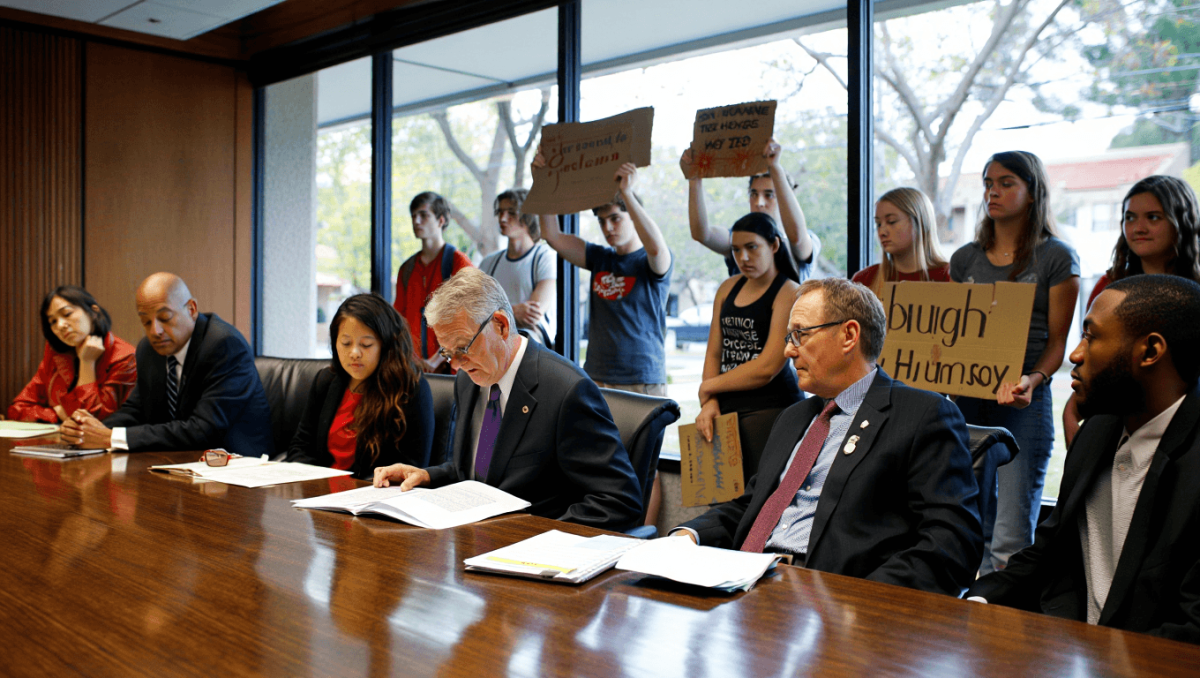
San Luis Obispo leaders convened a special session Tuesday to confront a growing flow of neighborhood complaints tied to off-campus housing and Greek life — a spike that city officials say is stretching enforcement resources and affecting renters and long-term residents. The debate centers on whether the existing rules are enforceable and how to balance community standards with student housing realities.
City Community Development Director Timmi Tway told council members that complaints about fraternities and sororities have climbed sharply since 2023, prompting dozens of formal enforcement actions. Tway recommended a rewrite of the current rules to make them simpler to apply and to encourage Greek houses to obtain and retain the proper approval.
“The regulatory framework in place is difficult to implement,” Tway said, urging code changes that would both increase compliance and reduce back-and-forth enforcement work.
Christa Pike released from hospital after failed execution, attorneys say
Dolly Parton tribute drives Madonna Inn crowds: steakhouse unveils limited menu
Resident frustration and neighborhood impact
At the meeting, nearby resident Laurel Smith voiced frustration with student behavior and the university’s perceived role in the conflict. She cited a recent large off-campus event that she says caused noise disturbance miles away and argued the campus should comply with city ordinances rather than operate independently.
Her comments reflected a broader concern among homeowners who say recurring parties, traffic and late-night disturbances are eroding neighborhood quality of life.
Greek organizations push for workable rules
Presidents from several Cal Poly fraternity chapters — including Beta Theta Pi, Pi Kappa Phi, Delta Upsilon and Phi Sigma Kappa — attended to explain the operational challenges they face under the current system.
Joshua Pinsky, president of Alpha Epsilon Pi and a business sophomore, acknowledged the need for accountability but described the enforcement process as unsustainable. He said his chapter lost its conditional approval earlier this year and has spent more than $6,000 on required modifications and appeals.
Pinsky urged a shift toward what he called “proactive accountability” — an approach that combines realistic operating standards with cooperation between the city and student groups so members can remain integrated in their neighborhoods.
Ela Wojewoda, Gamma Phi Beta’s education vice president, warned that stricter event rules could unfairly target student organizations and questioned whether city expectations would be applied equally to all residents who host large gatherings.
Enforcement options on the table
Tway and Code Enforcement Supervisor John Mezzapesa outlined potential changes, including an Overlay Enforcement Zone near campus that would raise enforcement attention in areas with the most complaints and offer incentives for chapters to seek a Conditional Use Permit.
- Overlay Enforcement Zone: Targeted enforcement closer to campus, paired with incentives for compliance.
- Permit incentives: Reduced fees or clearer standards to encourage houses to obtain and maintain permits.
- Operational changes: Shift from reactive punishments to collaborative, long-term standards for safety and neighborhood compatibility.
Noise, police response and enforcement capacity
Noise complaints remain a recurring source of tension. While the police department handles calls about loud disturbances, city staff said they still receive noise-related reports when code enforcement resources are delayed.
Deputy Chief Aaron Schaffer stressed the department’s 24/7 role in responding to noise and other immediate public-safety concerns, but acknowledged coordination with code enforcement remains necessary for long-term solutions.
Rising caseloads and delayed responses
Mezzapesa presented data showing a steep rise in overall investigation requests — from 556 in 2017 to 1,259 in 2025, a jump of roughly 122 percent. Between 2023 and 2025, the most common issues reported were:
- 259 requests for substandard rental housing
- 153 noise complaints
- 149 land-use disputes, including disagreements involving fraternities and sororities
That growth has stretched the enforcement division’s ability to meet original response targets. Mezzapesa said more cases have been closed 1–14 days past their due dates since 2023, whereas most investigations from 2021–2023 were typically completed on time.
Advocates for tenants urged the city to act quickly. Tyler Coari, a Cal Poly graduate and organizer with the SLO Tenants Union, described delayed enforcement as a driver of tenant hardship — unchecked mold, surprise entries by maintenance crews, and unjust rent increases — and called for hiring more code officers.
Councilmembers and staff floated short- and medium-term fixes: reprioritizing certain complaint types, reallocating resources, and exploring revenue streams to bolster the enforcement team. Mezzapesa emphasized that although workloads have increased, most requests are still being handled within a reasonably short period.
Why this matters now
The outcome of this policy review will shape how San Luis Obispo balances the needs of property owners, renters and a large student population. With complaints and housing-related problems climbing, the council faces a choice between tightening enforcement near campus, redesigning permitting incentives, or expanding staff — decisions that will directly affect neighborhood livability and renter protections.