Show summary Hide summary
Cal Poly students assigned to Poly Canyon Village have found their apartments more crowded than expected after the university delayed a new housing building, creating a ripple of cramped living spaces, allergy concerns and unanswered questions about when — or whether — they will be moved again. The changes affect scores of residents and have prompted the school to revise how it offsets students’ housing costs.
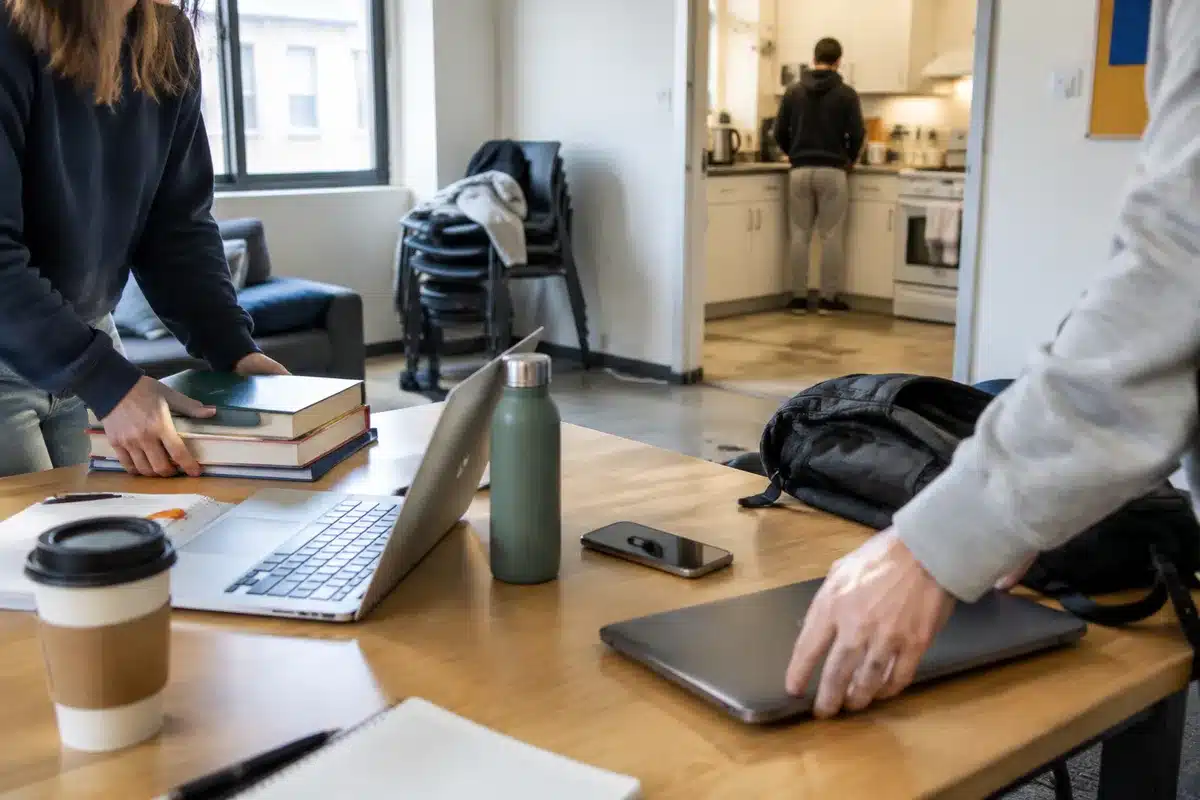
What began as a temporary workaround for construction delays has left some four-bedroom units reconfigured to hold six students, with one bedroom converted into a common study area. The university says the shifts are tied to completion timelines for the new residence hall known as łktoʔ, but has not provided firm move-in dates.
How many and where
Ronald McDonald House OKC hits 68-room milestone: new CEO to lead expanded services
Powder mailed to officials before election: man charged after hundreds of letters
University communications show that, as of Sept. 9, roughly 80 apartments in Poly Canyon Village (PCV) were adjusted to accommodate additional students, according to spokesperson Keegan Koberl. Transfer students — who are not bound by Cal Poly’s two-year on-campus residency requirement — made up most of the relocated cohort.
- Approximately 80 PCV apartments affected (reported Sept. 9).
- Some four-bedroom, four-person units temporarily house six students; one bedroom repurposed as a study.
- Relocated students were originally assigned to the new łktoʔ building; no firm move-in date announced.
- Housing adjustments reduced after some students dropped enrollment before the term began.
Students who received the sudden reassignments describe noticeably smaller personal spaces and shared common areas that can become congested at peak times, particularly the kitchen.
“It felt unfair,” said one sophomore who had expected an upperclassmen apartment to herself after living in a triple her freshman year. She and roommates say the influx has made bedrooms tighter and the living room partly taken up by extra study desks because one converted bedroom could not hold all four desks originally planned for each suite.
Health and accessibility concerns
For some residents, the changes raised safety questions. A student with nut and fish allergies said the idea of new, unfamiliar roommates using shared utensils and kitchen surfaces increased her risk and anxiety. She contacted Cal Poly’s Disability Resource Center, which offered options such as an exemption from PCV residency or reassignment to a different building. She ultimately chose to remain with her original roommates.

Not all students promised extra roommates actually received them. Koberl said withdrawals from the university before term start reduced the number of relocations, producing an uneven distribution: some units gained two additional occupants while others did not.
Space comparison and moving uncertainty
Relocated students note the layout in łktoʔ is similar to the temporary six-person suites in PCV — two students per bedroom — but with larger private rooms. University figures indicate łktoʔ double bedrooms are about 180 square feet versus roughly 108 square feet in PCV doubles, a difference of about 66% in usable bedroom space.
That size gap offers some reassurance, but students also worry about the logistics of moving again if the university requires transfers into łktoʔ mid-semester. “It’s still weird because they were saying you would have to move to the new building eventually,” one relocated student said, noting a lack of timelines or detailed guidance from housing officials.
Student compensation and reaction
Cal Poly initially offered modest one-time credits — $100 to $300, depending on circumstances — to students affected by the changes. After pushback from residents, the university revised that approach and reduced affected students’ fall housing charges by 50%.
- Original one-time credits: $100 (single room with new roommates), $200 (temporarily sharing), $300 (relocated students).
- Revised compensation: affected students now pay half of the original fall housing rate.
- Examples cited by the university: one group’s fall housing bill was cut from $8,600 to $4,300; students assigned to łktoʔ saw a reduction from $7,384 to $3,692.
Several residents called the new arrangement a fairer outcome than the earlier token credits, though some emphasized that the relief does not erase the inconvenience or the uncertainty about future moves.
Now more than a month into the temporary assignments, students report mixed experiences. Some have adjusted quickly and value the social benefits of larger suites, while others continue to flag worries about space, shared facilities and the prospect of another relocation.
For campus housing planners and university administrators, the episode underscores how construction delays can cascade into daily life on campus — affecting accessibility, student health concerns and trust between students and the institution. Until the university provides specific dates for transfers into łktoʔ and clarifies interim living arrangements, some students say they will remain on edge about whether more moves are coming mid-term.