Show summary Hide summary
A pair of local artists want to revive a 19th‑century stage trick on the sidewalks of downtown Oklahoma City — and city officials will consider the idea this week. If approved, four freestanding viewing sculptures called EchoScopes would let passersby peer through an eyepiece and see ghost‑like images superimposed on the real Automobile Alley streetscape.
How the illusion works
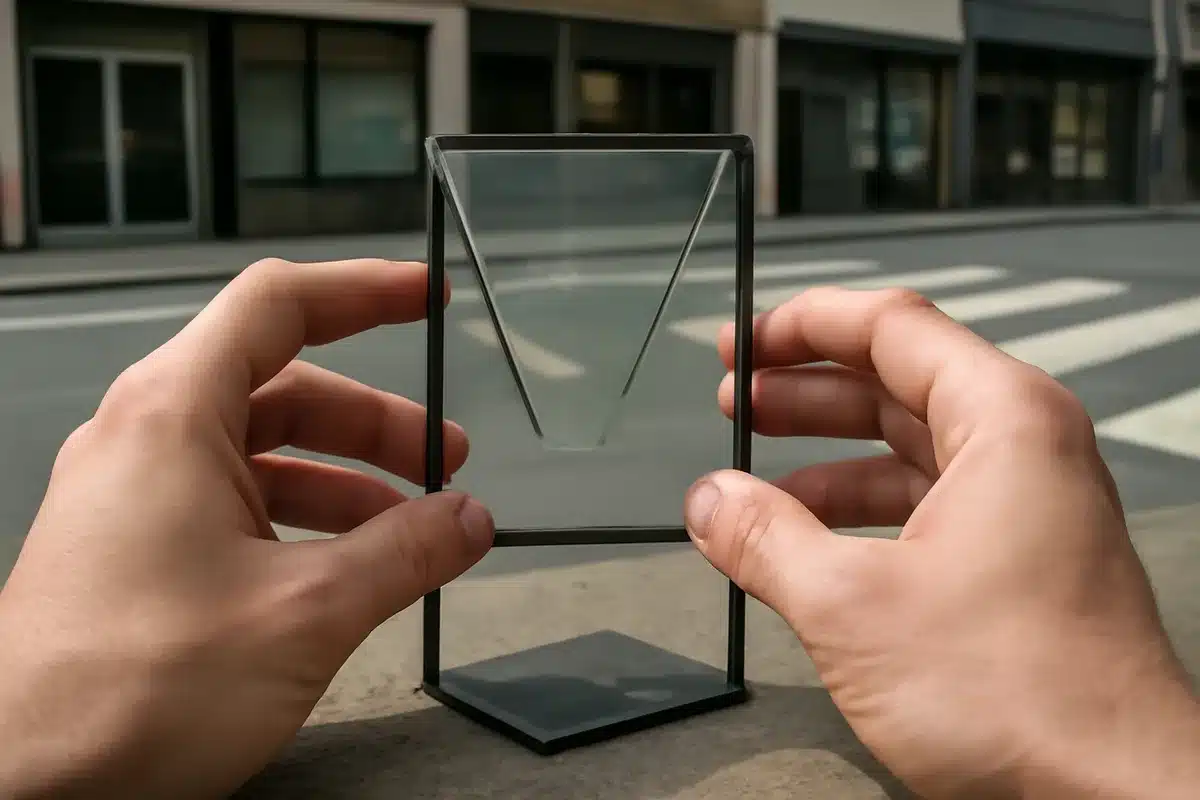
The proposal relies on a classic theatrical technique known as Pepper’s Ghost, which uses angled glass and controlled lighting to make a secondary image appear within a viewer’s line of sight. Once popular at early world’s fairs and theaters, the effect produces a convincing floating image without digital screens or projection mapping.
Christa Pike released from hospital after failed execution, attorneys say
Dolly Parton tribute drives Madonna Inn crowds: steakhouse unveils limited menu
Artists Ben Ezzell and Nick Bayer tell the city their designs will fuse that old‑school mechanism with contemporary fabrication to create durable, low‑maintenance public art. Each unit is described as a self‑contained viewing stand that reveals a fixed, framed perspective of the alley with an overlaid sculptural scene — examples shown in renderings include whimsical dragons and a futuristic skyline.
Where, when and who is paying
The plan calls for four EchoScopes to be installed along Broadway between NW 4th and NW 10th in the Automobile Alley district. The artists are scheduled to present the concept to the Oklahoma City Arts Commission on Monday, putting the project on an immediate timetable for city review.
- Number of units: Four freestanding viewing stands
- Location: Broadway corridor, NW 4th to NW 10th — Automobile Alley
- Funding: $20,000 from the corridor streetscape budget plus $20,000 from Automobile Alley Inc., for an initial $40,000
- Materials: Powder‑coated aluminum housings, a step for children, banners and reflective concrete wayfinding
- Mechanics: Manual lever to illuminate the internal sculpture and trigger the Pepper’s Ghost effect
Supporters argue the installations would be a low‑cost, family‑friendly draw that encourages exploration of the district and extends the return on recent streetscape investments. The designers also say the pieces are scalable, meaning additional units could be added elsewhere in town if the first four prove popular.
What it would mean for the district
Beyond the novelty, the EchoScopes are pitched as placemaking tools: small, interactive moments that can stretch a pedestrian visit into a longer stay and increase foot traffic for nearby shops and restaurants. The emphasis in the application is on analog interaction — tactile, mechanical triggers rather than phone apps or purely digital displays.
Practical details in the submission address visibility and durability: bright powder‑coat colors for the housings, concrete treatments using reflective glass aggregate to mark each site, and an elevated eyepiece to accommodate children and adults.
Next steps
The Arts Commission will review the presentation and the funding breakdown before any permits are issued. If approved, fabrication timelines, installation logistics and maintenance responsibilities will be the next items for city staff and the artists to iron out.
The proposal sits at the intersection of public art, urban design and tourism strategy — a small project that could have outsized effects on how people move through and experience Automobile Alley.