Show summary Hide summary
Bright new sculptures and murals are reshaping Oklahoma City’s streets and parks this year, turning intersections and plazas into destinations and marking milestones such as Route 66’s centennial. The wave of recent public art — funded through a mix of municipal programs and private donations — matters now because it’s changing how residents and visitors experience the city and strengthening the local creative economy.
What’s appearing around the city
Lower Scissortail Park is the latest site to receive a high-profile installation. Titled People Watching, the work by Matthew Mazzotta places two oversized Scissortail Flycatchers about 24 feet above the park. Each bird measures roughly 12 feet tall and is built from painted fiberglass over steel; the piece cost about $244,000 and was supported by the city’s public art allocation and donations from the Scissortail Park Foundation.

The piece joins a broader rollout of public works that have popped up across neighborhoods, cultural venues and entertainment districts over the past few months. The projects vary in scale and intent — from immersive, walk-in sculptures to site-specific murals — but all share a common goal of activating public space.
Christa Pike released from hospital after failed execution, attorneys say
Dolly Parton tribute drives Madonna Inn crowds: steakhouse unveils limited menu
- Cloud Embrace — A 24-foot-tall, 40-foot-wide perforated steel sculpture by Creative Machines (Joseph O’Connell) installed at United Way Plaza in Bricktown. Daylight patterns shift through the panels; LED lighting illuminates it at night, and visitors can walk inside.
- Light & Airy — A pop-art-inspired, illuminated slice of cake by Sander Henriksen and Heavy located in the NW 10th and Walker roundabout in Midtown, designed to reflect the neighborhood’s dining and gathering culture.
- Formless Matter and Its Devastating Gestures — A group of six monumental forms by local artists Denise Duong and Gabriel Friedman at Oklahoma Contemporary’s Campbell Art Park, built from structural steel and eastern red cedar; on view through April 26, 2027.
- Kicks 66 — A 35-foot-tall red cowboy boot by Cameron Eagle near the National Cowboy & Western Heritage Museum, created to celebrate the 100th anniversary of Route 66 and the city’s deep connection to the highway.
- Bridges — A colorful geometric mural by Jesse Warne that transforms fencing at 718 W Main St. in West Village into a pedestrian feature, funded by neighborhood and downtown partners.
- One Voice. One OKC (upcoming) — A terrazzo floor design by Matt Goad selected this summer for the new Continental Coliseum; the work will cover roughly 80,000 square feet across the arena concourses.
How these projects are paid for
Much of the recent activity traces back to the City of Oklahoma City’s 1% for Art policy, which sets aside one percent of the budget for most publicly funded construction projects to commission public art tied to the project site. That funding model ensures art is developed in, and for, the neighborhoods that host the capital projects.
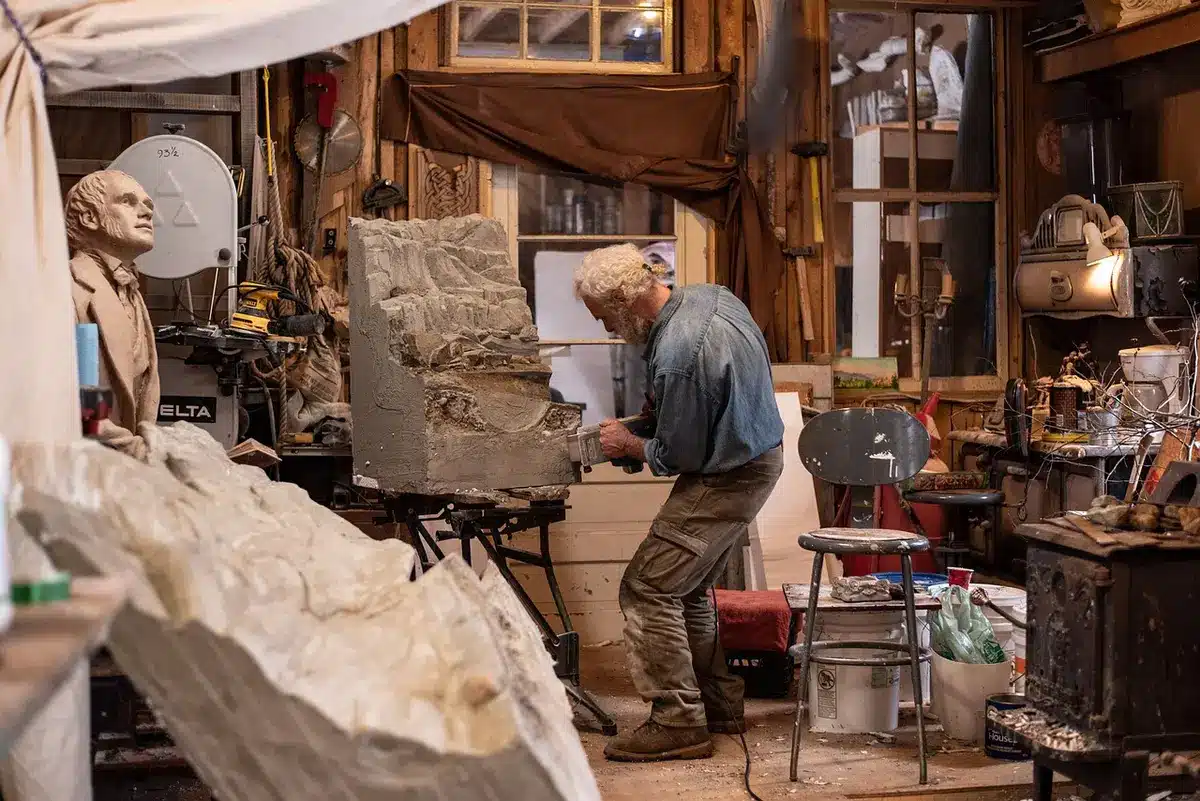
Selection committees — typically made up of residents, municipal staff and arts professionals — aim to choose works that respond to local character and community needs. Private philanthropy and corporate sponsorships have also been important, supplementing public dollars and enabling projects with higher budgets or specialized fabrication.
Why city officials and artists say this matters
City arts staff describe public art as more than decoration. Leondre Lattimore, public art project manager for the Office of Arts & Cultural Affairs, says thoughtfully placed works can foster local storytelling, boost civic pride and encourage people to reclaim public space.
There are practical impacts as well: visible public commissions help retain full-time professional artists, draw creative talent to the region and create new landmarks that can spur foot traffic and small-business activity in surrounding blocks.
“When art is integrated into everyday places, it creates a stronger sense of belonging and long-term stewardship among residents,” Lattimore said in an interview.
What to watch next
With several installations recently completed and major projects already in the pipeline, Oklahoma City’s public-art landscape will continue to evolve over the next few years. The terrazzo for the Continental Coliseum and ongoing exhibitions like the Campbell Art Park sculpture will keep large-scale pieces in public view for extended periods, while smaller site-specific works will keep neighborhood corners visually active.
For residents, the immediate takeaway is practical: new artworks make familiar routes more interesting and often become backdrops for gatherings, photos and local events. For the cultural sector, the momentum signals increased capacity to commission ambitious projects and sustain working artists.
Ultimately, these investments are shaping an evolving civic identity — one that city leaders and arts advocates say reflects Oklahoma City’s diversity and ambition while connecting art to daily life.