Show summary Hide summary
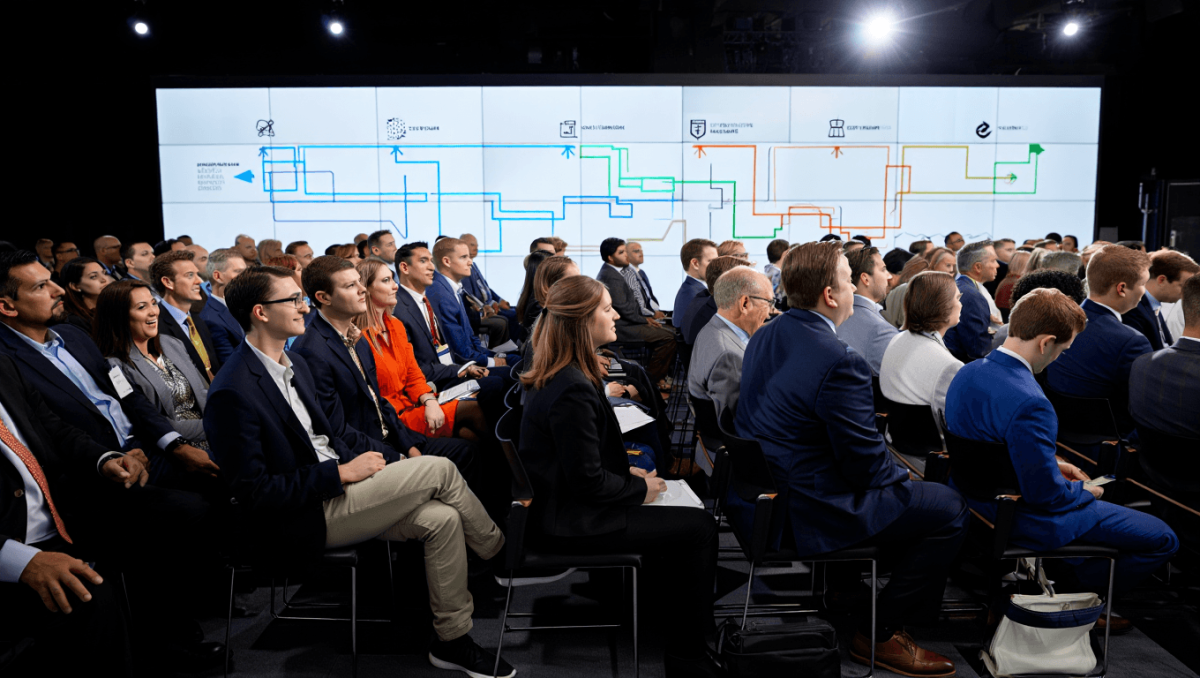
More than 50 manufacturing executives gathered in Oklahoma City this week to hear how artificial intelligence is reshaping shop floors and executive agendas. The session made clear that AI is already driving measurable gains—and that companies who treat adoption as an afterthought risk falling behind.
The Greater Oklahoma City Chamber hosted the chamber’s second Manufacturers Breakfast, moderated by Chip Carter of the Oklahoma AI Roundtable. Panelists included Madeline Mitchell Stacy, a professor and executive in residence at the University of Central Oklahoma College of Business, and futurist Scott Klososky of Future Point of View. Erik Williams, the chamber’s senior manager for business retention and expansion, framed the event as part of a broader effort to help local firms navigate rapid technological change.
AI moving from experiment to operations
Speakers stressed that AI is no longer an R&D novelty but an operational tool. They urged leaders to move beyond ad-hoc trials and build deliberate plans that tie projects to measurable outcomes, such as reduced downtime, higher throughput or lower maintenance costs.
Christa Pike released from hospital after failed execution, attorneys say
Dolly Parton tribute drives Madonna Inn crowds: steakhouse unveils limited menu
Mitchell Stacy described a large-scale example from industry where machine-learning models analyzed sensor streams from conveyor systems to forecast failures. Those predictions were fed directly into maintenance schedules, cutting unplanned outages and delivering substantial annual savings—figures that underscored the payoff when analytics are linked to existing workflows.
At the same time, she warned that AI systems can produce subtle errors that go unnoticed unless organizations put monitoring and controls in place. In her words, unlike traditional software that often gives clear error messages, failing AI can quietly skew decisions unless someone watches for it.
Governance, pilots and measurable wins
Klososky encouraged companies to start with policies rather than tools: define governance, data standards and accountability up front, then work with individual departments to surface high-value use cases. The goal is to create a sequence of pilots that prove ROI and build trust across the organization.
- Assess existing processes for automation or predictive opportunities.
- Audit data quality and accessibility before building models.
- Define governance—roles, approvals and monitoring for AI systems.
- Pilot a small number of high-impact projects with clear success metrics.
- Measure outcomes and scale only those projects that demonstrate real value.
- Train frontline staff and supervisors on new tools and workflows.
- Embed continuous monitoring to detect silent or emerging failures.
That checklist reflects a practical, step-by-step approach: governance first, then targeted pilots that deliver quantifiable benefits and justify broader rollout.
People before automation
Discussion also focused on the workforce implications. Panelists rejected alarmist narratives that cast AI as a simple job killer. Instead, they argued for positioning AI as an augmenting technology that increases employee productivity when paired with targeted reskilling.
Involving shop-floor workers early—asking them to identify repetitive tasks, quality bottlenecks or safety risks—was presented as an effective way to surface realistic use cases and accelerate adoption. Training plans and clear role definitions were emphasized as essential to preserve morale and capture value.
For local manufacturers, the immediate takeaway is twofold: adopt AI where it creates measurable improvements and build the organizational guardrails that keep those systems reliable and accountable. Firms that combine disciplined governance with practical pilots are more likely to see tangible returns and keep their workforce prepared as the technology evolves.
The chamber’s event underscored a simple message: AI is changing how products are made today, and companies that act strategically will convert technological change into competitive advantage.