Show summary Hide summary
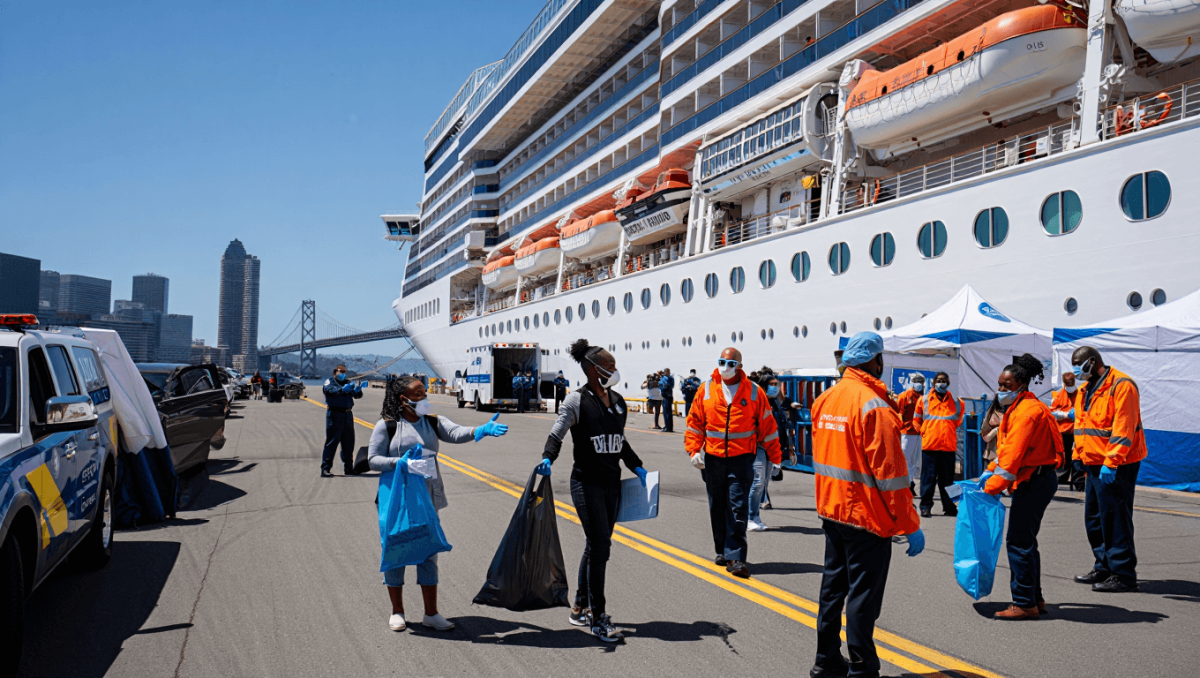
A cruise ship docked in San Francisco is contending with an outbreak of stomach illness that has sickened more than 100 travelers and prompted federal monitoring. The U.S. Centers for Disease Control and Prevention says the incident highlights how quickly contagious gastrointestinal viruses can spread on large vessels and why health surveillance at ports remains essential.
The CDC reported that aboard the Ruby Princess, currently in San Francisco, 102 of the ship’s more than 3,000 passengers and 23 crewmembers have been reported ill. The agency is tracking the situation through its Vessel Sanitation Program and has identified the cause as norovirus, a common cause of acute gastroenteritis.
What officials are saying
Christa Pike released from hospital after failed execution, attorneys say
Dolly Parton tribute drives Madonna Inn crowds: steakhouse unveils limited menu
Public health teams typically respond to cruise-ship outbreaks by coordinating with ship medical staff, conducting inspections, and advising on sanitation steps to limit further spread. The CDC’s involvement means the event is being monitored at the federal level and that standard outbreak-control measures are being applied.
Onboard, passengers with symptoms are usually isolated and given medical care; the vessel’s crew works to intensify cleaning of common areas and food service zones. Ports and local health departments may also be notified to manage any disembarkation or follow-up care needs.
Why this matters now
Norovirus spreads very easily in closed environments—where people live, eat and sleep in close quarters—making cruise ships particularly vulnerable. For passengers and crew, rapid transmission increases the likelihood of large numbers becoming ill during a single voyage, disrupting travel plans and potentially requiring medical attention ashore.
- Scope: 102 passengers and 23 crew reported ill aboard Ruby Princess; more than 3,000 passengers were on board.
- Agent: The CDC has identified the outbreak as norovirus, a highly contagious gastrointestinal virus.
- Response: The CDC’s Vessel Sanitation Program is involved; ship medical teams are isolating sick passengers and increasing cleaning protocols.
- Risks: Dehydration and complications can occur, especially among young children, older adults and people with weakened immune systems.
Practical advice for travelers
If you were on the affected cruise or plan to travel by sea soon, take basic precautions: wash hands frequently with soap and water rather than relying only on hand sanitizer, avoid sharing food or utensils, and stay off the ship if you have vomiting or diarrhea until at least 48 hours after symptoms stop. Seek medical care if you cannot keep fluids down or show signs of severe dehydration.
The CDC’s vessel surveillance updates and local health departments will post any major developments, including possible delays to disembarkation or recommendations for exposed passengers. For now, officials emphasize containment, enhanced cleaning and monitoring of anyone who falls ill.
While norovirus is unpleasant, most healthy adults recover within a few days. Still, the incident serves as a reminder of how quickly infectious illnesses can affect large groups and why public-health oversight at ports and on ships remains a priority.