Show summary Hide summary
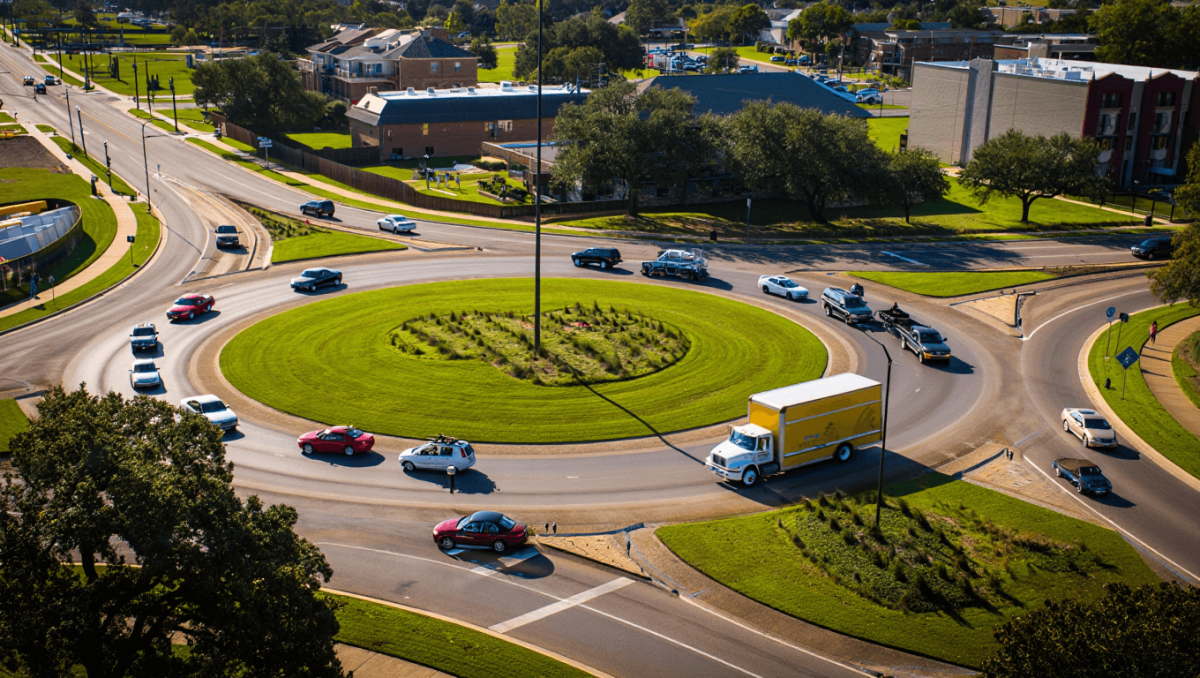
Oklahoma City has opened its first-ever double roundabout — a pair of connected circular intersections now known locally as The Peanut. The new layout is already changing traffic patterns at the site and will matter for daily commuters, delivery drivers and people relying on navigation apps in the area.
The design links two roundabouts in sequence to keep vehicles moving through a compact footprint while reducing high-speed conflict points. For drivers encountering the intersection for the first time, the shape and operation can look unfamiliar; for planners, it represents a small but noteworthy shift toward modern roundabout applications in the city.
What the double roundabout is meant to do
Christa Pike released from hospital after failed execution, attorneys say
Dolly Parton tribute drives Madonna Inn crowds: steakhouse unveils limited menu
Engineers chose the interconnected pair to balance capacity and safety where a conventional signalized junction or a single large circle would have been less efficient. In practice, the system funnels traffic through two controlled points, slowing vehicles and shortening crossing distances for pedestrians.
The intended outcomes include fewer severe collisions, smoother turning movements for trucks, and less idling time compared with some signalized intersections — though those benefits depend on driver behavior and proper signage.
Key facts drivers should know
- How it works: Vehicles circulate counterclockwise and yield on entry; lane choices are determined before entering each roundabout.
- Speed and safety: Lower approach speeds and fewer crossing conflicts reduce the risk of right-angle crashes.
- Navigation: GPS services may take a short time to reflect the new geometry — watch posted signs and lane markings until your route guidance updates.
- Pedestrians and cyclists: Crossing points are set back from the circulatory roadway; users should remain alert and use marked crossings.
What to expect in the coming weeks
Local transportation crews will monitor traffic volumes and collision reports as drivers adapt. Adjustments are common after a new intersection opens — from revised signage to pavement re-striping — based on real-world behavior.
Businesses and schools near the site can see modest changes in access times, and transit routes that use the corridor may need minor schedule tweaks. For residents, the most immediate effect will likely be a slower, steadier flow through the junction rather than the stop-and-go rhythm of traffic signals.
Practical tips for navigating The Peanut
Even experienced drivers benefit from a quick refresher when approaching an unfamiliar roundabout configuration:
- Slow down on approach and read the signs and lane arrows.
- Yield to traffic already circulating and merge when safe.
- Choose your lane before entering — do not change lanes inside the circle.
- Watch for pedestrians and bicyclists at crosswalks set back from the roundabout exits.
Why this matters beyond the intersection
Modern roundabouts are part of a broader move in American cities toward designs that emphasize safety and continuous flow. While a single double roundabout does not transform an entire network, it serves as a practical test case: if the intersection reduces crashes and delay as intended, the approach could influence future projects across the region.
For drivers, the change is immediate and practical. For planners and residents, the experiment will be judged on measurable outcomes — traffic efficiency, accident rates and how comfortably the public adapts to the new pattern.