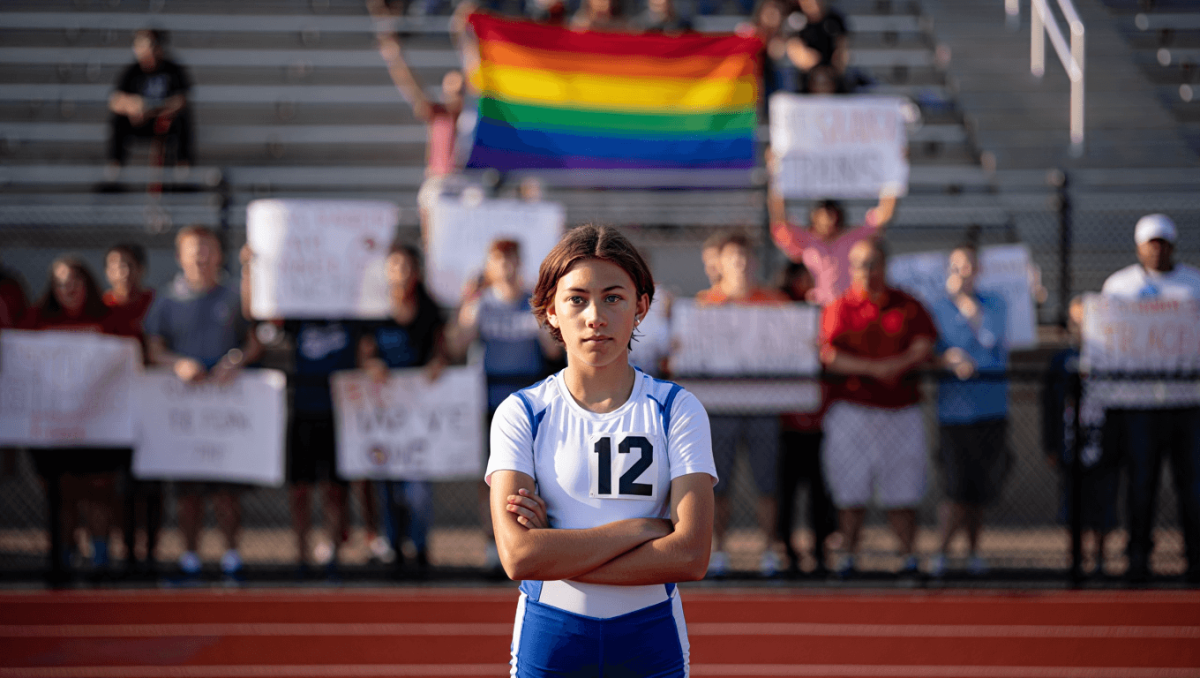
The Supreme Court on Tuesday cleared the way for states to prohibit transgender girls from participating on girls’ and women’s school sports teams, upholding state laws in Idaho and West Virginia in a 6–3 ruling that immediately reshapes youth athletics policy across the country. The decision, issued along predictable ideological lines, puts similar statutes in more than half of U.S. states on firmer legal ground and will prompt new guidance from schools and sports organizations.
Writing for the majority, Justice Brett Kavanaugh said states have authority to set eligibility rules for sex-segregated athletic programs, rejecting legal claims brought by families and advocacy groups who argued the bans violate federal civil-rights protections. The opinion narrows the legal avenues available to challenge these laws and signals how the Court views the balance between equal-protection arguments and states’ interests in organizing school sports.
The three more liberal justices dissented, warning that excluding transgender girls from girls’ teams risks significant harms to youth already facing social and mental-health challenges. They argued the factual record did not support broad exclusions and urged caution before allowing sweeping state restrictions that affect children in classrooms and on playing fields.
Christa Pike released from hospital after failed execution, attorneys say
Dolly Parton tribute drives Madonna Inn crowds: steakhouse unveils limited menu
What happens next is likely to be messy and immediate. State education agencies, high-school athletic associations and local school boards will now need to adapt policies; some will move quickly to implement state rules, while others may seek narrower approaches or await additional court guidance. Private leagues and colleges may also revise eligibility standards in response to the ruling, creating a patchwork of rules that vary by state and competition level.
- School districts: Districts in states with bans will be required to comply; districts in other states may adopt their own standards or face pressure to clarify policies.
- State leagues and associations: Regulators of interscholastic sports will issue new eligibility rules and enforcement protocols.
- Pending litigation: Families and advocacy organizations may pursue narrower challenges, or shift claims to state courts and administrative channels.
- Federal policy: Agencies that interpret Title IX and civil-rights statutes could revise guidance or face new rulemaking requests from Congress or state officials.
- Student-athletes: Individual eligibility and team rosters may change quickly, with consequences for competitive balance and access to athletic opportunities.
Reaction was swift. Civil-rights and LGBT advocacy groups said the ruling will deepen exclusion and stigma for transgender youth and could undermine efforts to promote safe, inclusive schools. Conservative and parental-rights organizations praised the decision as a protection of competitive fairness and biological distinctions in sex-separated sports.
Legally, the ruling does not erase all challenges: narrower cases that focus on particular facts or on different legal theories could still succeed, and state courts remain venues for alternate interpretations. Lawmakers in some states may try to revise statutes to avoid appeals, while others will assert their bans more forcefully.
For families, coaches and school administrators, the immediate takeaway is practical: review local and state rules, consult legal counsel if needed, and prepare for policy changes ahead of the coming school sports seasons. The issue is now settled at the national level for the statutes at hand, but the battleground will shift to implementation, athletics governance and future rounds of litigation and legislation.