Show summary Hide summary
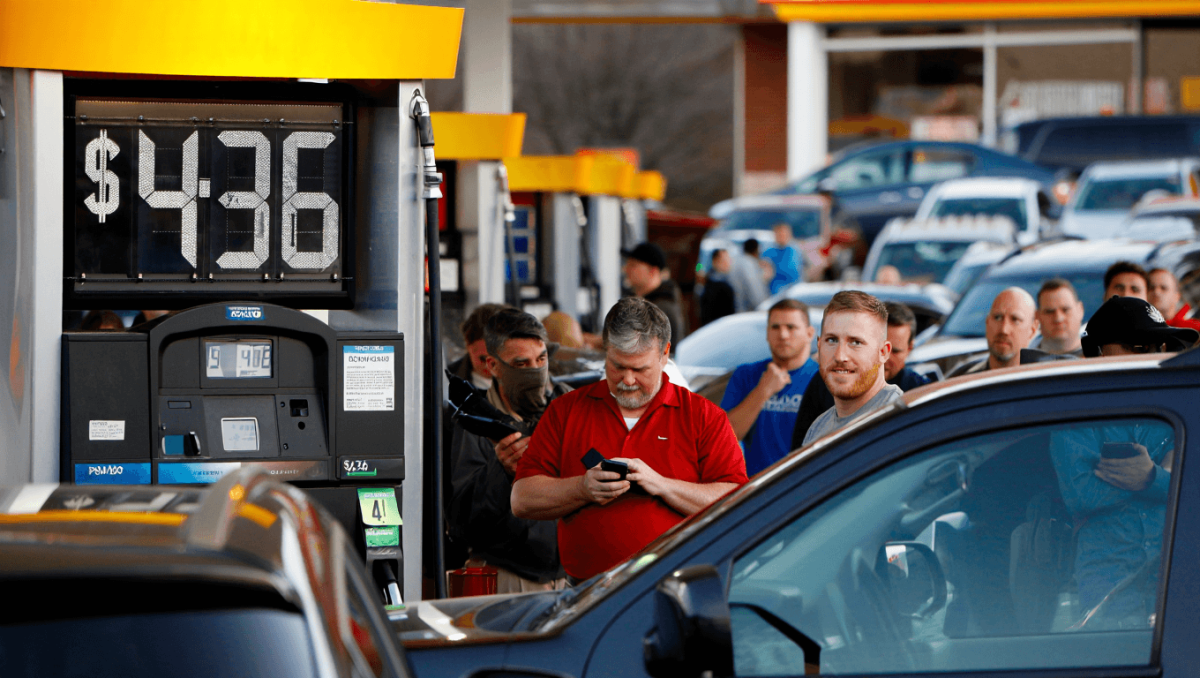
U.S. drivers are paying more at the pump: the national average for regular gasoline sits around $4.36 per gallon, and Oklahomans are seeing above-normal prices that squeeze household budgets and add cost to everyday travel. The jump in costs has tracked recent geopolitical tensions, and analysts say both global supply signals and local pricing patterns are pushing sticker prices higher.
According to price-tracking firm GasBuddy, the rise in pump prices began in mid-February — coinciding with increased conflict-related disruption involving Iran — and has persisted into May. In Oklahoma, the statewide average is roughly $3.70 per gallon, with Oklahoma City near $3.66 — numbers not seen since last August.
What’s driving today’s higher pump prices?
At the simplest level, gasoline follows crude oil: when crude becomes more expensive or uncertain, refiners and retailers adjust prices to reflect higher input and logistics costs. Disruptions to oil production, transportation or refining capacity — whether caused by geopolitical events, strikes or damage to infrastructure — tend to ripple through to consumers within weeks.
Christa Pike released from hospital after failed execution, attorneys say
Dolly Parton tribute drives Madonna Inn crowds: steakhouse unveils limited menu
On March 3, President Donald Trump told Reuters he expected oil and gas costs to rise while the conflict continued but predicted prices would fall once tensions eased. Market watchers say that short-term supply anxiety, combined with normal seasonal demand growth, helps explain why pump prices have not yet retreated.
When to fill up: small timing choices can add up
GasBuddy analyzed price patterns across more than 150,000 stations and found a consistent weekly rhythm in U.S. pump pricing. For most drivers, timing purchases can yield modest savings.
- Best days: Prices tend to be lowest on Sunday and Monday, according to GasBuddy’s analysis.
- Costlier days: Midweek — especially Wednesday through Friday — is often when stations are charging more.
- After a spike: If you see a sharp increase, patience can pay: prices commonly fall five to seven days later and can drop by as much as 15 to 45 cents per gallon in some markets.
- Use tools: Fuel-price apps such as GasBuddy’s Find Cheap Fuel let drivers compare local stations and find the lowest nearby rates in real time.
Patrick De Haan, head of petroleum analysis at GasBuddy, says the weekly swings reflect both competitive pricing and operational reset cycles at stations: retailers test prices early in the week, raise them as demand picks up, then adjust again before the weekend.
How the weekly cycle works — and why it matters
Retail gasoline pricing isn’t set only by global crude markets. Local competition and timing play a large role. Stations often lower prices to attract early-week customers, then raise them midweek when shopping demand increases. By Saturday, many retailers refresh their price strategy, which can reset the cycle.
This pattern means short-term shoppers can reduce what they spend at the pump without changing their driving habits dramatically — by shifting fill-ups a day or two or by using price-tracking apps.
Practical steps to reduce fuel costs
Small adjustments can lessen the pain from higher gasoline prices. Consider these straightforward tactics:
- Fill up on Sundays or Mondays when possible.
- Wait several days after a sudden price jump before refueling, if you can.
- Compare stations using a reputable fuel-price app to find the cheapest nearby option.
- Combine errands and reduce unnecessary trips to lower overall fuel consumption.
As prices fluctuate, keep an eye on both international headlines that affect crude markets and the local weekly rhythms that determine pump prices. For drivers in Oklahoma and elsewhere, that two-part view—global supply signals plus local station behavior—offers the clearest guide to saving at the pump this spring.