Show summary Hide summary
Downtown Oklahoma City’s landmark at Robinson and Park avenues is poised for a major transformation that blends new housing with living memory: the 12‑story landmark will be converted into apartments while preserving its role in the city’s civil rights history. The move signals fresh momentum for downtown housing and a deliberate effort to keep the building’s century‑long story visible as the community plans for its 100th anniversary.
From office tower to mixed‑use residence
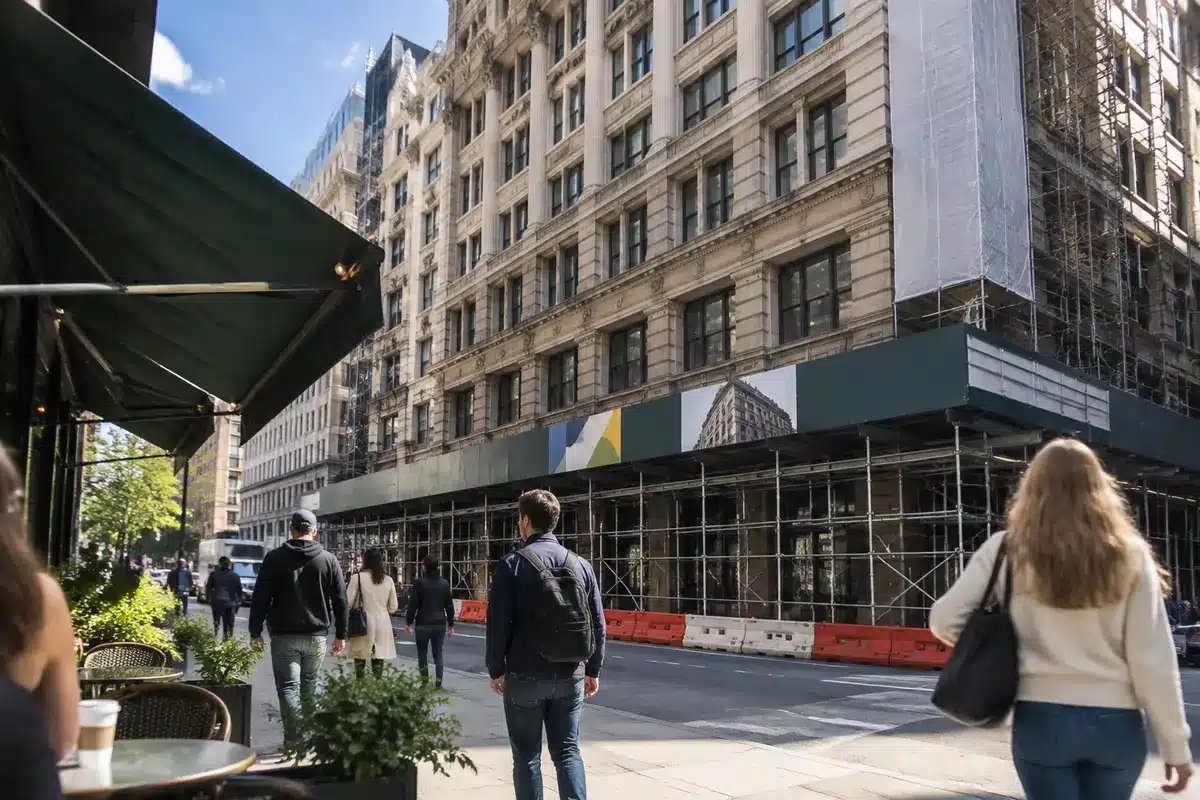
Built in 1927, the building now known as Robinson Renaissance is undergoing an estimated $50 million renovation that will repurpose former office floors into 106 apartments. Ground‑level retail and commercial space will remain, and developers say the project is aimed at adding residents within walking distance of downtown jobs and attractions.
Oklahoma civic engagement: local talks identify clear steps to boost turnout
State Farm agrees to $45 million settlement after Oklahoma roof damage probe

The developer, Gardner Tanenbaum, acquired the property in 2024 for $10.25 million. City leaders authorized about $6 million in tax increment financing to support the conversion — a public‑private step officials describe as a lever for further downtown investment.
| Project | Robinson Renaissance (Robinson & Park) |
|---|---|
| Year built | 1927 |
| Stories | 12 |
| Planned units | 106 apartments (one‑ and two‑bedroom) |
| Estimated cost | About $50 million |
| Developer purchase | $10.25 million (2024) |
| Public support | $6 million TIF |
| Target opening | 2027 (building’s 100th anniversary) |
| Amenities | Fitness center, resident lounges, coworking spaces, concierge services, golf simulator |
Preserving a site of civic memory
Beyond bricks and glass, the building carries a contested social history. Its basement once housed Anna Maude’s Cafeteria, which refused service to Black residents during segregation. Beginning in 1960, demonstrations organized by civil rights leader Clara Luper and the NAACP Youth Council targeted the cafeteria’s discriminatory policy.

Protests escalated through arrests — including a notable incident on Jan. 14, 1961 — and continued pressure helped lead to the cafeteria serving Black customers by 1963. City officials at a recent preview stressed that the site is among the surviving places where people can physically trace the local sit‑in movement.
Mayor David Holt noted the building’s rarity as a near‑century‑old structure in a city that lost many historic properties during midcentury urban renewal. He also pointed to Robinson Avenue’s role linking downtown landmarks such as the Oklahoma City National Memorial and Scissortail Park.
Honoring those who protested
The redevelopment preview included recognition of the activists who helped change access to the building. Marilyn Luper Hildreth, Clara Luper’s daughter and a participant in the sit‑ins, attended along with other original demonstrators and members of the Clara Luper Legacy Committee.
At the event the developer announced a $50,000 gift to the Freedom Center of Oklahoma City to support preservation and public education about the city’s civil rights history. A ceremonial key was also presented to Hildreth as a symbolic acknowledgment of her family’s connection to the site.
Hildreth reflected on growing up under segregation and the courage of young protesters who endured harassment and arrest to press for equal treatment, saying their struggle continues to inform civic life today.
What this means for downtown
Converting office space into housing is a growing strategy for cities seeking denser, more active downtowns. Developers behind Robinson Renaissance point to prior projects in the area — such as The Harlow, The Montgomery and Park Harvey — as part of a sustained push to expand urban living options.
The new residences are expected to bring more foot traffic to neighborhood businesses and increase patronage for nearby entertainment and employment hubs. Proponents argue that preserving the building’s history while adding modern amenities creates a dual benefit: honoring the past and supporting future economic activity.
- Timing: Opening scheduled for 2027, aligning with the building’s centennial.
- Use mix: Residential units above, commercial and retail at street level.
- Community investment: Public financing used to catalyze private redevelopment.
As work progresses toward the 2027 target, the project will be watched for how it balances historic preservation with changing downtown needs. For residents and visitors, Robinson Renaissance will soon offer a new way to inhabit a building that has long stood at the crossroads of Oklahoma City’s urban and social history.