Show summary Hide summary
Cal Poly’s move from a quarter calendar to a semester system this academic year has compressed the summer break and forced many students and employers to renegotiate plans. The switch — intended to sync the campus with the rest of the California State University system — is already affecting internships, course loads and some students’ graduation timelines.
Shorter summers, more scheduling friction
Under the new academic calendar, the summer recess ended earlier: students returned in August rather than September. That change collided with summer internships that typically begin in June and run for a fixed number of weeks.
Ronald McDonald House OKC hits 68-room milestone: new CEO to lead expanded services
Powder mailed to officials before election: man charged after hundreds of letters
Faculty report that several interns were bound by employer contracts requiring them to remain on-site into August, creating direct conflict with the start of classes. Mechanical engineering professor Arturo Cajal said several students were obligated to extend their placements, forcing last-minute adjustments.
- Reduced summer window: Earlier fall start means less time for long-term internships or summer coursework.
- Internship conflicts: Fixed-week employer agreements can now overlap with the first weeks of the semester.
- Graduation timing: Changes to credit distribution have left some students needing extra terms to fulfill degree requirements.
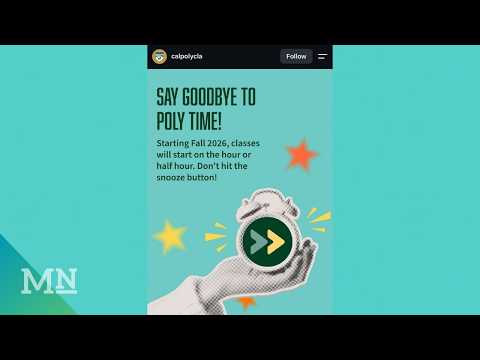
- Daily schedule shifts: Campus routines such as the old “poly time” start have been eliminated, creating ripple effects for work and class timing.
Credit structure and course sequencing
Alongside the calendar change, Cal Poly adjusted how credits are assigned to courses. Many classes now carry different unit values, which has altered the number of courses students must enroll in each term to stay on track.
Fourth-year kinesiology student Melanie Couch said the recalibration of credits has pushed back some graduation plans. She noted that what once amounted to two remaining quarters of work no longer maps directly onto the semester system, leaving her to rework her final-year schedule.
The shift to 15-week terms also changes the rhythm of learning. Courses run longer, and students often take more classes per term, meaning sustained effort over a longer stretch rather than shorter, concentrated bursts.
How students are responding
Reactions on campus are mixed. Some students describe a heavier, more continuous workload: senior aerospace engineering student Sebastian Cosme-Reyes said that unit totals feel denser now, with more material stretched over a longer period.
Others see opportunity. History major Gianna Frisella, who began at Cal Poly during the transition year, found the semester format helped her complete requirements sooner and move closer to graduation.
Teaching and classroom implications
Professors say the longer terms allow for deeper engagement with material. Instructors can spread problem sets across weeks and incorporate more real-world examples and practice activities into the syllabus.
Cajal remarked that the extended calendar gives faculty room to explore applied problems and reinforce concepts — a benefit for students aiming to connect coursework with professional experience.
Campus routines and practical fallout
Small operational changes have been felt across campus. One example: the campus-wide ten-minute delayed start known informally as “poly time” has been discontinued, which some students say interferes with existing work schedules and commuting patterns.
Those logistical shifts, while minor on paper, combine with academic changes to produce a noticeably different daily life for students this year.
Cal Poly’s semester conversion was approved as part of a multi-year plan to align the university with other CSU campuses, a strategy that has been in development since 2021. Administrators and some faculty emphasize the long-term benefits — better coordination with transfer students, standardized academic calendars across the system and potential improvements in internship and study-abroad timing — but the immediate transition requires adjustments from students, employers and instructors alike.