Show summary Hide summary
Weeks after returning from the Artemis II journey, NASA astronaut Victor Glover came back to the campus that launched his career, using the stop to underscore a simple but powerful takeaway: space travel sharpens how we see Earth and the people on it. The visit in mid-June tied his mission milestones to the community and classroom experiences that shaped him—and offered a blunt reminder of why representation and STEM pathways still matter now.
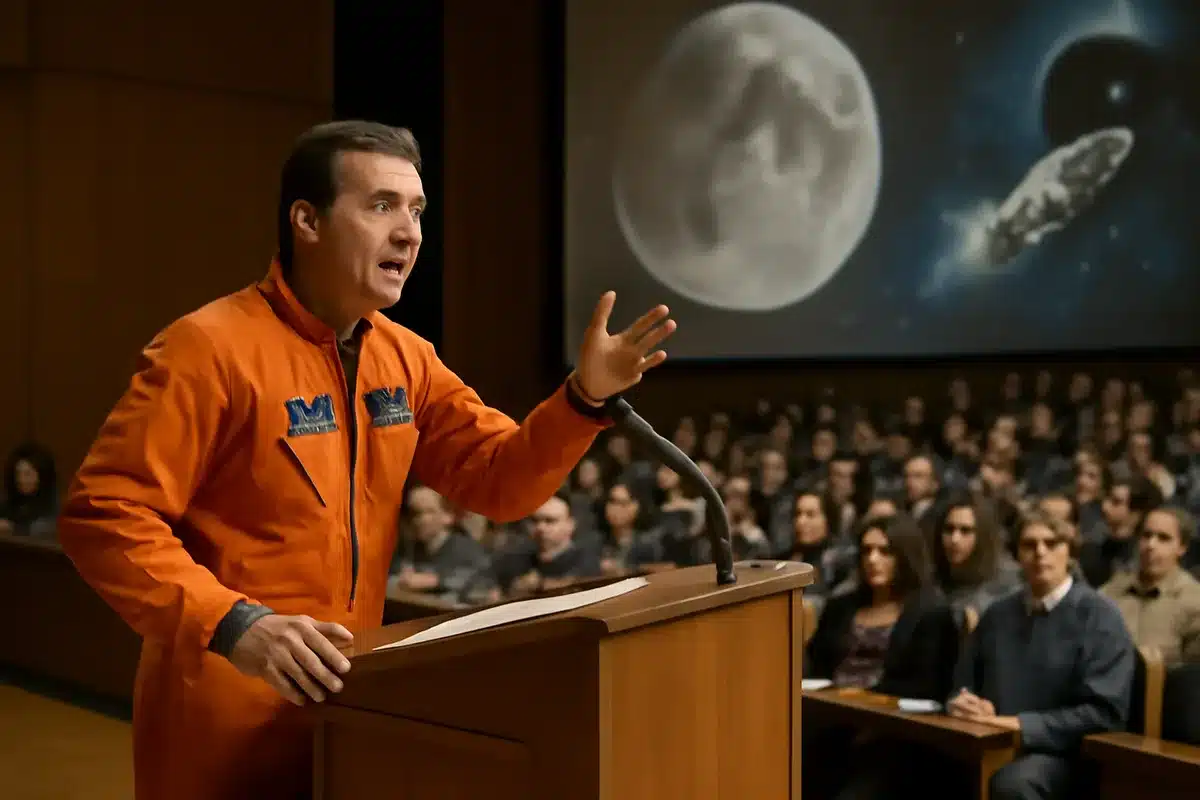
The event, held at Cal Poly’s Performing Arts Center, drew nearly 1,300 people: family members, students in playful space-themed outfits, longtime supporters from the Navy and his fraternity, and faculty who watched his career unfold. Glover arrived with the authority of someone who piloted a crewed spacecraft around the moon and the tone of a hometown alumnus recounting lessons learned along the way.
He peppered remarks with humor and humility, joking about the program’s title and preferring the part of the phrase that emphasizes return. But his central point was earnest: the view from deep space puts human priorities into sharper focus.
Christa Pike released from hospital after failed execution, attorneys say
Dolly Parton tribute drives Madonna Inn crowds: steakhouse unveils limited menu
| Mission | Artemis II |
| Role | Pilot — Victor Glover |
| Duration | Approximately 10 days |
| Primary objectives | Validate the Orion spacecraft with crew aboard; capture imagery of the lunar far side |
| Program goal | Return humans to the moon and lay groundwork for future missions to Mars |
One moment from the mission became a viral soundbite: a radio call to his wife declaring his love from lunar distance. Glover traced that private-in-public exchange back to his time at Cal Poly, where a shared commitment to outreach and education first connected him with Dionna, now his wife and a frequent presence at his public appearances.
The couple crossed California in a Volkswagen van to demonstrate science projects for K–12 students through MESA, the campus program that supports under-resourced students in calculus-based STEM. Glover credited those early outreach trips—and Dionna’s steadiness during grueling test-pilot and graduate school years—with keeping his career on course.
From a failed exam to a defining lesson
Glover also recounted a pivotal academic struggle. A difficult class in fluid mechanics nearly derailed him; he failed it the first time, then came back and earned the top grade. The turnaround wasn’t just about mastering equations. It came through hours spent in a professor’s office and a shift in perspective: college, he said, was training for how to think, not just how to perform a job.

The memory of that professor’s patient mentorship stuck with him. “I learned that learning to think matters more than training for a title,” he told the audience, crediting that ethic with how he approaches complex problems as a pilot and engineer.
What his visit means now
Glover framed his visibility as both opportunity and obligation. He described complex feelings about serving as a role model for students of color: pride that the image of who can be an astronaut is expanding, tempered by the recognition that representation should be ordinary rather than exceptional.
He cited historical thinkers on the need for unbiased history and emphasized a broader hope: that accomplishments by Black Americans and other underrepresented groups no longer be treated as anomalies, but as part of the mainstream narrative.
- Practical impact: Artemis II tested systems critical to future crewed lunar and Mars missions.
- Educational ripple: Glover’s story highlights how campus programs and mentorship feed the space workforce pipeline.
- Civic stakes: Greater visibility in science and engineering helps widen access and ambition for students from diverse backgrounds.
He linked those goals to his fraternity’s ethos—service and culture—and said his public platform obliges him to share the passion that carried him to orbit. “I can’t keep this to myself,” he said, describing outreach as a responsibility he gladly accepts.
And he returned again to the view from space as a unifying image. Looking back at Earth from roughly a quarter-million miles away gave him a clearer sense of shared humanity: labels and divisions fall away when the planet is seen whole.
That perspective matters beyond poetry. It underwrites why nations fund lunar programs, why universities invest in STEM pipelines, and why communities emphasize mentorship: the work done now shapes who will build and lead the next era of exploration.
Glover closed his visit reiterating a simple outcome of his trip—seeing Earth changed him but also reinforced his priorities. The mission proved technical systems and tested human resolve. For him, the ultimate measure of those efforts is whether they bring people back to a healthier, more inclusive world.