Show summary Hide summary
A three-tower office complex on northwest Oklahoma City’s skyline is about to be reborn as housing. The project, now called The Landmark, will convert the mid-century Landmark Towers into more than 300 apartments — a move that reshapes parking, historic-tax incentives and the market of renters near the city’s medical corridor.
The property at 3545 NW 58th St. was bought last year by local developer Gardner Tanenbaum for roughly $16.25 million. The company says work will begin soon and the conversion is expected to take about two years, making the site one of the region’s higher-profile office-to-residential redevelopments this year.
What’s planned for the site
Christa Pike released from hospital after failed execution, attorneys say
Dolly Parton tribute drives Madonna Inn crowds: steakhouse unveils limited menu
The complex sits on 9.36 acres and comprises three identical 10-story towers built between 1967 and 1971. Under the redevelopment proposal, the former office floors will be reimagined into mid-century–styled units with shared amenity space and controlled access.
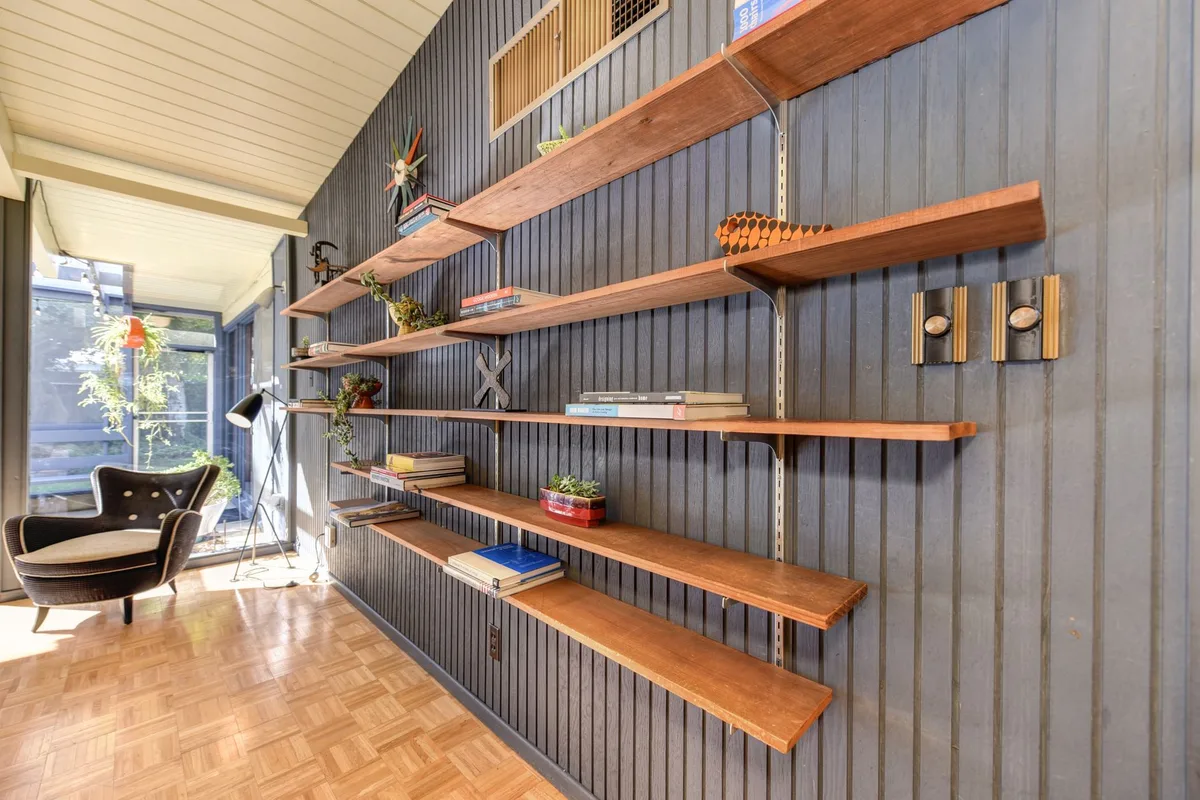
- Size: Each tower is about 101,380 gross sq. ft.; total roughly 304,140 sq. ft.
- Apartment count: More than 300 units across the three buildings.
- Parking: Existing capacity of 812 spaces would fall to about 506.
- Amenities: Pool, barbecue courtyards and landscaped green space between towers.
- Timeline: Demolition work on the central tower is scheduled to begin this summer, with full construction projected to last 24 months.
- Target rents: Two-bedroom units expected to rent between $1,500 and $2,500 per month.
Developer Richard Tanenbaum highlighted the site’s views — open sightlines to Lake Hefner to the north and downtown to the south — as a major selling point. He also described a design feature the team calls a “reverse penthouse,” where some ground-level apartments will connect down to lower-level spaces by internal stairs, a nod to older urban housing patterns.
Why the project matters now
Converting empty or underused offices into housing has accelerated across many U.S. cities. For Oklahoma City, the Landmark Towers project addresses two immediate issues: expanding rental stock near Integris Baptist Hospital and giving new life to a complex that has been primarily commercial for decades.

Because the property was added to the National Register of Historic Places late last year, the developer plans to use preservation tax incentives to offset renovation costs. That financial support can be decisive for large adaptive-reuse projects.
How the historic tax credit works here
Oklahoma developers can stack federal and state credits: a 20% federal rehabilitation credit coupled with a 20% state credit can yield up to 40% in tax incentives once the work is complete and the property is ready for occupancy. State preservation officials said applicants must document the building’s historic status, describe existing conditions and follow through exactly on approved rehabilitation plans to receive the credits.
Local preservation staff have been advising the Landmark conversion for about a year. Because the complex is owned as a single parcel, the developer will file one consolidated historic tax application for the whole property.
Developer track record and a local context
Gardner Tanenbaum has repeatedly turned older downtown buildings into residential projects in recent years, including conversions of notable Oklahoma City office towers into apartments. This will be the firm’s seventh project using historic credits, according to company statements.
Historically, the three towers served insurance and office tenants and were renamed Landmark Towers in the 1980s. Their inclusion on the National Register was finalized in January after certification in October 2025 — a procedural step that clears the way for credit eligibility during the rehabilitation.
For neighborhood residents and city planners, the conversion raises familiar trade-offs: new housing and activated streetscapes versus fewer parking spaces and the impacts of construction traffic. The developer frames the project as tailored to workers at nearby medical facilities and other employees seeking modern rentals with mid-century character.
Looking ahead
Assuming the schedule holds, site work that begins this late summer should lead into major construction in the coming months, with occupancy phases rolling out over a roughly two-year horizon. City officials and preservation staff will continue to monitor compliance with historic rehabilitation standards before the project can claim the promised tax credits.
What happens at The Landmark will be watched by owners of other older office properties in the metro area as they weigh the economic case for conversion versus continued commercial use.