Show summary Hide summary
In Istanbul, Team USA closed the FIBA U-17 Men’s World Cup with a commanding 107-81 victory over Serbia, securing an eighth consecutive title and underscoring American depth at the youth level. The performance matters now: college programs and professional scouts will use the tournament tape to shape recruiting and early draft boards ahead of the 2026–27 season.
Team USA finished the week unbeaten at 7-0, outscoring opponents by an average margin that reflected both offensive firepower and defensive control. Head coach Scott Fitch praised his roster’s chemistry and preparation, saying he was proud of how quickly the group came together and delivered under pressure.
Long-range barrage sets a new standard
The Americans rewrote the tournament record for makes from downtown, draining 77 three-pointers across seven games — topping the 2010 benchmark of 73. That volume was concentrated in the group stage, when the team went 16-for-31 (51.6%) from deep in a blowout win over Japan on June 28.
Christa Pike released from hospital after failed execution, attorneys say
Dolly Parton tribute drives Madonna Inn crowds: steakhouse unveils limited menu
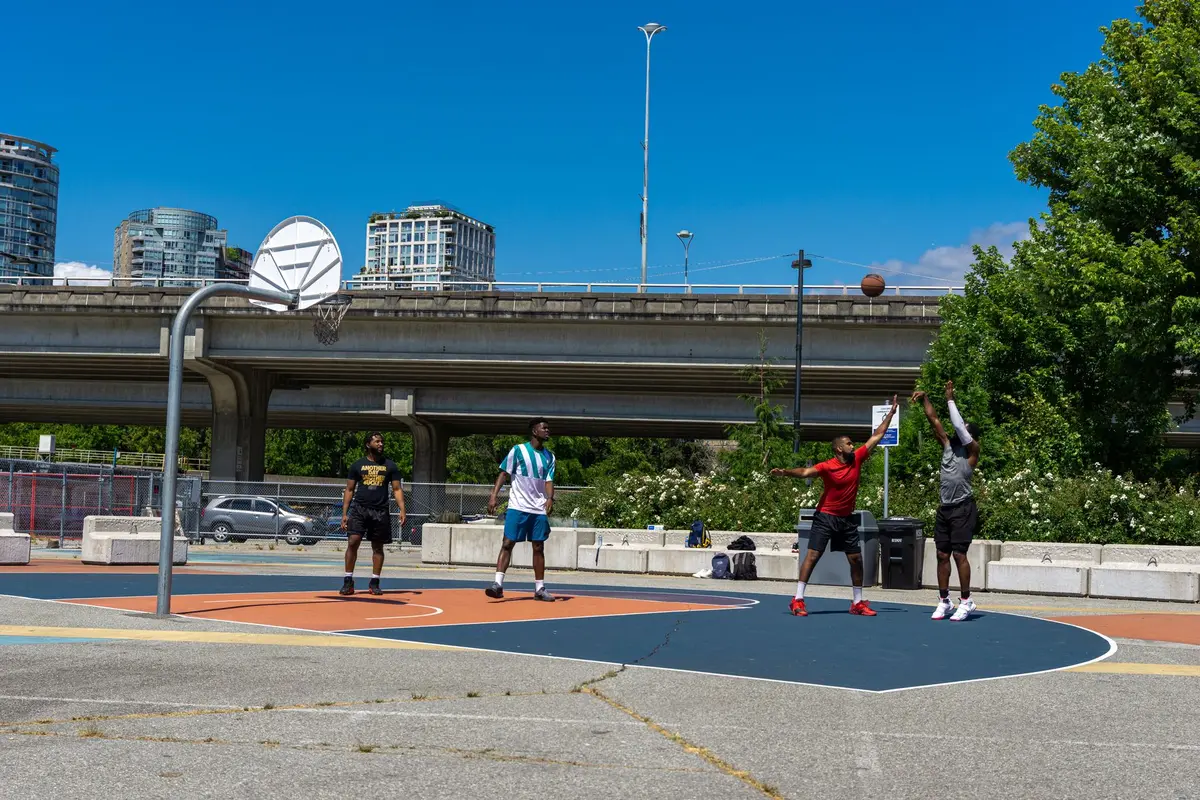
Guards and wings combined for that outburst, led in that game by AJ Williams, who shot 5-of-6 from beyond the arc and finished with 25 points, seven rebounds and two steals.
Boumtje-Boumtje dominates the glass and the box score
Named tournament MVP, Joaquim Boumtje-Boumtje anchored the U.S. inside presence. He established a new single-tournament rebounding record with 76 boards, including 15 in the championship game, surpassing the previous mark of 70.
Across seven contests the five-star forward averaged 19.6 points and 10.9 rebounds, registering three double-doubles late in the event. His standout outing came in the quarterfinals, when he posted 31 points, 16 rebounds and two blocks — a stat line that will draw heavy attention from college coaches and pro scouts.
Primary distributor lifts the offense
Beckham Black emerged as the team’s chief playmaker. He totaled 58 assists for the tournament — one short of the all-time assist mark set in 2010 — and averaged 8.3 assists per game. Black produced three games with at least 10 assists, including a 12-assist performance in the quarterfinals.
He also contributed offensively, averaging 12.3 points per night and delivering scoring bursts of 23 and 19 points in key matchups.
Clutch shooter closes the title game
CJ Rosser led the U.S. attack in the final with 23 points, marking his third 20-point game of the event. Rosser averaged 16.4 points for the tournament and provided steady perimeter scoring throughout the week.
| Tournament snapshot | Key stat |
|---|---|
| Champion | Team USA (Istanbul, 2026) |
| Final score | USA 107, Serbia 81 |
| U.S. record at event | 58-0 all-time |
| 3-pointers (tournament record) | 77 made |
| MVP / Rebounds leader | Joaquim Boumtje-Boumtje — 76 rebounds |
| Assists leader | Beckham Black — 58 assists |
| Top individual game (final) | Nikola Kusturica (SRB) — 37 points |
Serbia’s scorer makes a late surge
Serbia’s Nikola Kusturica finished with a game-high 37 points in the final and averaged 24.6 points for the tournament on 46.8% shooting. His scoring and physical profile keep him on the radar as an elite prospect in the international class.
Despite Kusturica’s heroics, Team USA’s balance — inside scoring, perimeter accuracy and playmaking — proved decisive in the title game.
- Scouting impact: Several U.S. players bolstered their stock for college programs and future draft conversation.
- Program depth: The eighth straight title demonstrates sustained dominance in youth development and talent identification.
- International competition: Serbia’s top-end scorer and other teams’ performances signal deeper global competition at the next age levels.
The broader consequence is clear: college coaches and NBA personnel will be re-watching these games. Performance at this level often reshapes recruiting boards and early draft chatter, and Istanbul provided a fresh batch of players who could influence rosters for years to come.
Fitch summed up the week by emphasizing development and team play; for a program that has not lost at this event, the win in Turkey reinforces a long-running pipeline that continues to feed higher levels of the game.