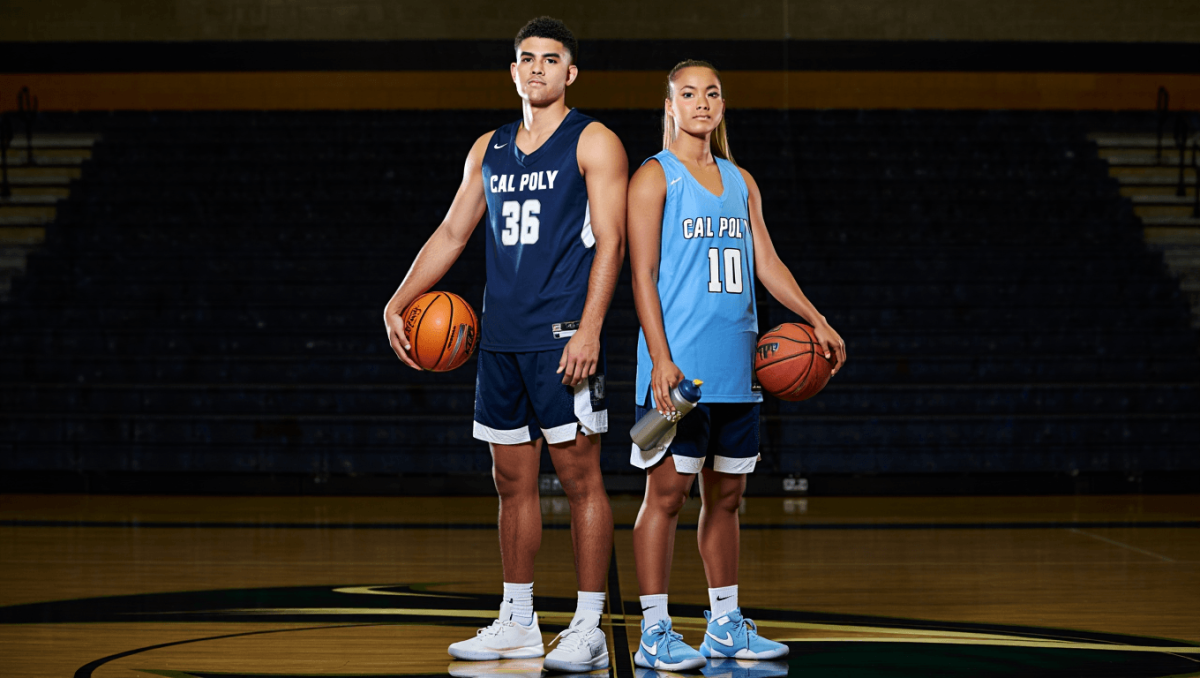
Two Cal Poly players who arrived without scholarships — one on the women’s team, one on the men’s — illustrate how unpredictable and exacting the path to Division I minutes can be. Their stories, from grueling daily routines to eventual recognition, underscore what matters now for college athletes: roster fluidity and the payoff of persistence.
Avery Knapp, a sophomore business administration student on the Cal Poly women’s basketball squad, began her college career as a true walk-on. She says the label carries misconceptions; beyond the roster designation, the position means sharing the same early workouts and time commitments as scholarship players but without the security of a guaranteed spot or funding.
Knapp describes a tightly scheduled life — classes, practices, conditioning and film sessions stacked hour by hour — that left little margin for error. Rather than expecting opportunities, she focused on what she could control: punctuality, effort and steady improvement. That approach eventually led to the program offering her financial support; the moment she learned she’d earned a scholarship was emotional and unexpected.
Christa Pike released from hospital after failed execution, attorneys say
Dolly Parton tribute drives Madonna Inn crowds: steakhouse unveils limited menu
How the redshirt route unfolded
Cayden Ward, a third-year psychology major with Cal Poly men’s basketball, arrived in a similar position but with an explicit caveat from head coach Mike DeGeorge: he would be a redshirt walk-on, practicing but not appearing in games during his freshman season. Ward used that initial limitation as a learning period, leaning on family encouragement and his own determination.
The strategy paid off. In his second season Ward emerged as a team leader and a reliable scorer, averaging 14.5 points per game — a mark that placed him among the conference’s more productive players. Despite attention from other Division I programs after that breakout year, Ward elected to remain with the Mustangs, the team that first gave him a chance.
- Walk-on: Joins without scholarship; same practice demands as scholarship athletes but less job security.
- Redshirt: May practice with the team while preserving a year of eligibility and often postponing in-game opportunities.
- Scholarship: Brings financial support and a clearer roster role, though position and playing time can still shift season to season.
Both players emphasize that the walk-on experience builds habits that extend beyond the court: time management, mental preparation and a focus on incremental gains. Ward spoke of preparing mentally before games — a routine he says helps him recapture the focus and hunger he had as a walk-on — while Knapp framed her trajectory as a lesson in controlling variables she can influence.
Their stories also highlight wider stakes for college programs and recruits. With transfers and roster turnover increasingly common, incoming players who accept non-scholarship roles face real uncertainty. For programs, giving opportunities to walk-ons can yield unexpected returns in leadership and production.
For prospective student-athletes and families, the takeaway is pragmatic: paths to contribution and scholarship are often non-linear. Patience, daily discipline and seizing practice-time chances remain crucial.
Knapp and Ward’s experiences suggest one final point: even when immediate playing time isn’t available, the investment can pay off — sometimes in scholarship dollars, sometimes in a starring role — but always in the habits and resilience that sustain a collegiate career.