Show summary Hide summary
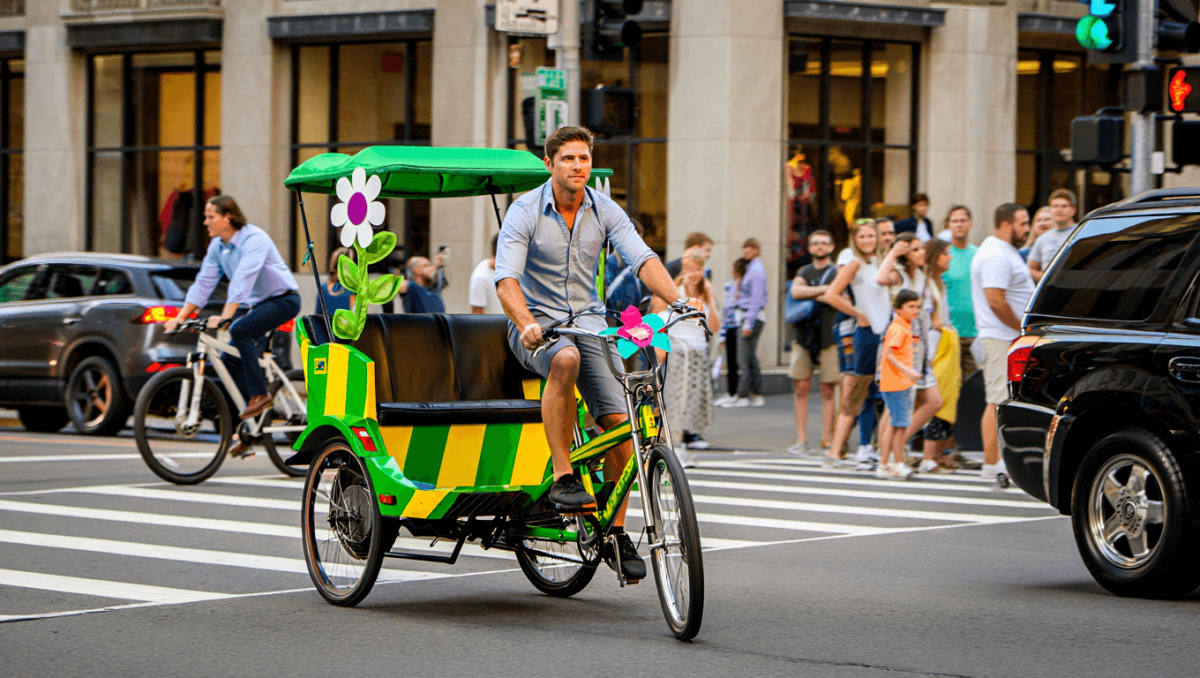
On downtown streets where cars, bikes and foot traffic intersect, one operator has turned short-distance transport into a casual public event. Robert Grajeda pedals a brightly outfitted tricycle-cab he calls Ubert!, offering rides that prioritize atmosphere and human connection over a fixed fare — a model that reflects shifting ideas about urban mobility and neighborhood life since 2020.
Grajeda describes his vehicle simply: a three-wheeled pedal cab with a bench for passengers, styled more like a mobile living room than a traditional taxi. He sometimes gives lifts for no set price, accepting tips when riders choose to contribute. That approach makes each trip unpredictable in length, route and conversation.
Ubert! grew out of a mix of nicknames and serendipity. People had shortened Robert to “Burt,” he said, and a few mistaken shouts of “Uber” nudged him toward the playful name. A stray letter, he jokes, is left open to interpretation by passengers.
Christa Pike released from hospital after failed execution, attorneys say
Dolly Parton tribute drives Madonna Inn crowds: steakhouse unveils limited menu
A ride that’s more performance than taxi
Grajeda frames the pedicab as an experience rather than a business. He has previously run a licensed service with insurance and formal pricing, but shifted to his current, looser model after 2020. The change is deliberate: without a posted fare, the interaction becomes part transport, part conversation and part street-side performance.
Music, friendly banter and an upbeat presence are deliberate tools he uses to create a memorable ride. Passersby often react — waving, laughing or hopping on — turning a single trip into a small social moment that livens the downtown corridor.
He emphasizes that money is secondary. Ubert! is a seasonal side project for Grajeda, who balances it with a range of other work, including municipal positions and utility work. Still, he treats the pedicab as an extension of how he wants to move through life: playfully and without turning every action into a transaction.
What riders can expect
- Vehicle: Three-wheeled pedicab with bench seating for short trips.
- Pricing: No set fare — tips welcome but optional.
- Availability: Irregular; Grajeda is a one-person operator who appears when his schedule allows.
- Typical rides: Short downtown cruises, casual sightseeing, occasional longer trips when needed.
- Not a tour: Informal local commentary rather than a structured historical tour.
His favorite outings are the simplest: riders who just want to “cruise” with no destination in mind. He also occasionally steps in for more practical needs, such as getting a stranded passenger to the airport, but he avoids promising regular service or strict schedules.
Why this matters locally
Micro-transport options like Grajeda’s pedicab influence how people experience downtowns. For residents and visitors, the ride can be a convenient, low-speed alternative to driving for short distances. For businesses, spontaneous rides can draw foot traffic and create lively street scenes that benefit cafes, shops and public spaces.
At the same time, the model raises familiar questions for city planners and regulators: where and when such vehicles can operate, how they intersect with pedestrian flows, and what standards of safety or insurance apply. Those are policy conversations communities continue to have as urban mobility diversifies.
Grajeda resists formalizing Ubert! into a predictable schedule. “I like to be like a shooting star,” he said — an intermittent presence that punctuates routine rather than replaces it. Whether viewed as practical transport or a spontaneous city spectacle, his pedicab has become a recognizable piece of downtown character for those who encounter it.
Correction: This story was updated to fix the spelling of Robert Grajeda’s last name.