Show summary Hide summary
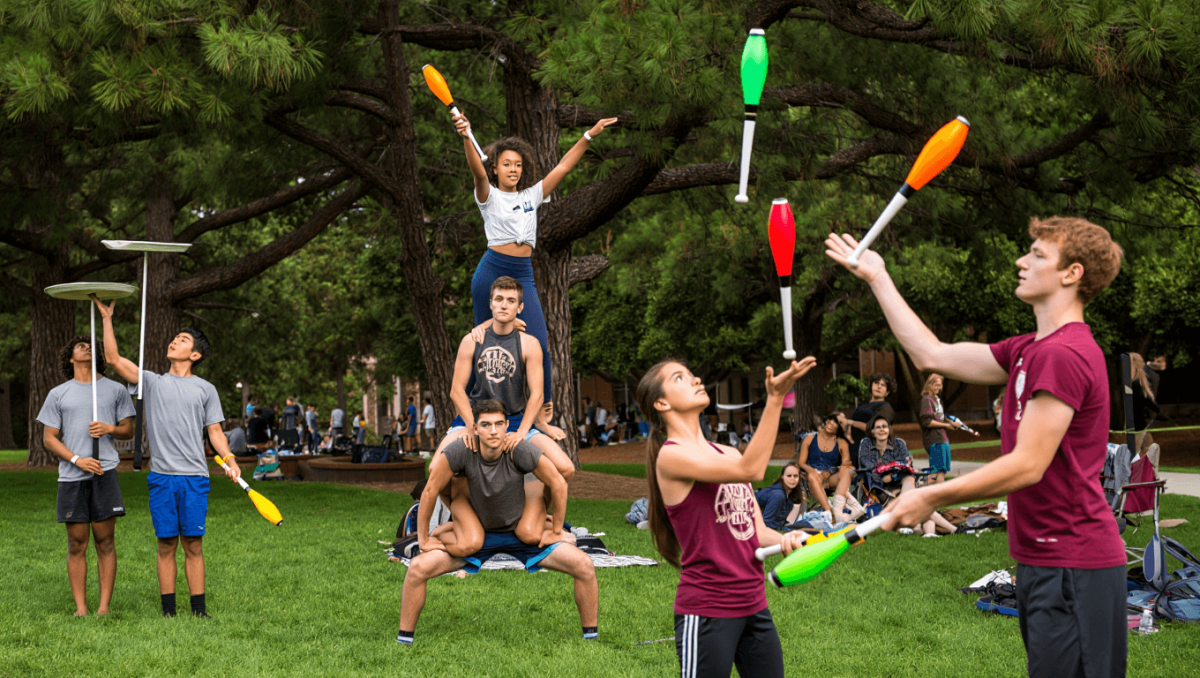
Between club fairs and charity fundraisers, a quieter scene has taken root under the campus pines: students gathering to juggle, spin plates and build human pyramids on Dexter Lawn. These low-key practices — led by two distinct groups — are drawing students who want hands‑on skills, social connection and a break from screens.
Skills, not spectacle
At one corner of Dexter Lawn, the Cal Poly Juggling Club assembles each week to pass clubs, rings and balls through the air. Membership is informal — typically about 10 to 20 students show up — and the focus is practical: teaching newcomers, sharing equipment and experimenting with a wide range of props.
Jacob Hinshaw, the club president and a senior in marine sciences, says the appeal is part social, part intellectual. He pointed to the variety of objects members try and the steady, iterative process of learning as what keeps people returning.
Christa Pike released from hospital after failed execution, attorneys say
Dolly Parton tribute drives Madonna Inn crowds: steakhouse unveils limited menu
What the juggling sessions offer
- Meeting time: Two-hour practice on Thursdays.
- Membership: Open and free; club props are available for borrowing.
- Props: Clubs, rings, different kinds of balls, spinning plates and more.
- Approach: Emphasis on teaching and making skills accessible to beginners.
Beginners are encouraged to try without pressure; experienced jugglers often stay to coach others and to explore new tricks themselves.
Acro-yoga and the return of movement
Just a few steps away, another group transforms the same lawn into a practice space for Acro Yoga. Members roll out mats and alternate between balances, supported flips and partner lifts that range from basic bird poses to more elaborate lifts.
Nicole Sandrini, a freshman studying environmental earth and soil sciences, said acro-yoga helped her keep a long-running athletic passion alive after leaving competitive acrobatics behind. She described the club as an inclusive community where recreational practice replaces the pressure of competition.
Classes are taught by instructor Liz Crosby in the Recreation Center mat room and run on Sundays from 5:30 p.m. to 7 p.m. Crosby, who has led the sessions for three years, also ferries mats out to Dexter Lawn to give outdoor participants a more public practice space.
Why these groups matter now
Both clubs meet a simple campus need: low-cost, social activities that build coordination, trust and belonging. For students juggling coursework and life transitions, this kind of hands-on, in-person engagement can be a compact way to reduce stress and widen social circles without a large time commitment.
Members often move between the two gatherings, blurring lines between solo skill work and partner-based movement. That overlap means spectators and participants alike can sample multiple forms of physical play on the same green.
Whether tossing pins into the sky or forming a stacked human pose, the shared goal is to make seemingly difficult feats approachable — one practice session at a time.