Show summary Hide summary
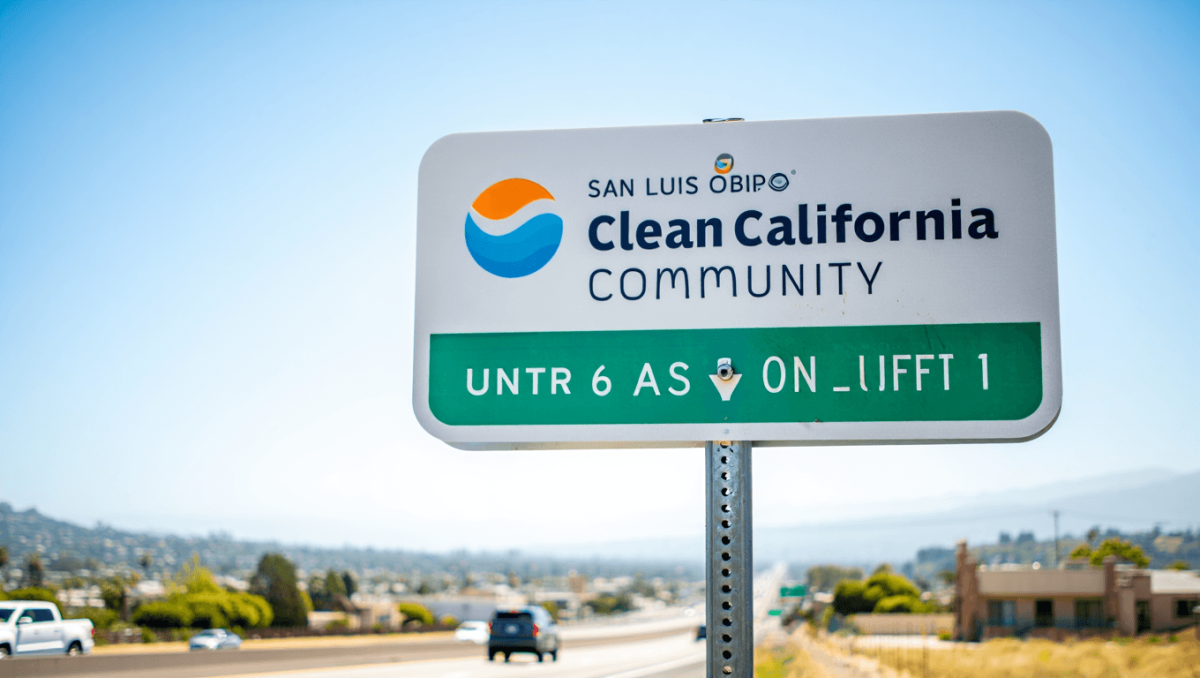
Drivers entering San Luis Obispo along Highway 1 now pass a freshly installed marker declaring the city a Clean California Community, a visible sign of local efforts to curb litter and expand green public spaces. The emblem—placed this month at Santa Rosa Street and Highland Drive—marks a formal finish line in an ongoing push to make waste reduction and beautification a civic priority.
The recognition comes from a statewide initiative led by Caltrans that rewards municipalities for coordinated anti-litter work and environmental projects. San Luis Obispo earned the designation last year; the marker’s installation followed delays in manufacturing and logistics.
A citywide effort, not a single department
City officials say the program’s value lies in cross-departmental collaboration rather than a one-off ceremony. Bob Hill, who oversees sustainability and natural resources for the city, describes the initiative as an integrated civic campaign that pulls planning, parks, public works and community organizations into a shared agenda.
Christa Pike released from hospital after failed execution, attorneys say
Dolly Parton tribute drives Madonna Inn crowds: steakhouse unveils limited menu
“It wasn’t a single office carrying this—everyone had a role,” Hill said, emphasizing that the sign is meant to reflect ongoing practice, not a symbolic gesture that ends with installation.
Local nonprofit ECOSLO played a central role in meeting the program’s requirements. Ellie Howell, ECOSLO’s volunteer and community engagement coordinator, says the group handled cleanup coordination, tracking progress, public outreach and planting projects that figured into the city’s application.
- Cleanup and measurement: Organized pick-ups and data collection to show measurable reductions in litter.
- Community education: Outreach to encourage proper disposal and reuse habits.
- Long-term planning: Strategies for sustaining gains beyond initial events.
- Greening and beautification: Tree plantings and streetscape improvements to enhance public areas.
Why the sign matters now
The new roadside marker is intended to do more than welcome visitors; it signals priorities to residents and commuters at a moment when many cities are rethinking waste systems and public space design. Officials are tracking progress through existing stormwater and recycling programs, which provide the data needed to assess whether the designation is translating into measurable change.
Hill cautioned that it’s early to draw firm conclusions. On-the-ground observations suggest people are more likely to carry out and dispose of trash properly, but systematic results will need time and continued monitoring.
Persistent challenges: plastic and confusing rules
Officials point to two ongoing obstacles. First, the bulk of visible litter remains made of plastic, reflecting national trends in roadside and shoreline debris. Second, recycling rules vary across jurisdictions; SLO County’s guidelines differ from neighboring counties, which can confuse residents and undermine sorting efforts.
Howell says that despite those hurdles, community participation has increased — more volunteers turning out for cleanups and tree plantings, and more people signing up for events. That civic energy, she adds, is a crucial component of lasting change.
For city leaders, the designation should function as a framework for continuous improvement rather than a static badge. “This is meant to change behavior and infrastructure over the long term,” Hill noted. “The sign is a reminder of what we’ve committed to—now we have to keep doing the work.”