Show summary Hide summary
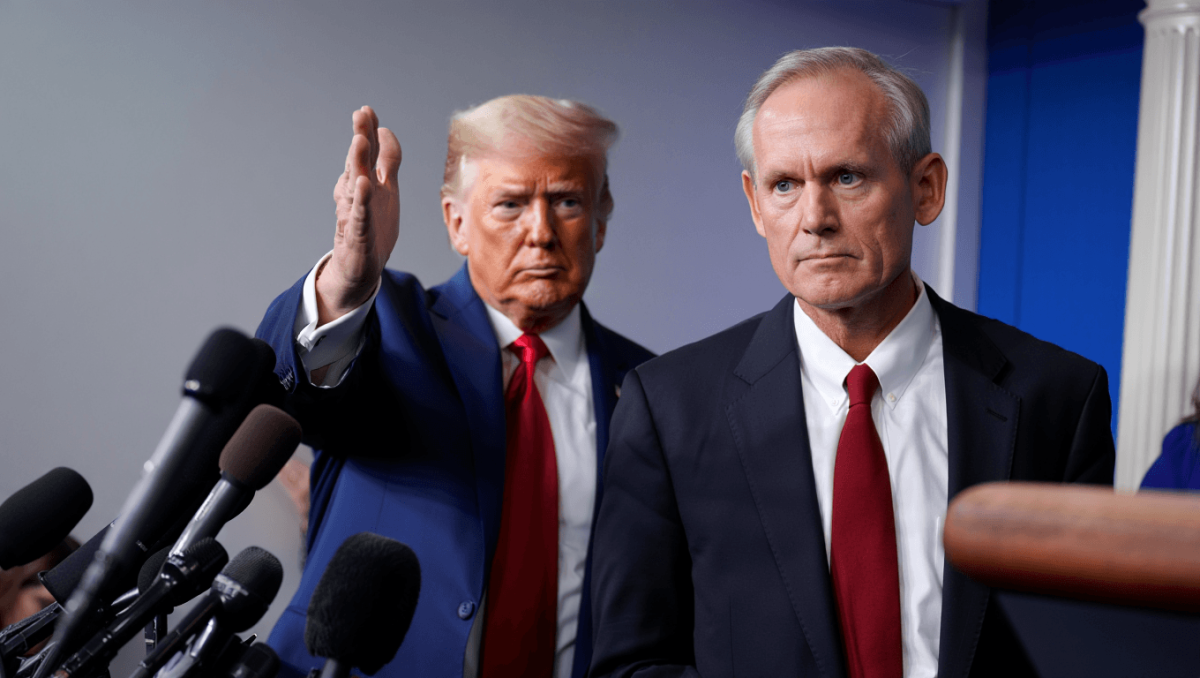
President Trump on June 27 announced his intent to nominate former Oklahoma Highway Patrol trooper Lance Schroyer as director of U.S. Immigration and Customs Enforcement, a move that immediately sharpened debate over federal immigration policy and agency leadership. The nomination matters now because a confirmed ICE director would shape enforcement priorities at a moment of heightened scrutiny over civil‑rights complaints, state–federal cooperation and private‑sector ties.
Who is Lance Schroyer?
Schroyer is a former U.S. Marine who rose through the ranks of the Oklahoma Highway Patrol to command the agency’s Emergency Services Unit, overseeing tactical teams, emergency medical response and large‑scale crowd and perimeter operations. He later joined the Department of Homeland Security staff as a senior adviser to Secretary Markwayne Mullin, an Oklahoma politician who has publicly endorsed the nomination.
Christa Pike released from hospital after failed execution, attorneys say
Dolly Parton tribute drives Madonna Inn crowds: steakhouse unveils limited menu
Although Schroyer has law‑enforcement experience at the state level, he has not previously held a leadership position inside ICE. That gap in federal immigration management is at the center of the debate over whether he is prepared to run an agency with nationwide reach.
Fast facts about the nomination
- Announcement: President Trump publicly backed Schroyer on June 27, urging prompt Senate consideration.
- Current role: Senior adviser at DHS to Secretary Markwayne Mullin.
- If confirmed: Schroyer would be the first Senate‑confirmed ICE director since early 2017.
- Agency scale: Critics note ICE has roughly 20,000 employees and a budget exceeding $20 billion.
- Acting leadership: David Venturella is serving as acting director pending any confirmation; he previously worked for the GEO Group.
Why this choice is consequential
ICE sets the tone for immigration enforcement across the country—deciding, for example, how arrest operations are conducted, how priorities are set for deportations and how the agency navigates civil‑rights concerns. A confirmed director answers to the president but also must manage an agency with thousands of employees and a multi‑billion‑dollar budget.
Supporters say Schroyer’s tactical background and state‑level experience are assets for coordinating with local law enforcement. Opponents argue that leading ICE requires deep knowledge of federal immigration law, detention policy and complex interagency operations—areas where Schroyer has limited public record.
Oklahoma’s expanding role in immigration enforcement
Oklahoma has become a prominent partner for federal immigration operations in recent years, signing numerous agreements that authorize local officers to carry out certain federal immigration functions. State officials have pointed to higher arrest numbers and revenue tied to these partnerships as evidence of effectiveness.
The state’s cooperation includes deputizing highway patrol troopers and other local officers under so‑called 287(g) arrangements, which permit local enforcement of some federal immigration statutes. These programs are controversial: advocates of stricter enforcement praise the results, while immigrant‑rights groups and civil‑liberties organizations raise alarms about profiling and due‑process impacts.
Questions about experience and potential conflicts
Schroyer’s nomination has drawn both local praise and national skepticism. Oklahoma leaders, including U.S. senators and the governor, have publicly supported him, citing his years in uniform and command experience. They frame his selection as continuity with a more assertive enforcement agenda.
Critics, including progressive lawmakers and immigration policy experts, have flagged two core concerns: first, whether a state trooper without prior ICE leadership is suited to manage the agency’s scale and complexity; second, whether close ties between DHS officials and private prison contractors—highlighted by the brief acting tenure of a former GEO Group executive—raise questions about outside influence on detention and contracting decisions.
Representative Pramila Jayapal called the pick ill‑fitting for the position, and Aaron Reichlin‑Melnick of the American Immigration Council noted the leap from state postings to directing an agency of ICE’s size and budget.
What comes next
The nomination will move to the Senate for confirmation hearings, where lawmakers can probe Schroyer’s experience, policy priorities and views on enforcement tactics, detention and civil‑liberties safeguards. How quickly the Senate acts will determine whether ICE gains a confirmed leader to implement the administration’s immigration agenda or continues under acting directors.
For communities and agencies affected by immigration enforcement, the confirmation fight will signal whether federal policy shifts toward expanded local partnerships and stricter operations, or whether oversight and civil‑rights concerns will shape a different course.