Show summary Hide summary
McKesson has chosen Moore, Oklahoma, for a major new regional distribution center, announcing a multi-hundred-million-dollar project that local officials say will reshape the economy along the I‑35 corridor. Groundbreaking took place June 23, 2026, and company and state leaders framed the move as a boost to supply-chain resilience and long-term job growth across the region.
The facility, to be built in North Moore Industrial Park on Pole Road, will span roughly 330,000 square feet and include expanded capacity for temperature‑sensitive medicines, automated handling systems and backup power to keep operations running during extreme weather. McKesson, which handles about one‑third of North America’s pharmaceuticals, said the site will serve pharmacies, hospitals and other care providers across Oklahoma, Texas and neighboring states.
Fast facts
Christa Pike released from hospital after failed execution, attorneys say
Dolly Parton tribute drives Madonna Inn crowds: steakhouse unveils limited menu
- Size: ~330,000 sq. ft.
- Investment: $179 million capital project
- Jobs: More than 200 direct positions expected at opening; county projects 630+ total jobs by the first year of operations (2029)
- Construction impacts: Roughly 1,156 jobs during build‑out; $85.7 million in wages tied to construction
- Fiscal effects: $28 million in tax revenue from construction; an estimated $118 million annual GDP impact once operational
- Capabilities: automated systems, predictive analytics, expanded cold chain storage and 100% standby power
The Cleveland County Economic Development Coalition provided the economic analysis, forecasting both immediate stimulus from construction and sustained regional benefits when the hub opens in 2029. County officials say the project will generate tens of millions in local wages and a sizable boost to public revenues that will support schools and infrastructure.
Why Moore won
Company leaders said Moore was selected after a multi‑state competition that included cities in Texas and Arizona. Local officials credit the decision to coordinated planning, available infrastructure and a workforce pipeline that can support a logistics operation at scale.
Lawrence McKinney, CEO of the county development group, described McKesson’s commitment as evidence that the region can deliver complex projects quickly and reliably—an outcome he says will attract further national and international investment.
Governor Kevin Stitt framed the announcement as validation of Oklahoma’s business environment and central geography, while Moore Mayor Mark Hamm highlighted the long‑range planning that made the industrial park competitive with larger markets.
Technology and workforce
McKesson plans to combine automation with human oversight. Company executives emphasized that machinery and software are meant to increase throughput and safety rather than to eliminate jobs.
Gene Cavacini, president of U.S. pharmaceutical distribution at McKesson, said the design will pair automated systems with human roles focused on supervision, quality control and mission‑critical tasks. He declined to provide a companywide average wage for the new positions but characterized them as “quality, high‑paying” jobs.
The center will feature predictive analytics and an expanded cold‑chain footprint to handle temperature‑sensitive therapies, an important capability as distribution of complex biologics and specialty medicines grows.
Local reaction and next steps
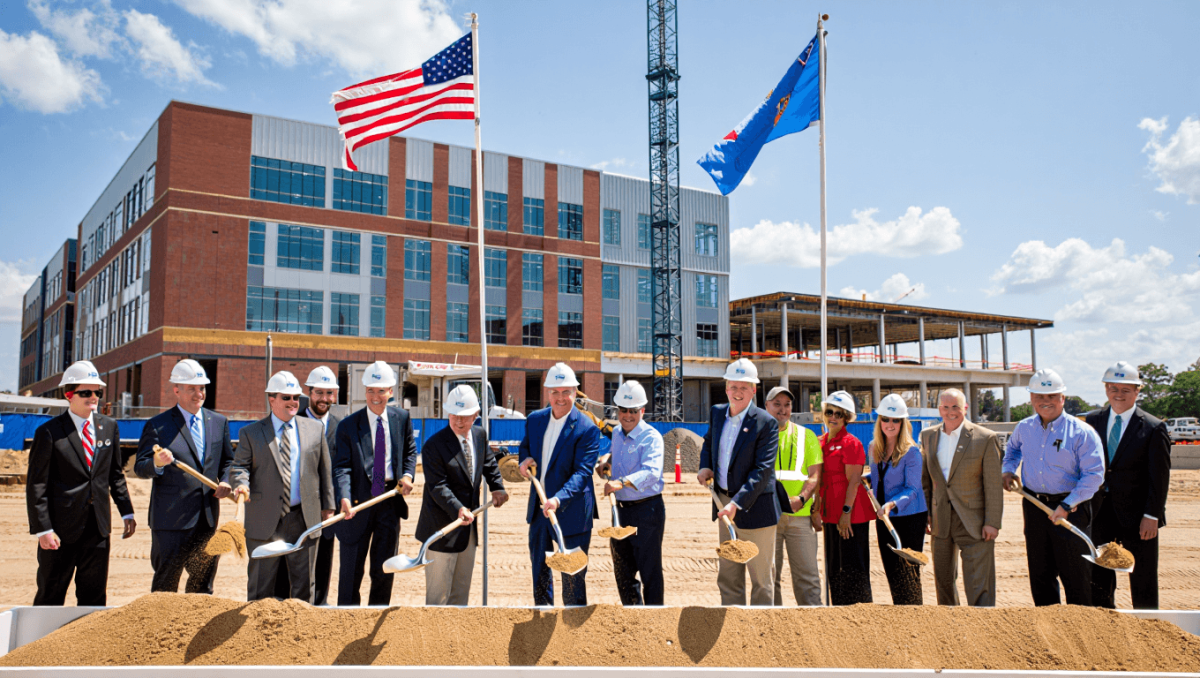
The June 23 ceremony was moved indoors because of heavy wind and rain, but that did not dim the message officials wanted to send: the project marks the first major industrial investment in the North Moore Industrial Park and could set a precedent for additional development along the Interstate 35 corridor.
Construction is expected to continue through 2028, with phased hiring leading up to full operations around 2029. County projections anticipate that the combination of construction and ongoing operations will create hundreds of jobs and generate significant economic activity in the region.
For residents and regional planners, the immediate implications are clear: increased demand for skilled logistics and technical workers, greater tax revenues for public services, and a stronger position for Moore in competing for future industrial projects.