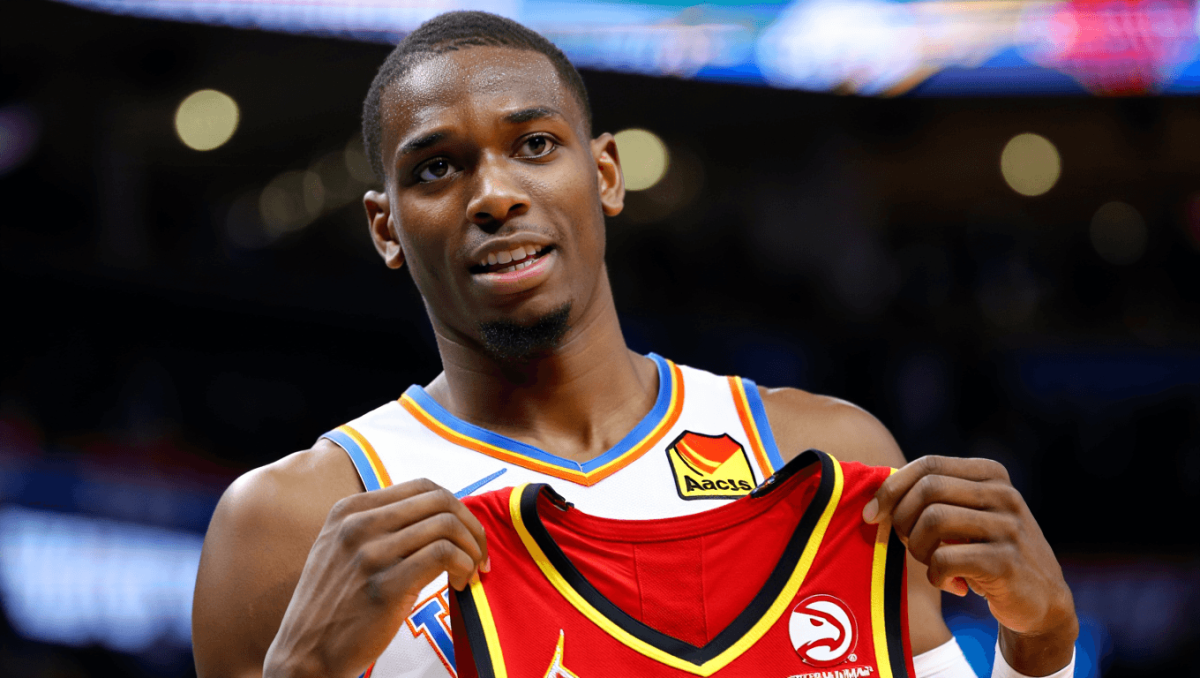
The Oklahoma City Thunder have agreed to send guard Aaron Wiggins to the Atlanta Hawks for two future second-round picks, a move designed largely to ease the team’s impending luxury tax burden as the 2026 NBA Draft approaches. The trade lowers Oklahoma City’s projected tax tab and opens immediate payroll room, giving the Thunder more flexibility on draft night and into the summer free‑agency period.
ESPN reported the deal Tuesday, which sends Atlanta’s 2030 second-round selection and the less favorable of the Hawks’ and Lakers’ 2032 second-round picks to Oklahoma City. No players will be coming back in the transaction; the return is purely draft assets.
The financial impact is the headline. By moving Wiggins’ $9.2 million salary, the Thunder shrink a previously estimated luxury tax bill from roughly $213 million to about $152 million. That also reduces the team’s projected roster outlay from about $549 million to $476 million—numbers that shape what the franchise can do around the draft and during free agency.
Christa Pike released from hospital after failed execution, attorneys say
Dolly Parton tribute drives Madonna Inn crowds: steakhouse unveils limited menu
- Assets received: Atlanta 2030 second-round pick; the less favorable 2032 second-round pick between the Hawks and Lakers.
- Wiggins’ salary: $9.2 million.
- Estimated luxury tax: Falls from ~$213M to ~$152M for Oklahoma City.
- Roster payroll: Drops from roughly $549M to $476M.
Practical consequences arrive fast. The Thunder head into draft week holding two first-round selections at No. 12 and No. 17 — positions that could be used to add young talent or packaged in deals. With Wiggins moved, Oklahoma City has a clearer runway to make draft-night trades or sign rookie-scale and short-term veteran contracts without immediately bumping up against the league’s punitive tax and apron thresholds.
That runway depends on several roster decisions. If Oklahoma City declines the team options on Lu Dort, Isaiah Hartenstein and Kenrich Williams, estimates show the franchise would sit about $3.7 million below the luxury tax line, roughly $11.7 million under the first apron and about $24.7 million below the second apron before any new deals for those players are negotiated.
For Atlanta, Wiggins is an economical addition absorbed via a trade exception tied to Luke Kennard’s $11 million salary. The Hawks still hold seven second-round picks and are projected to be roughly $6.4 million under the luxury tax threshold, although their stance on Jonathan Kuminga’s $24.3 million team option could materially alter that picture.
What this trade signals is straightforward: Oklahoma City is actively managing its payroll to protect short‑term championship pursuits while preserving maneuverability for the longer term. By converting a role player into future draft capital and immediate tax relief, the Thunder prioritize flexibility as another critical offseason—and the draft—unfolds.