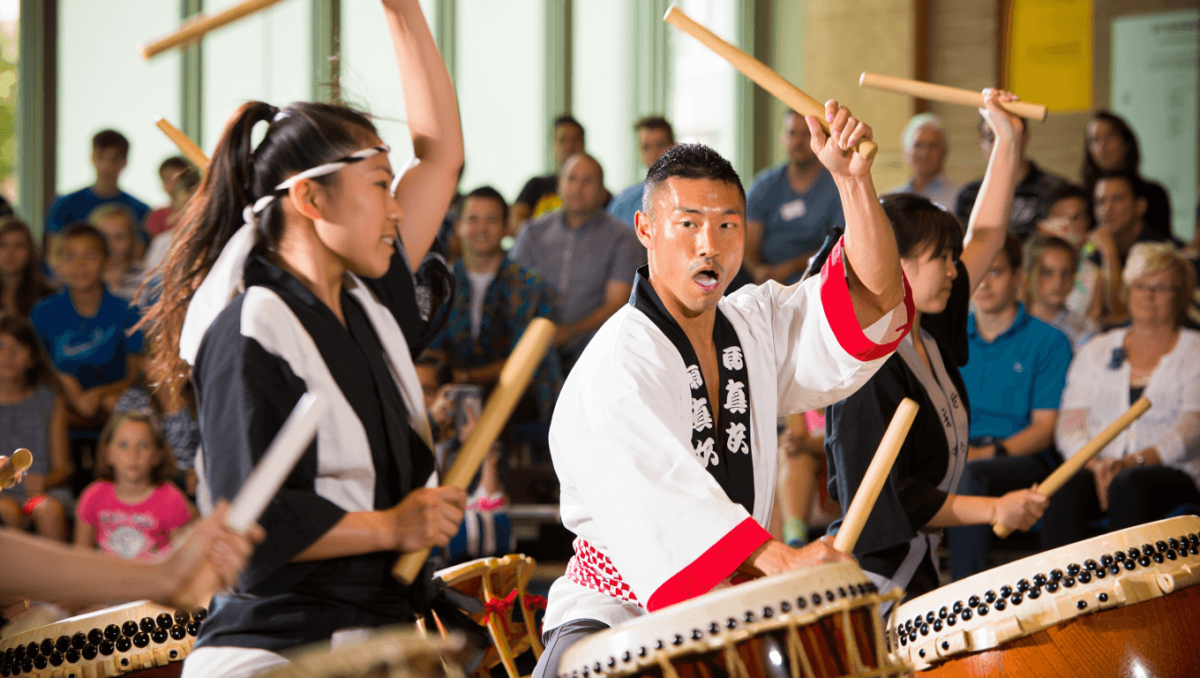
A thunder of drums filled Cal Poly’s University Union this week as Ichimi Daiko returned to campus for the first time in nearly a decade, drawing students, alumni and community members to a program that doubled as a cultural showcase and a push for deeper international engagement. The performance, held during Asian Pacific Islander Desi American Month and at the close of the university’s International Symposium, highlighted how arts programming can connect identity, belonging and educational opportunity.
Organized by Cal Poly’s International Center with support from the Japanese Student Association and other campus partners, the event was conceived after a campus leader attended an Ichimi Daiko concert last summer and saw an opening to bring the troupe back to San Luis Obispo.
Cari Vanderkar, assistant vice provost for international programs, said the goal was practical as well as cultural: to create occasions that link campus life with international perspectives and encourage students to consider study abroad and other global experiences.
Christa Pike released from hospital after failed execution, attorneys say
Dolly Parton tribute drives Madonna Inn crowds: steakhouse unveils limited menu
Taiko — a broad family of Japanese percussion instruments and performance styles — is often presented as kumi daiko, a coordinated ensemble form that blends rhythm, choreographed movement and stage presence. Historically used in ceremonies and as a means of communication, the modern ensemble version places equal weight on precision and collective effort.
Ruth Vines, executive director of Ichimi Daiko and a Cal Poly alumna, described the art form in community terms: for performers, taiko is as much about shared energy and teamwork as it is about sound. Returning to her alma mater made the appearance personally significant, she said, and the group deliberately includes interactive segments to let attendees try the drums themselves.
Students responded in varied but telling ways. For some, the event stirred personal and cultural memories; for others, it was a first-time encounter that broke down barriers.
Emi Sado, a sophomore studying construction management who has prior taiko experience, said the performance felt like a reminder of home and of cultural continuity on campus. Environmental protection and management junior Riley Welch, who volunteered in the hands-on portion, called the experience “fun” despite initial nerves and said events like this help underrepresented students feel welcome and seen.
The program was the result of months of coordination among student groups and community partners. Japanese Student Association vice president Karl Aannestad helped secure the venue and later described the most rewarding outcome as the way the evening strengthened informal networks across campus.
- Cultural exposure: Live performance and demonstrations introduced taiko’s history and technique.
- Hands-on participation: Attendees could try drums, lowering the barrier between audience and art.
- Community ties: Alumni involvement reinforced links between past and present students.
- International engagement: Organizers used the event to encourage study abroad and global curiosity.
Organizers said they plan to stage similar programs going forward and hope to expand collaboration with additional cultural student organizations, using performance events as a platform for inclusion and international outreach.
Correction: A previous version of this report misstated Karl Aannestad’s role; he serves as vice president of the Japanese Student Association.