Show summary Hide summary
The planned shift from older AWACS planes to the newer airborne-surveillance platform now under consideration has immediate implications for both U.S. military readiness and Oklahoma’s economy. With lawmakers preparing the next National Defense Authorization Act, decisions made in the coming months will determine whether Tinker Air Force Base keeps its central role in command-and-control operations and preserves thousands of related jobs.
From a long-standing mission to a technological upgrade
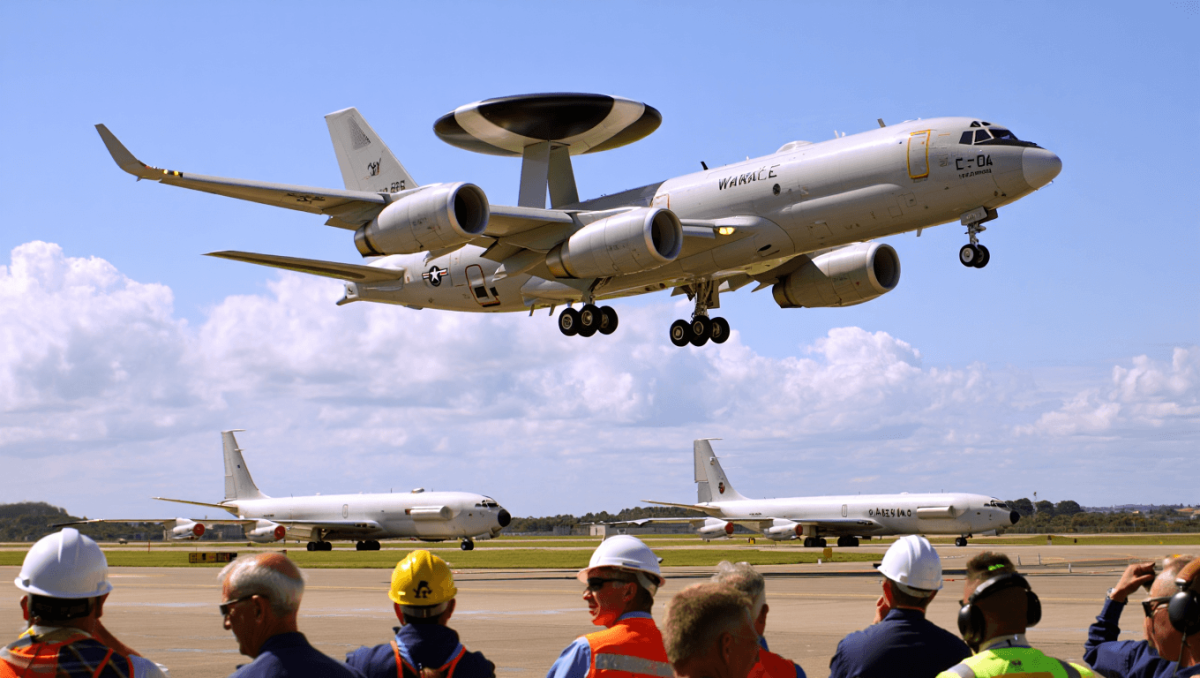
Tinker has hosted the Airborne Warning and Control System mission for decades, anchoring a network of maintenance, logistics and operational skills around the base. The newer system under review, the E-7 Wedgetail, brings upgraded radar, data links and command features intended to speed decision-making in complex environments.
Christa Pike released from hospital after failed execution, attorneys say
Dolly Parton tribute drives Madonna Inn crowds: steakhouse unveils limited menu
The shift is not simply about replacing airplanes. It represents a change in how aerial surveillance and battle management are executed—moving toward faster information sharing, improved interoperability with allies and a platform designed for modern electronic environments.
Economic ripple effects across Oklahoma
For the state, the program carries more than strategic value: it underpins local employment and a broad industrial ecosystem. Tinker’s sustainment operations and associated contractors are embedded in Oklahoma’s broader aerospace cluster, which supports engineers, technicians, supply-chain firms and logistics specialists.
- Jobs: Retaining the mission at Tinker would protect existing positions tied to aircraft maintenance, training and operations.
- Supply chain: Local suppliers and regional vendors stand to benefit from long-term sustainment requirements.
- Industry presence: A continuing role for Boeing and other primes would sustain high-skill work in the state.
- Economic scale: The aerospace sector’s stability affects state revenues and workforce development programs.
Industry analysts say the steady flow of sustainment work and upgrades creates predictable demand for skilled labor, which in turn supports training programs at community colleges and private shops across the state.
Where Congress stands
Members of Oklahoma’s congressional delegation have pressed for the base to remain central to the next-generation mission. Recent legislative steps reflect bipartisan attention to the transition, but formal authorization and funding must appear in the next defense bill to move planning into execution.
That timing matters: procurement schedules, maintenance contracts and workforce planning all hinge on congressional language and budget lines. Delays could fragment supplier commitments or force relocation of specialized teams.
Operational and strategic consequences
Beyond jobs and local industry, the decision affects how the Air Force will command air operations in the years ahead. The new platform’s improved sensors and real-time coordination tools are designed to reduce response times and improve situational awareness for deployed forces.
For service members and allies, upgraded capabilities can mean safer, more coordinated missions. For communities near Tinker, it could mean decades of work tied to national defense.
Key considerations for policymakers include procurement timelines, sustainment footprints and workforce transition plans. Those elements will determine whether the state benefits from continuity or faces disruptions.
What comes next
The immediate focus is the National Defense Authorization Act process: hearings, language in the bill and appropriations that will either lock in the transition or leave it tentative. Local and federal advocates continue to press for explicit commitments that align base capability with the newer platform’s requirements.
Keeping the mission at Tinker Air Force Base would reinforce the base’s role as a national sustainment hub; letting it move elsewhere could redistribute economic and technical capacity. For Oklahoma’s aerospace workforce, the outcome will shape career pathways and investment for years to come.