Show summary Hide summary
The coastal city of Santa Maria has become the epicenter of federal immigration arrests on California’s Central Coast, and the fallout is reshaping everyday life for residents and advocates alike. As local groups track rising detentions and mobilize rapid-response networks, families, farmworkers and volunteers face new uncertainties — and growing risks for those who speak out.
An activist on patrol
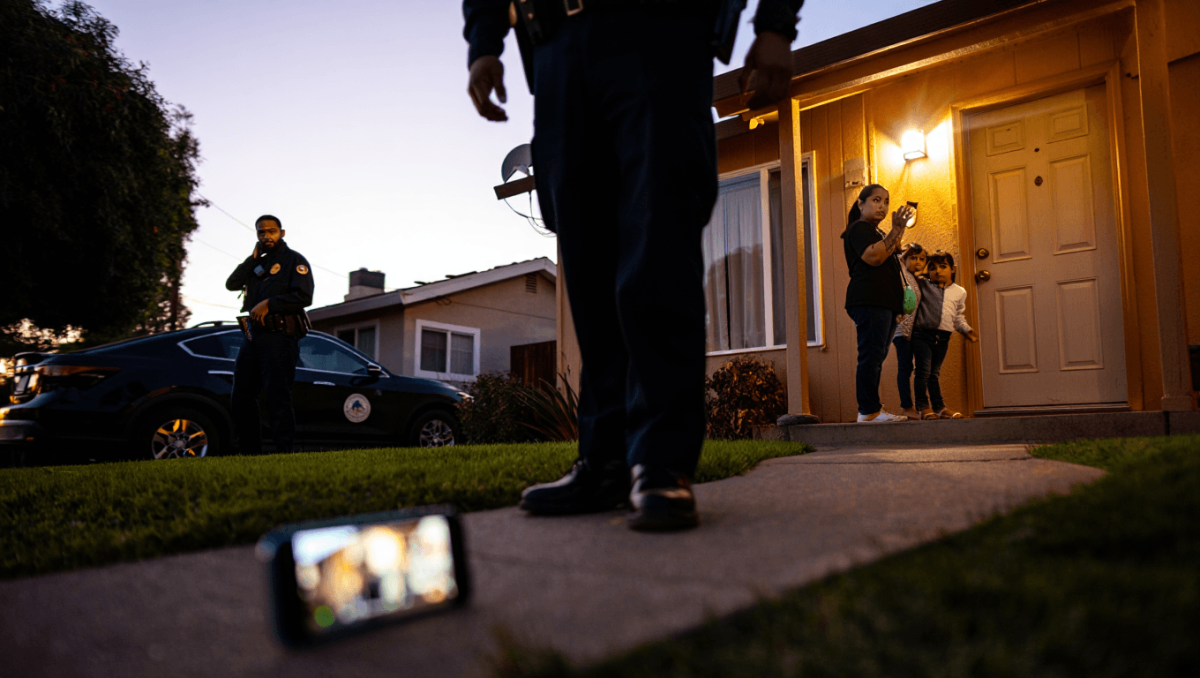
Before dawn, Cesar Vasquez drives the same streets where he grew up, scanning for unmarked vehicles and logging license plates. At 18, he coordinates a network of hundreds of volunteers for 805 UndocuFund, the community organization that documents federal enforcement and provides emergency aid when arrests happen.
Christa Pike released from hospital after failed execution, attorneys say
Dolly Parton tribute drives Madonna Inn crowds: steakhouse unveils limited menu
Vasquez describes his role as a constant balancing act: keeping people informed, offering immediate financial help to affected households, and preserving the safety of families who could lose their primary earners overnight. He has also become a visible public voice against enforcement operations, a position that has drawn online threats and a direct warning from someone who approached him at a local protest.
Why it matters now
Local data collected by 805 UndocuFund show that since January 2025, federal immigration actions have led to 466 detentions in Santa Maria through April 1 — the highest total across San Luis Obispo, Santa Barbara and Ventura counties. That concentrated activity has concrete consequences: reduced labor in the fields, sudden income loss for households, and trauma that echoes through neighborhoods.
Advocates say early-morning operations — timed when agricultural workers leave for the fields — have been particularly disruptive. Volunteers monitor those hours closely, hoping to respond quickly when families are affected.
On the ground: routines and reactions
Vasquez keeps a running list of vehicle descriptions and plate numbers, and stays in near-constant contact with fellow volunteers across the three-county region. He checks on homes where friends and neighbors have been detained and coordinates emergency funds for families that lose a breadwinner. What were once familiar streets have become sites of repeated loss, he says; every route carries memories of an arrest or a family in crisis.
He credits an anxious childhood and early civic involvement with preparing him for this role. As a teenager he helped his mother navigate government forms and began organizing around issues including school funding, fieldworker pay and public safety — experience that later shaped his focus on immigration response work.
- Detentions in Santa Maria: 466 recorded since Jan 2025 (data through Apr 1)
- One-day surge: 34 people taken into custody in Santa Maria during post-Christmas raids last year
- Volunteer network: roughly 900 rapid-response volunteers coordinated by Vasquez
- Typical target window: early morning hours when agricultural workers head to fields
Campus ties and community outreach
Local student organizations have begun partnering with 805 UndocuFund, hosting trainings and fundraising events to support rapid-response work. At Cal Poly, groups such as Students for Justice in Palestine have helped connect students to volunteer shifts and on-campus spaces used for community meetings.
Those partnerships reflect a wider effort to bridge campus resources with the region’s largely farmworker communities, advocates say. For Vasquez, the decision to defer a college acceptance in San Diego and remain in Santa Maria after high school was shaped by a commitment to serve locally — a choice that has pushed him into leadership at a young age.
Risks for visible organizers
Visibility carries costs. In addition to anonymous threats on social media, Vasquez reports an in-person intimidation attempt at a recent demonstration. Organizers who coordinate rapid response work often face hostility while trying to keep families informed and safe.
Despite the threats, Vasquez frames his work as a long-term effort to support his community rather than a momentary protest. He sees leadership as rooted in following the needs and decisions of neighbors and relatives affected by enforcement actions.
| Topic | Local impact |
|---|---|
| Workforce disruption | Loss of employees during harvest seasons can reduce household income and strain local agriculture operations |
| Community trauma | Frequent detentions have turned routine routes and neighborhoods into reminders of arrests |
| Volunteer strain | Coordinators manage logistics, emotional support and safety concerns for hundreds of volunteers |
Advocates emphasize that the human consequences extend beyond those detained. Children, elderly relatives and employers feel ripple effects when a parent or worker is removed. Local nonprofits say the demand for legal aid, emergency cash assistance and counseling services has grown alongside enforcement activity.
For residents, the stakes are immediate: disrupted incomes, uncertain futures for families, and an erosion of the everyday security once taken for granted. For volunteers like Vasquez, the work is a sustained commitment — one that requires emotional resilience as much as organizational skill.
Note: The individual taken into custody in the incident documented by volunteers had their image blurred in coverage to protect privacy. A member of one student organization mentioned in this article has an affiliation with the publisher but was not involved in reporting.