Show summary Hide summary
A surge of charged particles from the sun has prompted NOAA to warn of a strong geomagnetic storm tonight, lighting up northern skies across much of North America. While dramatic auroras are most likely well to the north, the event matters for travelers, photographers and anyone tracking space-weather impacts.
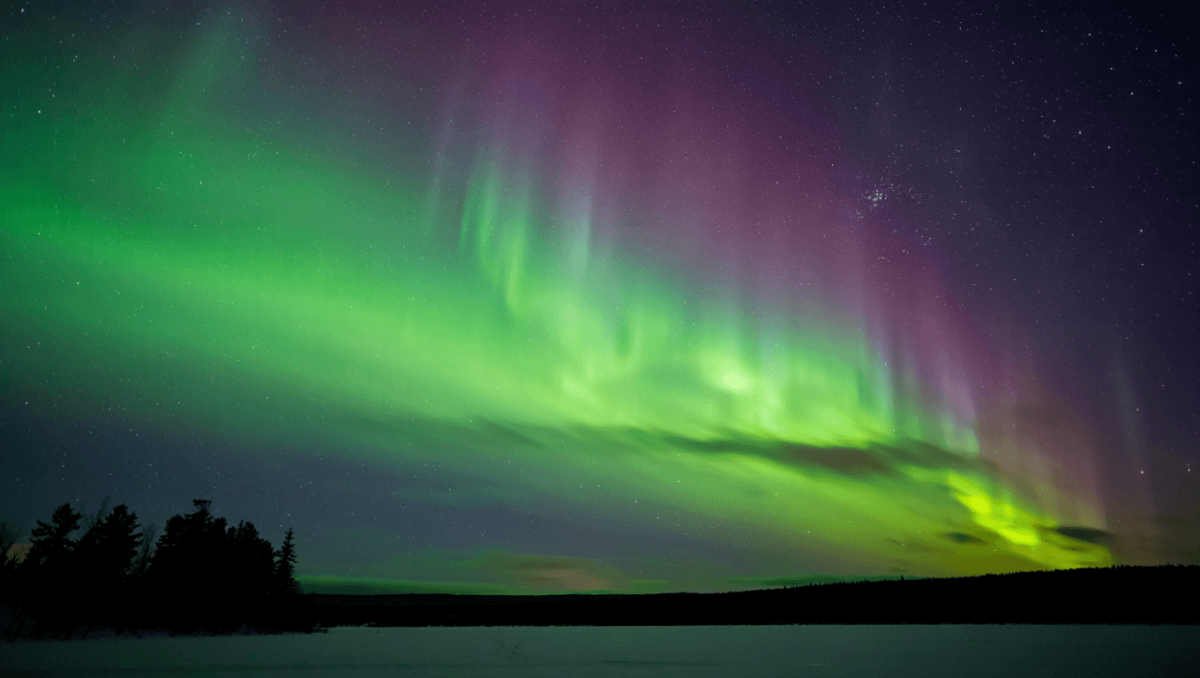
The National Oceanic and Atmospheric Administration has issued a G3 geomagnetic storm watch after three coronal mass ejections left the Sun earlier this week and merged on the way to Earth. The combined stream of energized particles is expected to produce bright auroral displays over Canada and the northern United States during the evening hours on June 4.
What forecasters say and why it matters
Christa Pike released from hospital after failed execution, attorneys say
Dolly Parton tribute drives Madonna Inn crowds: steakhouse unveils limited menu
The federal Space Weather Prediction Center projects a strong probability of visible aurora well north of Oklahoma. In practical terms, the center’s models push the core of the display into Canadian latitudes and the northern tier of U.S. states.
G3-level storms can also have modest side effects: high-frequency radio communications and some satellite services may be disrupted, and operators of sensitive electrical equipment monitor for transient fluctuations. For most residents the main consequence will be an opportunity to see an unusual night-sky phenomenon—if conditions line up.
Visibility snapshot
| Region | Chance of seeing aurora tonight | Best window to watch |
|---|---|---|
| Canada & northern U.S. (e.g., Minnesota, North Dakota) | High | Evening through after midnight |
| South Dakota / Nebraska | Possible—especially toward the north of those states | Late evening, after local sunset |
| Oklahoma | Very low, but not zero—best near the Kansas border | Late night; look low on the northern horizon |
Even where the aurora is visible, viewers should expect the glow to be far to the north and, if seen from mid-latitudes, often faint and reddish rather than the vivid greens associated with stronger, closer displays.
Practical steps to increase your odds
- Move north if you can: Traveling closer to the Kansas border or beyond improves the chance significantly.
- Escape light pollution: Choose remote roads, state parks or agricultural areas with dark skies.
- Watch the northern horizon: From Oklahoma the display, if visible, will likely hug the horizon rather than appear overhead.
- Check cloud cover and real-time alerts: Use local weather forecasts and the Space Weather Prediction Center’s updates to time your outing.
Timing matters. Auroral activity often intensifies after local midnight, but strong storms can produce visible effects earlier in the evening. Patches of clouds or haze along the northern horizon will erase any chance of spotting a faint glow, so pick a clear night and an unobstructed view north.
Tips for photographing the glow with a phone
- Enable Night Mode or a low-light capture app; some phones offer a manual exposure slider.
- Stabilize your device—use a tripod or rest it on a rock or car roof to avoid blur.
- Select a long exposure where available; avoid the phone’s flash.
- Shoot in RAW if your phone supports it to preserve detail for post-processing.
For those tracking the event, follow official notices from NOAA and the Space Weather Prediction Center for real-time KP index values and alerts. If you plan to travel for a better view, monitor local weather and road conditions—especially after sunset.
Space weather can be unpredictable: a storm that looks promising on models can fade, or conversely, brief bursts of activity can produce surprising displays. Still, this weekend’s G3 watch is a reminder that solar storms can push auroras farther south than usual—and occasionally reward watchers with rare sights.