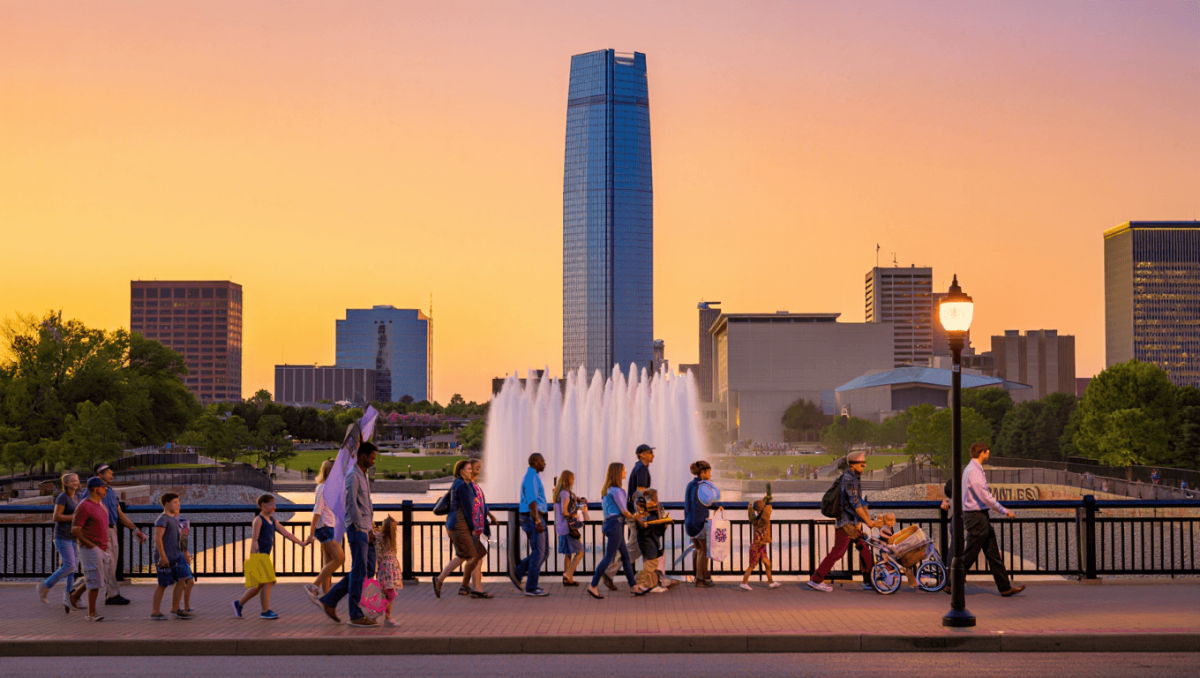
Oklahoma City has climbed to the No. 2 spot among large U.S. cities in U.S. News & World Report’s 2026–2027 rankings, a jump that matters for anyone weighing where to live, work or invest this year. The placement reflects shifting priorities for many Americans — notably a renewed emphasis on cost and commute — as housing costs continue to squeeze households nationwide.
U.S. News evaluated metropolitan areas across several measures, including affordability, quality of life, commute times, job-market strength and overall desirability. Oklahoma City finished ahead of larger, better-known metros such as Fort Worth, Raleigh and Austin, signaling that affordability and livability are reshaping the map of attractive urban destinations.
The ranking captures more than one-off factors. In recent years the city has seen steady in-migration, new commercial investment and the ability to host larger events — all while keeping everyday costs comparatively low. Those elements combined to lift Oklahoma City in national visibility and in practical terms for residents.
Christa Pike released from hospital after failed execution, attorneys say
Dolly Parton tribute drives Madonna Inn crowds: steakhouse unveils limited menu
Why this matters now: rising housing prices and cost-of-living pressures across coastal and Sun Belt markets are prompting both families and employers to reconsider location choices. A high placement in a national ranking tends to accelerate attention from homebuyers, companies recruiting talent and event planners — which can, in turn, influence local housing demand and infrastructure planning.
Locally, the effects are already visible in several areas. Some neighborhoods are attracting new residential development; downtown amenities and entertainment options have expanded; and civic leaders are positioning the city to capture more conventions and corporate relocations.
| Factor | Assessment for Oklahoma City |
|---|---|
| Affordability | Comparatively strong — housing and living costs remain below many peer metros |
| Commute times | Manageable — shorter average drives than larger urban cores |
| Job market | Growing — steady job additions and employer interest |
| Quality of life | Improving — expanded recreation, cultural and entertainment offerings |
| Desirability | Rising — more national attention and events |
For residents and prospective movers, that mix means more options but also the possibility of faster price pressure in popular neighborhoods. Employers may find an easier time recruiting workers who prioritize lower costs and shorter commutes. City officials will face renewed pressure to upgrade transportation, housing supply and amenities to keep pace with demand.
- Homebuyers: expect more competition in well-located neighborhoods and a still-favorable overall cost profile compared with many coastal cities.
- Workers: expanding job opportunities in several sectors, with a continued premium on shorter commutes.
- Policymakers: pressure to balance growth with infrastructure investments and affordable housing strategies.
- Investors and event planners: growing appeal for venues, retail and hospitality projects as the city’s profile rises.
This recognition adds to a string of recent national acknowledgments for Oklahoma City, underscoring a broader trend: when affordability and livability align, mid-sized metros can climb quickly in public perception and practical appeal. U.S. News & World Report’s full 2026–2027 city rankings provide the complete list and methodology for readers who want to compare metrics city by city.