Show summary Hide summary
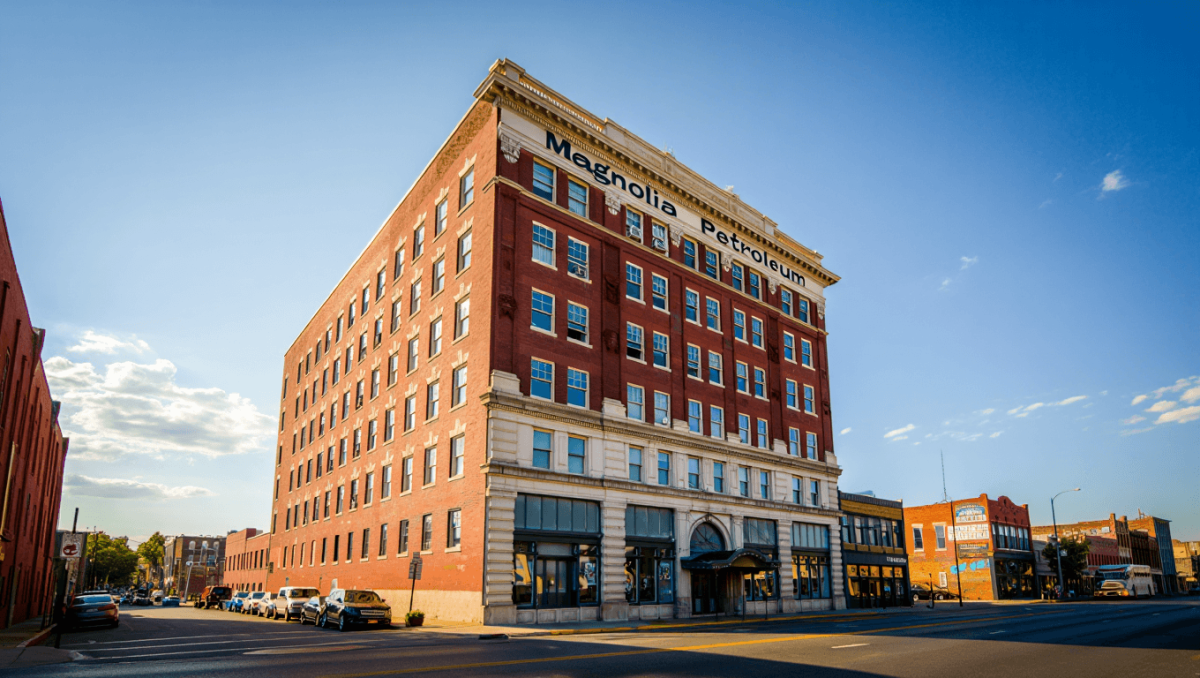
The historic five-story building at 722 N Broadway has a new owner and a new potential purpose: a downtown developer is exploring turning the 1919 Magnolia Petroleum building into the first hotel in Automobile Alley. If the plan proceeds, it would mark a notable step in the neighborhood’s multi‑year comeback and link directly to an adjacent mixed‑use project opening later this year.
Pivot Project, a development firm known for rehabilitating older properties, purchased the building April 30 for $4.575 million. The team says it is studying a boutique-hotel conversion but will not finalize designs until later in 2026.
Christa Pike released from hospital after failed execution, attorneys say
Dolly Parton tribute drives Madonna Inn crowds: steakhouse unveils limited menu
What the site is and why it matters now
The five-story structure was originally the regional office for Magnolia Petroleum and included a ground‑level gas station; more recently that street-level bay served as a bank drive-through. Its location sits beside Pivot Project’s ongoing $30.1 million redevelopment of an early-1900s Chevrolet dealership — a project that occupies the same block and is meant to add housing and retail energy to the corridor.
Beyond the building itself, timing is a factor. The neighboring Medley Marketplace — a mixed-use complex with apartments, food and beverage space and recreational courts — is roughly 60% complete and aims for a November opening. Developers say the two properties could complement each other: a hotel would supply overnight guests and event traffic while Medley delivers neighborhood amenities.
Quick facts
- Address: 722 N Broadway (Automobile Alley)
- Year built: 1919
- Sale price: $4.575 million (sold April 30, 2026)
- Buyer/Prospective developer: Pivot Project
- Nearby investment: $30.1 million redevelopment of an early 1900s Chevrolet dealership
- Medley Marketplace status: ~60% complete; planned opening in November
Jonathan Dodson, Pivot Project’s CEO, said the firm was attracted both to the building’s character and its adjacency to the Medley development — factors that could make a hotel viable. The company’s leaders expect to settle on a definitive plan later this year after further study.
Longtime owner Chris Salyer bought the Magnolia and several nearby properties during downtown’s slump in the 1980s, at a time many considered the city center past revival. He remained an active steward of the block for decades and now has sold the building while continuing to live in the area in a converted loft.
Salyer has often pointed to the slow, uneven nature of downtown recovery: what looked like decay to some became an opportunity to preserve and repurpose historic assets. Four decades on, Automobile Alley contains a mix of residences, offices, restaurants and shops — a far different scene from the low-activity nights he recalled years ago.
Possible impacts
Converting the Magnolia into a boutique hotel would have discrete, tangible effects on the neighborhood:
- Increase in overnight visitation and demand for local restaurants and services.
- Stronger synergies with Medley Marketplace amenities, from dining to recreational programming.
- Additional incentive to restore and reuse more historic commercial buildings in the corridor.
The plan remains at an exploratory stage. City approvals, design work and market studies are likely next steps before a formal redevelopment proposal is filed. Still, the transaction signals renewed developer confidence in a corridor that has steadily evolved from decline to one of downtown Oklahoma City’s most active commercial strips.