Show summary Hide summary
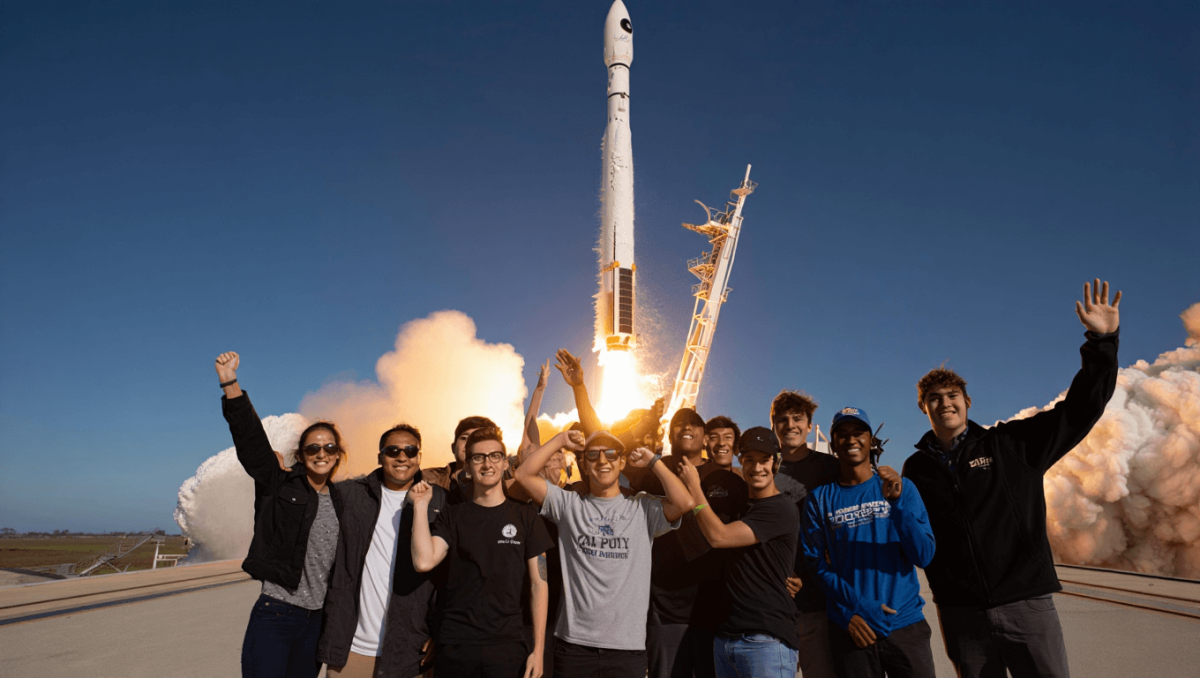
Students at Cal Poly’s hands-on aerospace lab watched months of design and late-night fabrication reach orbit when their latest CubeSat rode a launch vehicle out of Vandenberg late last month. The mission not only puts a small satellite into space — it also underlines how undergraduate labs are training the next generation of engineers in real flight operations.
Student-built hardware now in orbit
Cal Poly’s PolySat Lab — a multidisciplinary, student-run workshop that builds compact research satellites — confirmed the CubeSat reached orbit after a launch from Vandenberg Space Force Base at about 4 a.m. on March 30. Ground teams have established two-way contact and continue to track and receive data from the spacecraft.
Christa Pike released from hospital after failed execution, attorneys say
Dolly Parton tribute drives Madonna Inn crowds: steakhouse unveils limited menu
The satellite, called SAL-E, is the university’s 13th CubeSat mission. Students in the lab handled everything from structural design to software and communications, then watched their work transition from benches and test stands to an operational spacecraft circling Earth.
How the team pulled it together
Participation stretches across majors and year groups. Mechanical and aerospace students shared responsibilities in manufacturing, structural analysis and systems integration. One student on the Structure and Mechanisms team described long hours over the summer and academic year, saying the first successful contact from orbit felt like a payoff for the entire group’s effort.
Operations co-leads managed day-to-day commanding, telemetry reception and orbital tracking. That hands-on role means students aren’t just building hardware — they are learning routine mission procedures and troubleshooting under real mission timelines.
- Mission name: SAL-E
- Institution: PolySat Lab, Cal Poly (student-run)
- Launch site: Vandenberg Space Force Base
- Launch time: ~4 a.m., March 30
- Mission number: Cal Poly’s 13th CubeSat
- Team size: Core manufacturing and structure crew of about 17 students, plus software and operations contributors
- Current status: In orbit and under active ground-station monitoring
What this means beyond the campus
Programs like PolySat give students experience that goes beyond classroom theory: they learn systems engineering, documentation and the operational rhythms of a live mission. For employers across aerospace and defense, graduates who have run a cubesat mission are immediately valuable because they have faced real hardware failures, integration challenges and communications windows.
Faculty, alumni and families gathered at dawn for final pre-launch checks, a reminder that these missions are both technical projects and community efforts. Students say the work doesn’t end with lift-off — monitoring, analysis and follow-on experiments keep teams busy for months after launch.
For universities and regional tech ecosystems, those ongoing activities help build a pipeline of skilled engineers familiar with flight hardware and mission operations — expertise that feeds into commercial space firms and government programs alike.
Looking ahead
The PolySat Lab’s cadence of satellite development means SAL-E is likely one step in a sequence of increasingly complex student missions. The practical lessons learned on this launch — from ground-station operations to last-minute engineering fixes — will inform future designs and training for incoming students.
While small in size, CubeSats continue to provide outsized value as educational platforms. For the students who watched their work clear the horizon on March 30, the mission is both a culmination and a starting point for more advanced projects.