Show summary Hide summary
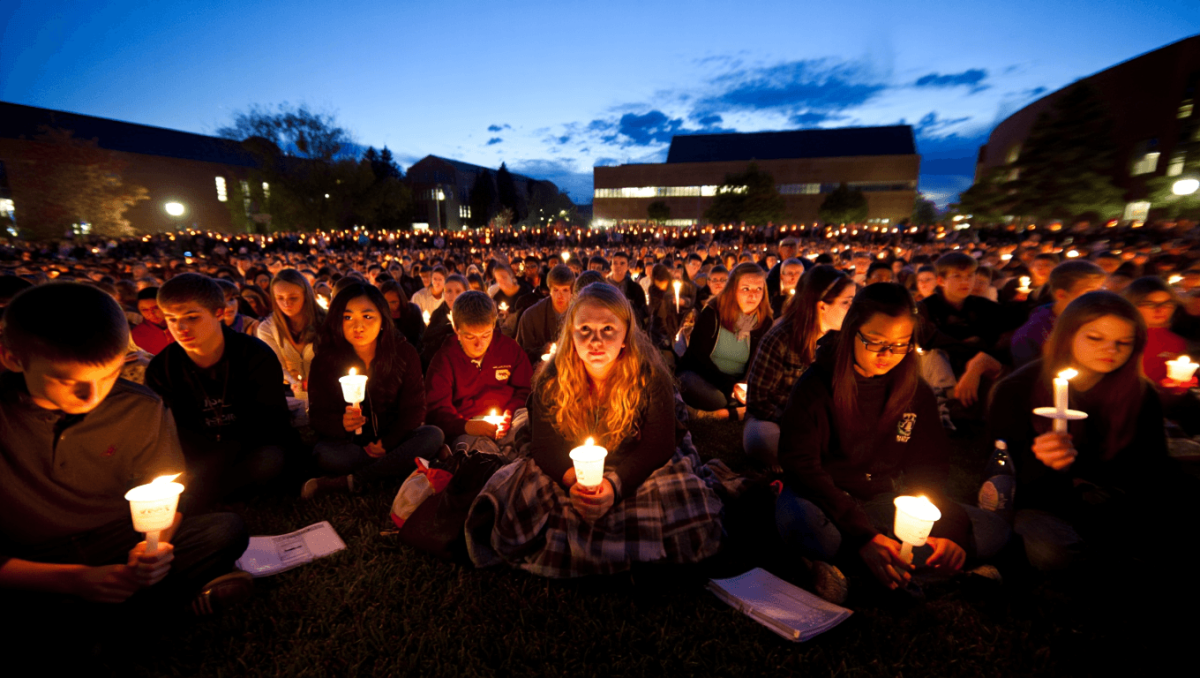
On Friday evening, members of the campus community gathered on Dexter lawn to mark the 111th anniversary of the mass killings of Armenians in 1915–1916. The event, organized by students, combined a symbolic memorial, personal stories and a municipal proclamation to underline why remembrance still matters on campus today.
A scaled replica of the Tsitsernakaberd memorial and a historical map of the region framed the ceremony, offering a visual anchor for speakers and attendees. Students and faculty stood together around the installation, laying emphasis on both mourning and education.
Local official issues proclamation
Cal Poly professor and City Councilmember Mike Boswell opened the gathering by formally designating April 24 as “Armenian Remembrance Day” for the city. Boswell — who chairs the university’s City and Regional Planning Department — said he attended in dual roles: as an elected official signaling the city’s commitment to inclusion, and as a faculty member showing support for students.
Christa Pike released from hospital after failed execution, attorneys say
Dolly Parton tribute drives Madonna Inn crowds: steakhouse unveils limited menu
He described the memorial as an important expression of solidarity and stressed the value of listening to students from diverse backgrounds.
Students center memory and community
Marine Hunanyan, a junior studying business administration and one of the Armenian Student Association’s co-presidents, said the event was intended to make history tangible rather than relegated to textbooks. Historical estimates put the death toll around 1.5 million, and Hunanyan said public remembrance helps keep that record alive.
Her fellow co-president, English junior Thomas Sargsyan, highlighted the group’s outreach success. He noted the turnout of students who are not Armenian as a sign the organization is expanding awareness beyond its core community.
- When: Friday evening, marking the 111th anniversary
- Where: Dexter lawn, Cal Poly
- What: Replica of the Tsitsernakaberd memorial, map of historic Armenia, testimonies and a city proclamation
- Why it matters: Education about the Armenian Genocide, campus inclusion, and community solidarity
Several attendees took the mic to describe what the Armenian Student Association means to them. For many, especially first- and second-generation students, the club provided a rare space to explore language, food, faith and identity among peers.
Electrical engineering sophomore Diego Calusdian pointed out that non‑Armenian participation was especially meaningful: it signals broader community support and shows the group’s reach beyond a single ethnic circle.
What the observance signals now
Commemorations like this one serve immediate and longer-term purposes. In the short term, they give survivors’ descendants and allies a public moment to honor victims and to teach peers. Over time, they reinforce historical memory in a generation increasingly shaped by digital information — and misinformation.
On a practical level, the event also highlights how student organizations can influence campus culture: by educating classmates, engaging with local government and creating visible rituals of remembrance, they help sustain conversations about human rights, history and belonging.
As attendees dispersed, organizers said they hoped the ceremony would be one of many steps toward keeping historical memory active on campus and in the community. For this group of students, the annual observance is both a tribute and an ongoing lesson: that recognition, not erasure, should shape how history lives in public life.