Show summary Hide summary
Oklahoma City has been quietly redefining itself: new civic projects, museum exhibitions and an expanding restaurant scene are giving the state capital fresh momentum as a short-break destination. For travelers deciding where to spend a long weekend, or for residents seeking a reopened cultural calendar, the city now offers a compact mix of memorials, museums, parks and neighborhoods worth planning around.
Why this matters today
Recent investments in downtown infrastructure and public spaces have changed how people experience the city on foot. That matters because it makes Oklahoma City easier to explore in a single visit — and because many attractions that were closed or limited during past years are now operating full programs and rotating shows.
Christa Pike released from hospital after failed execution, attorneys say
Dolly Parton tribute drives Madonna Inn crowds: steakhouse unveils limited menu
The result: more live events at the Paycom Center, expanded programming at museums, and a faster-growing food scene across several walkable districts.
| Attraction | What it is | Best for | Typical visit | Quick tip |
|---|---|---|---|---|
| Oklahoma City National Memorial | Museum and outdoor memorial honoring the 1995 bombing | History and reflection | 1–2 hours | Morning light is quieter; guided tours add context |
| National Cowboy & Western Heritage Museum | Extensive collection of Western art and artifacts | Cultural history and families | 2–3 hours | Allow extra time for special exhibitions |
| Bricktown | Canal-side entertainment district with restaurants and bars | Evening dining and boat rides | 1–3 hours | Take a water taxi for a different view |
| Oklahoma City Museum of Art | Permanent collection and traveling shows; notable American glass collection | Art lovers | 1–2 hours | Check for rotating exhibitions before you go |
| Scissortail Park & Myriad Botanical Gardens | Large urban park and conservatory | Walks, picnics, family time | 30–90 minutes | Weekends host frequent pop-up events |
| Paseo Arts District | Historic arts neighborhood with galleries and boutiques | Art browsing and brunch | 1–2 hours | First Friday gallery walks are a local ritual |
| Science Museum Oklahoma | Hands-on science exhibits and planetarium | Families with children | 2–4 hours | Plan for the planetarium schedule |
Neighborhoods, food and nightlife
Each district has a distinct personality: Bricktown for canals and sports nights, Automobile Alley and Midtown for chef-driven restaurants, and Paseo for galleries and intimate bars. Local cuisine ranges from barbecue and steakhouse traditions to inventive small plates and craft cocktails.
Visit an early-morning farmers market to see local producers, then shift to a long lunch in Midtown or an evening tasting menu downtown. Late-night options are concentrated near the entertainment corridor.
Outdoor activities and family options
- Walk or bike the riverfront trails that connect parks and memorials.
- Rent a paddleboard or take a short canal cruise in Bricktown.
- Bring kids to the conservatory at Myriad Botanical Gardens or the hands-on exhibits at Science Museum Oklahoma.
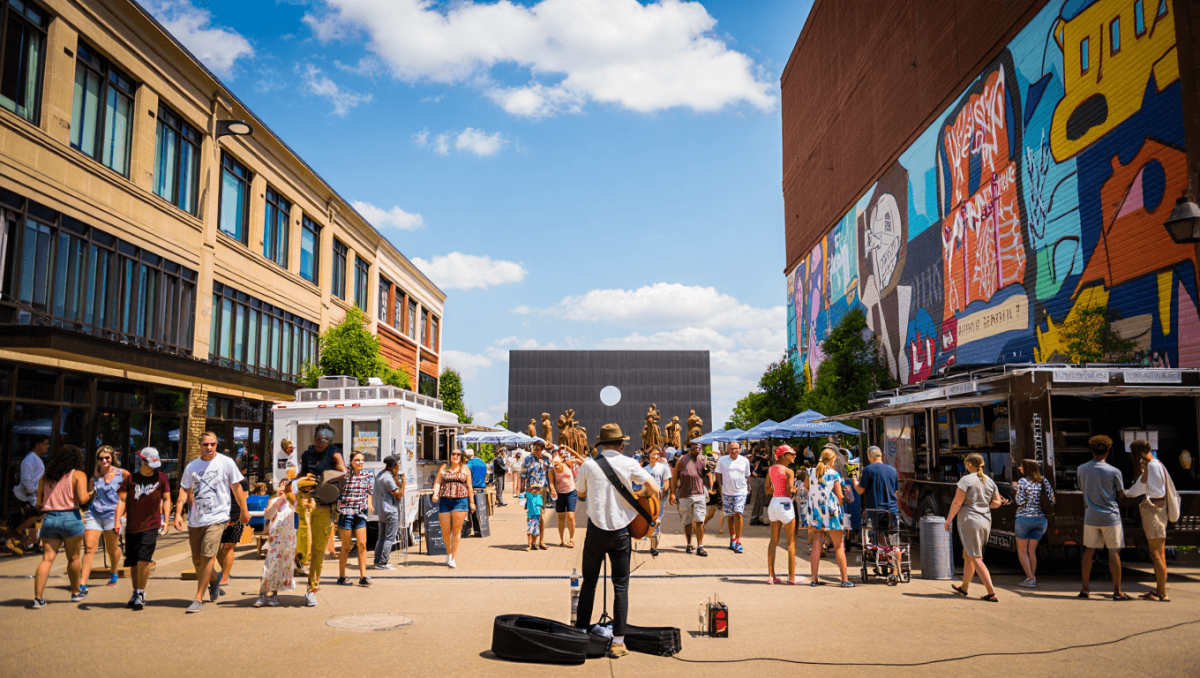
- Attend a seasonal festival or an outdoor concert at Scissortail Park — many are free or low-cost.
Three practical sample itineraries
These compact plans are designed to fit different rhythms without rushing.
- 24 hours: Morning at the National Memorial, lunch in Bricktown, afternoon at the Museum of Art, evening performance or game at the Paycom Center.
- 48 hours: Add the National Cowboy & Western Heritage Museum, stroll Paseo on Saturday, and relax in Scissortail Park before heading out.
- Family weekend: Science Museum Oklahoma, Myriad Botanical Gardens, plus a canal boat ride and a casual BBQ dinner.
Timing matters. Summers can be hot and humid, so aim for spring or fall for comfortable walking. Weekends bring more events and longer hours at galleries and restaurants, but midweek visits can be quieter and easier on parking and reservations.
Getting around and accessibility
The city is car-friendly, but recent downtown projects have improved walkability and added transit options. The Oklahoma City Streetcar connects core neighborhoods, and many attractions lie within a short ride or walk from each other. Most museums and major venues offer accessible entry and services; check specific sites for detailed accommodations.
Whether you come for a game, a gallery opening or a reflective visit to the memorial, Oklahoma City now rewards both short stays and more leisurely exploration. The mix of revived public spaces and active cultural programming makes it a practical choice for travelers looking for an urban experience off the usual coastal routes.