Show summary Hide summary
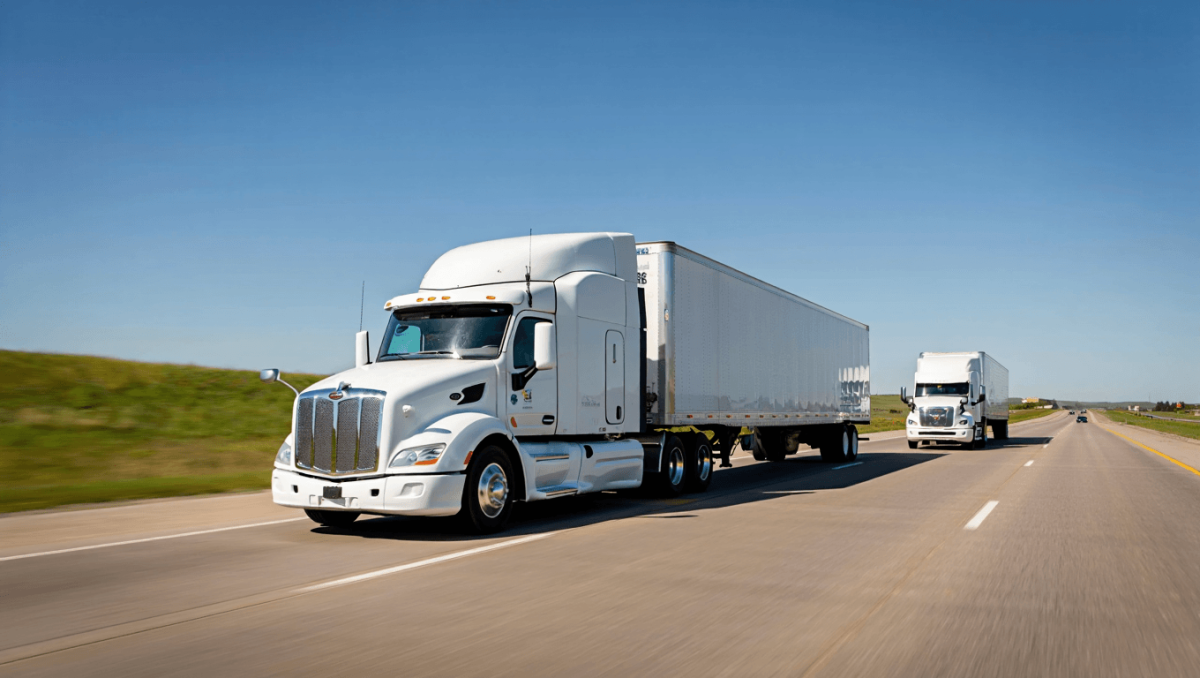
A new autonomous freight corridor now links Dallas and Oklahoma City, bringing driver-supervised self-driving semis deeper into Oklahoma traffic. The development matters for shippers, roadside safety and state regulators because it expands a still-limited pilot program at a moment when other states are moving faster on fully driverless trucking.
Companies behind the service say the line will operate multiple days each week, but Oklahoma law still requires a person to occupy the cab. That legal boundary — and the concentration of activity on one interstate — shapes how quickly autonomous freight will scale across the state.
How the new route changes the map
Christa Pike released from hospital after failed execution, attorneys say
Dolly Parton tribute drives Madonna Inn crowds: steakhouse unveils limited menu
Autonomy developer Aurora Innovation, working with Volvo Autonomous Solutions, announced a roughly 200-mile freight corridor between Dallas and Oklahoma City that will run frequently during the week. Operators say the vehicles will navigate the route using onboard autonomy systems while a human remains in the driver’s seat to supervise.
This is the second commercial autonomous trucking operation reaching Oklahoma. In late 2023, logistics partners Kodiak AI and Maersk launched a separate lane connecting Houston with Oklahoma City, creating a cluster of autonomous freight traffic along the south-central axis of the state.
Driver presence: what Oklahoma law permits now
Under current state statutes, fully unattended, driverless semis are not permitted on Oklahoma roads. The Oklahoma Highway Patrol confirms trucks may run in autonomous mode, but a human must be inside the cab at all times.
OHP Captain Brian Orr described what he’s observed from these operations: the systems handle steering, braking and throttle during stretches of highway driving while the person in the seat typically monitors the system rather than actively steering. Orr also told reporters he finds the combination of sensors and automated response times reassuring — a personal assessment rather than a formal legal judgment.
Where autonomous trucks currently run in Oklahoma
For now, most autonomous freight movements in the state are concentrated on I-35, running between Oklahoma City and the Texas border. There are no known commercial autonomous routes operating on Oklahoma’s segments of I-40 or I-44.
Industry sources and state officials point to two main constraints on wider deployment: the time and effort required to electronically map and validate each highway corridor, and the absence of statutory permission to operate without a human occupant. Until lawmakers change state rules, fleets can expand only within the current framework.
- Operational frequency: Aurora and Volvo plan to run the Dallas–OKC corridor multiple days per week, increasing regularity of autonomous freight traffic.
- Regulatory limit: Oklahoma requires a person in the cab; full remote or unattended operation is not allowed as of June 2026.
- Geographic focus: Activity remains clustered on the I-35 corridor; broader statewide routes will need route mapping and legal changes.
Why this matters now: autonomous freight promises lower operating costs and round-the-clock capacity for shippers, but it also raises immediate questions about enforcement, emergency response and workforce impacts for truck drivers. States are diverging — Texas permits driverless operations for certain carriers, while Oklahoma maintains a hands-on requirement — creating a patchwork regulatory environment for interstate freight.
Stakeholders — from highway patrol officers to logistics managers and state legislators — will be watching how these pilot corridors perform on safety metrics and reliability. Data from these routes could shape whether Oklahoma lawmakers move to allow unattended freight operations or continue to require in-cab supervision.
What to watch next
Expect attention on three fronts over the coming months: operational reports from Aurora and Volvo about uptime and incident rates; any legislative proposals in Oklahoma that would alter the in-cab requirement; and broader industry moves to expand mapped corridors beyond the I-35 pocket. Each will influence how quickly autonomous trucking transitions from a limited experiment to a routine component of regional freight.