Show summary Hide summary
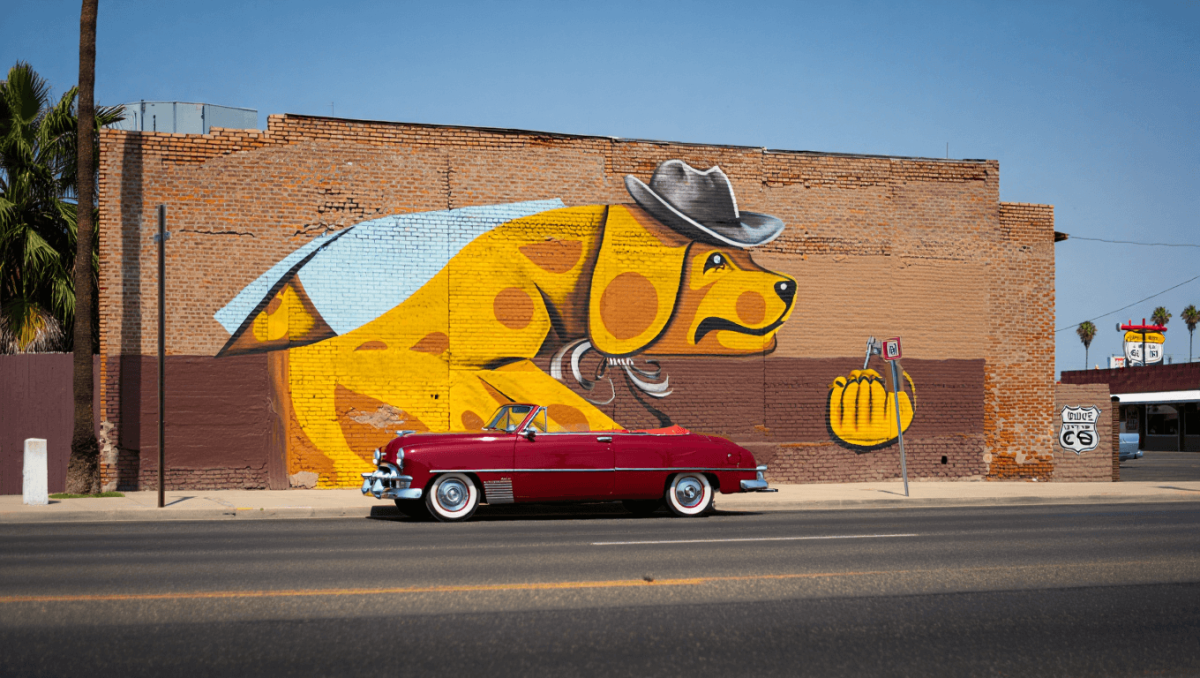
Oklahoma’s portion of Route 66 is experiencing a creative resurgence: large-scale murals and roadside sculptures are turning towns along the highway into open-air galleries that matter now for travelers and local economies alike. These artworks revive midcentury landmarks, draw foot traffic to small businesses and offer fresh reasons to plan a road trip across the state.
- Why it matters: Public art on Route 66 is helping preserve local history while boosting heritage tourism and neighborhood revitalization.
- What to look for: From a painted highway shield on a red-brick facade to an 8-foot tin robot and a rooftop milk bottle, many pieces are intentionally placed where they connect directly to community stories.
- Practical note: Several works were created or restored in the last five years, so they remain vivid and photo-ready—best seen during daylight for colors and safety.
Christa Pike released from hospital after failed execution, attorneys say
Dolly Parton tribute drives Madonna Inn crowds: steakhouse unveils limited menu
Britton District Route 66 Shield
Where: North Western Avenue and Britton Road, Oklahoma City.
Commissioned by the Britton District Group, this oversized highway shield has been painted on a historic red‑brick commercial building near vintage shops and galleries. The mural functions as both a local landmark and a photographic stop that anchors a walkable stretch of the district.
Route 66 Robot (Robots on 66)
Where: Uptown 23rd Street District, Oklahoma City.
- Artist: Mary Beth Babcock
- Installed: 2021
The attraction is a stainless-steel homage to post‑war tin toys: an 8‑foot, 900‑pound robot that greets passersby in Uptown 23rd. Its cheeky sign and scale make it a modern roadside tableau—a nod to nostalgia with a contemporary public-art sensibility.
Milk Bottle Grocery
Where: 2426 N Classen Blvd., Oklahoma City.
- Restoration: Chris Presley, 2020
- Feature: rooftop milk bottle atop a 350 sq. ft. triangular brick storefront
Originally an eye-catching advertisement for dairy products, the iconic milk bottle was designed to pull drivers’ attention to the small triangular store beneath it. A recent restoration has kept the structure’s midcentury character intact, preserving one of the city’s more photogenic examples of roadside signage as architecture.
39th Street — “Summer of 66”
Where: 39th Street District, Oklahoma City.
Artist Nick Bayer created a mural that celebrates Route 66 imagery and local landmarks, incorporating motifs such as the robot and the milk-bottle building. The piece is part of coordinated public-art activity along 39th Street aimed at reconnecting the corridor to its Route 66 identity.
Sapulpa Route 66 Mural
Where: Dewey Avenue and Main Street, Sapulpa.
- Lead artist: Scott Taylor and Colorpop Art Lab
- Size: roughly 1,300 square feet
Stretching across a prominent downtown wall, this mural condenses Sapulpa’s local history into a dozen symbolic images — from the TeePee Drive‑In to Frankoma Pottery and the Route 66 Auto Museum’s oversized fuel pump. It’s a town-focused panorama that ties community memory to the larger highway story.
Guardian of the Mother Road
Where: 600 Sabra Pass, El Reno.
Artist Rick Sinnet painted a vibrant mural featuring waving wheat, a scissortail flycatcher and redbuds, using a palette deliberately chosen to echo the Oklahoma state flag. The work merges regional flora and fauna with Route 66 symbolism, reinforcing a sense of place for locals and visitors.
Catoosa — The D.W. Correll Mural
Where: 19934 E Pine St., Catoosa.
Painted by Lance Hunter on the D.W. Correll Museum exterior, this wide-format mural honors the museum’s benefactor and gives a visual preview of the artifacts inside. At about 8 feet tall and 72 feet long, the piece acts as an introduction to the museum’s collections and to Catoosa’s Route 66 story.
“You Said We Couldn’t Do It, But We Did”
Where: 1306 E 11 St., Tulsa.
Artists Ernie Merlan and Jorge Galeano created this mural as a civic statement, commemorating a 1904 bridge over the Arkansas River and celebrating community achievement. The artwork has become a local Route 66 landmark and an emblem of pride.
Quick viewing tips
- Plan daytime visits for the best color and safety; many murals face busy streets or sit on compact downtown blocks.
- Combine stops: several murals are within short drives of restaurants, antique shops and small galleries—good for an afternoon itinerary.
- Respect private property: take photos from public sidewalks unless a site explicitly invites closer access.
These murals do more than decorate facades: they are active tools in community revitalization, historical memory and local tourism. As Route 66 continues to draw interest from new generations of travelers, Oklahoma’s painted stories are proving both resilient and relevant.