Show summary Hide summary
As of early June 2026, Oklahoma’s once-booming medical cannabis economy is contracting sharply, and the consequences are spilling into jobs, property markets and local government budgets. Growers, landlords and service firms say the twin forces of oversupply and tougher enforcement are turning a lucrative enterprise into a precarious one overnight.
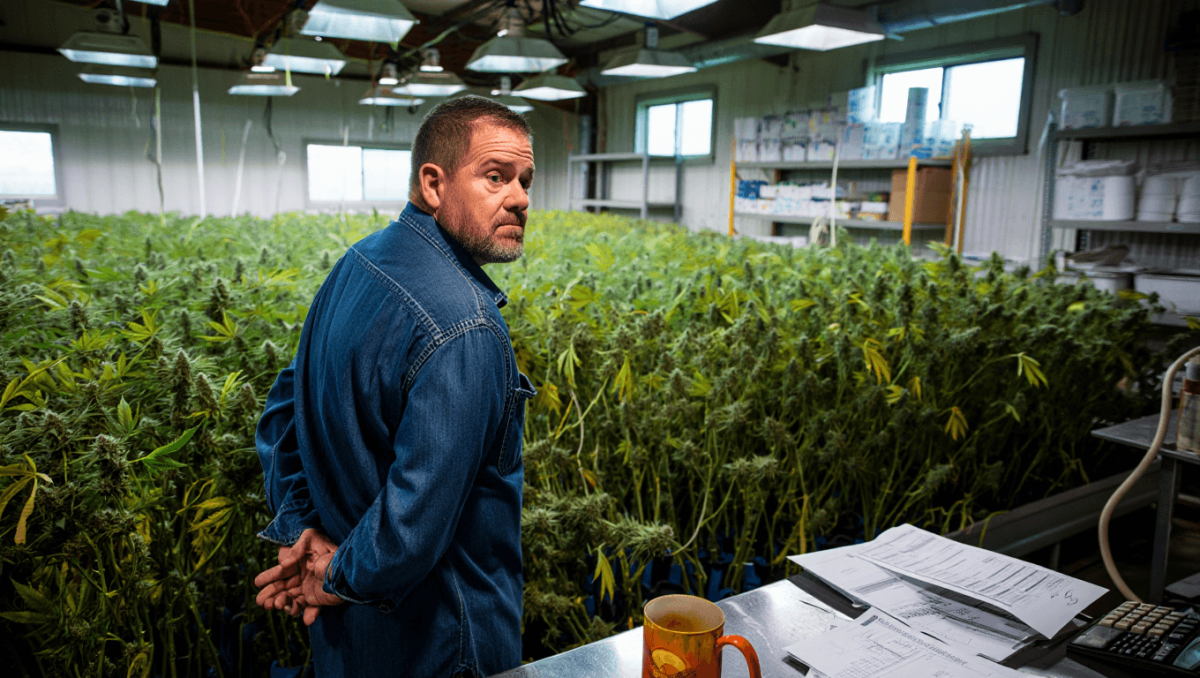
Zachary Bomar, who launched a family-run cultivation business after losing an oilfield job in 2020, describes the industry’s arc in simple terms: rapid expansion followed by an equally rapid price collapse. What began as a hopeful investment has become a fight to cover payroll and keep lights on as the market softens.
Christa Pike released from hospital after failed execution, attorneys say
Dolly Parton tribute drives Madonna Inn crowds: steakhouse unveils limited menu
The price shock
Wholesale values have plummeted from early highs of several thousand dollars per pound to levels many growers say barely cover operating costs. Bomar reports selling premium flower for roughly $1,100 per pound today, down from more than $3,000 when the market was tight.
That drop matters because it spreads beyond cultivation. Lower wholesale prices squeeze margins for dispensaries and reduce demand for specialized services — from climate-control installers to testing labs — that sprang up alongside the industry’s boom.
Quick facts at a glance
- 2025 retail sales: about $670 million
- Reported 2025 wholesale activity: roughly $1.1 billion
- Excise revenue (2025): ~$47 million
- State and local sales taxes (2025): >$60 million
- Peak licensed businesses (approx.): up to 14,000; growers near 9,400 at the market’s height
- OMMA (current): more than 2,000 licensed growers and over 1,300 dispensaries, agency officials say
Why supply outpaced demand
Economists point to Oklahoma’s permissive early rules — low fees, minimal caps and broad patient qualification — that made it easy to open a grow operation. A 2023 study commissioned by the regulator estimated licensed supply exceeded patient demand by a striking margin, underscoring how quickly production outstripped the state’s legal market.
“The entry barriers were very low,” said a state university economist who has studied the sector. That openness fueled an expansive local supply chain: construction, real estate, security, testing and compliance firms all scaled up to meet growers’ needs.
Properties and the risks of repurposing
Commercial real estate agents and appraisers say the market in many regions is now saturated with former grow sites. Some buildings are returning to generic industrial uses, but many are heavily customized — low ceilings, specialized lighting and HVAC — making conversion costly or impractical.
An appraiser who valued cannabis properties during the boom reports a flood of listings and scant buyer demand. Large rural complexes, designed solely for cultivation, can sit vacant for months or longer because local markets lack alternative industrial tenants.
Illicit diversion and market distortion
Law enforcement officials warn that excess legal production has fed a parallel black market. The economics are stark: unregulated operators avoid taxes and compliance costs and can undercut licensed businesses, sometimes funneling product across state lines.
Regulators and police describe a mixed ecosystem where some legally produced cannabis is diverted through informal channels, while other product never enters the regulated marketplace at all — a dynamic that further depresses legal wholesale prices.
The wider economic ripple
Industry representatives emphasize the sector’s reach: it is not just growers and dispensaries, but an array of auxiliary businesses and public roles. Testing labs, compliance firms, tradespeople and municipal licensing staff have all depended on cannabis-related work.
“If the legal market collapses, a lot of those supporting businesses disappear with it,” said an industry association board member, noting downstream effects on Main Street — from diners to auto shops — that rely on cannabis employees as customers.
Political pressure and regulatory uncertainty
The debate intensified this year after the governor called for ending the state’s medical cannabis program, arguing it had grown out of control. That political stance, combined with stepped-up enforcement and emerging federal guidance, has chilled investment and long-term planning in the sector.
State regulators say they are monitoring conditions. The Oklahoma Medical Marijuana Authority confirms it is studying market changes and has dedicated staff for compliance and investigations, but it has not released new estimates of the supply-demand balance. Officials describe the industry as still in flux amid pricing swings and shifting enforcement priorities.
The uncertainty itself is an economic factor: potential lenders, landlords and equipment suppliers are increasingly reluctant to extend credit or sign long leases without clearer rules.
What operators face next
For many small cultivators, decisions are immediate and personal — whether to sell, scale back, or try to survive on thin margins. Others are stripping out specialized systems to make facilities more marketable for different uses.
Policy choices looming in the state capital will determine whether the industry stabilizes, contracts further, or transitions into a larger illicit trade. Regulators say more analysis is underway; growers and ancillary businesses say they need clearer direction now.
Reporting for Oklahoma Watch.