Show summary Hide summary
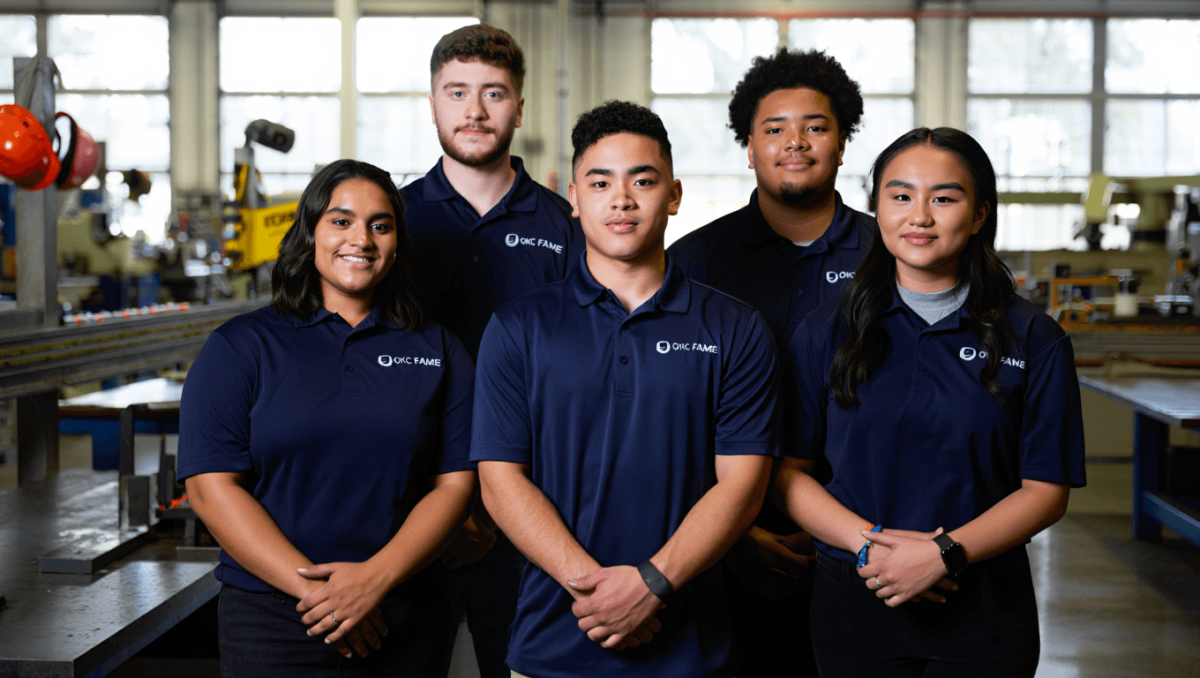
Five students have become the first graduates of a new employer-led training pipeline in Oklahoma City, a milestone local leaders say could reshape how manufacturers recruit skilled labor across the region. The program, launched with backing from the Greater Oklahoma City Chamber, ties classroom learning directly to paid on-the-job experience and aims to speed workers into in-demand technical roles.
The inaugural cohort is small but strategic: organizers view the graduates as proof that a coordinated partnership between employers, a community college and industry can produce job-ready technicians without saddling learners with large debt loads.
Lee Copeland, the Chamber’s director of talent and business growth, framed the graduation as evidence the model works. He said employer partners have taken an active role in mentoring apprentices and defining the skills they need — shifting responsibility for workforce development toward businesses that will hire these technicians.
Christa Pike released from hospital after failed execution, attorneys say
Dolly Parton tribute drives Madonna Inn crowds: steakhouse unveils limited menu
How the program works
The local effort follows a national framework that combines classroom instruction with paid work. Participants split their week between school and employment, gaining credentials while they earn a wage.
- Academic component: Students attend classes at Oklahoma State University–Oklahoma City two days per week.
- Work experience: Apprentices are employed at sponsoring firms for at least 24 hours per week, receiving hands-on training.
- Credentials: Graduates receive an Associate of Applied Science in Engineering Technology and an Advanced Manufacturing Technician certification.
- Industry involvement: Employers help shape curriculum and on-the-job learning to match specific workforce needs.
The model is relatively rare in the state: it functions like an apprenticeship, giving companies direct influence over the competencies students develop while providing learners with a paid pathway into stable manufacturing careers.
For employers, the appeal is practical. Rather than waiting for entry-level hires to arrive with applicable skills, sponsoring firms can cultivate talent tailored to their processes and culture. For students, the program offers a route to technical credentials and workplace experience without the same tuition burden associated with a full-time college track.
Early momentum and next steps
A second cohort is already underway, and organizers are planning a third group. Chamber leaders say growth will depend on expanding employer participation, strengthening connections with K–12 systems and building additional postsecondary partnerships.
Local officials contend that if the model scales, it could ease hiring pressures in advanced manufacturing and related sectors, support regional economic growth and create a replicable template for other industries facing similar skill gaps.
The first graduation is being presented not merely as a celebratory benchmark but as a sign that employer-driven training can be a sustainable component of workforce strategy — one that aligns educational outcomes with market demand and reduces barriers to entry for technical careers.