Show summary Hide summary
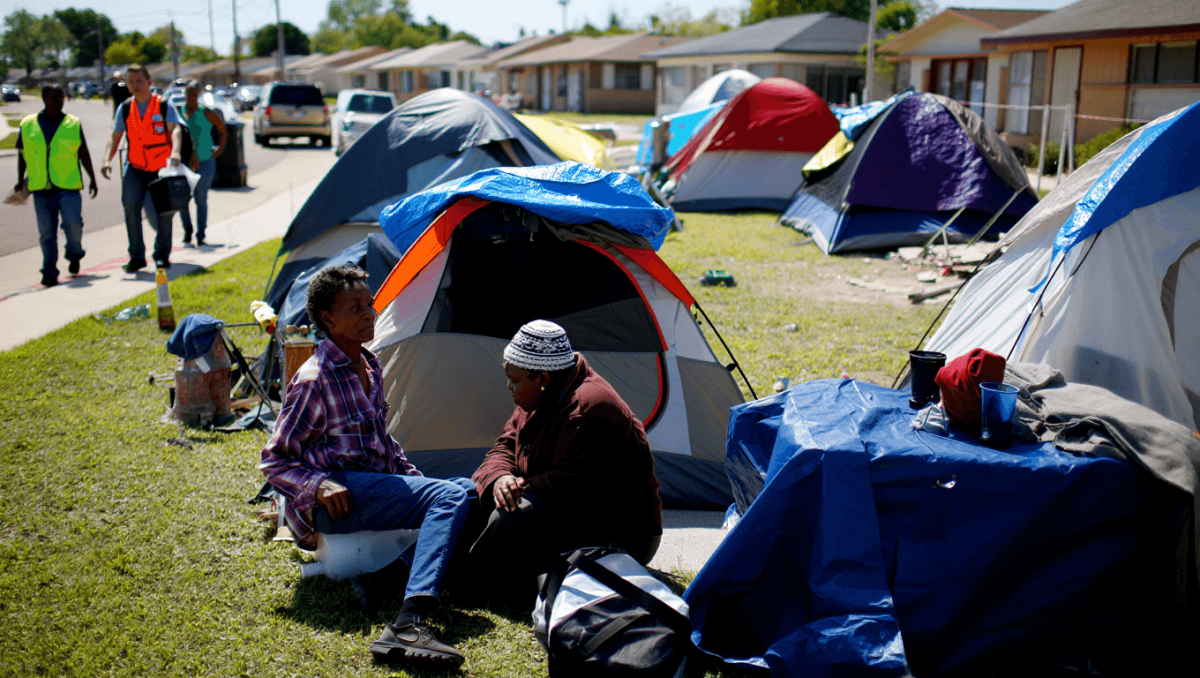
Months after Governor Kevin Stitt’s Operation SAFE cleared a tent community in Norman, the same Reed Avenue site is populated again—underscoring how short-term removals may only displace the problem. Residents, outreach workers and nearby neighbors say the encampment’s return highlights a gap between enforcement actions and durable housing or support options.
The reappearance of tents at Reed Avenue has reignited debate over how local authorities and state programs address homelessness. Operation SAFE—an initiative driven by the governor’s office that previously removed the encampment—focused on clearing sites quickly, officials said at the time. But people who live in or near the encampment now describe a familiar pattern: sweeps followed by returns, as underlying needs remain unmet.
For many community members the question is straightforward: what happens after a sweep? Outreach groups report that people moved off a patch of land reappear weeks or months later when there are no stable alternatives. Those experiencing homelessness cite lack of affordable housing, limited shelter space and gaps in mental health and addiction services as barriers to finding a permanent place to stay.
Christa Pike released from hospital after failed execution, attorneys say
Dolly Parton tribute drives Madonna Inn crowds: steakhouse unveils limited menu
Why this matters now: repeated clearings can produce immediate public safety and sanitation improvements, but without a sustained strategy they often create a revolving-door dynamic that strains city services, frustrates residents, and leaves vulnerable people without long-term help.
Short-term gains, long-term questions
Municipal leaders say encampment removals are sometimes necessary to address complaints, hazards and illegal activity. Enforcement can be politically popular and visibly decisive in the short term. Yet community organizations argue that enforcement alone does not reduce homelessness—because it does not increase affordable housing or expand supportive services.
The result is uneven: for some people a sweep prompts connection to emergency shelter or a brief housing placement; for others it means losing a makeshift community, possessions and contact with caseworkers, increasing the chance they’ll resettle nearby.
- Immediate effects: cleaner public spaces and reduced nuisance complaints.
- Unintended consequences: displacement without rehousing, loss of personal belongings, interruption of care.
- Long-term needs: affordable units, reliable shelter capacity, targeted outreach and coordinated case management.
What stakeholders are saying
People living near the Reed Avenue site report mixed experiences. Some say outreach teams visited after the last sweep; others say help was inconsistent or short-lived.
Local advocates emphasize that without new housing stock or expanded supportive programs, the same locations will see tents return. City officials have pointed to partnerships with state agencies and law enforcement but acknowledge that housing development and social services require sustained funding and planning.
For residents of the encampment, the situation is both practical and human: staying close to services, familiar routes and community networks matters, even when sites are cleared. That reality helps explain why removals often fail to produce lasting change.
Paths policymakers often consider
Experts and advocates typically point to a mix of policy options to break the cycle. None are instant remedies, but together they aim to reduce repeat encampments and improve outcomes for people experiencing homelessness:
- increasing permanent supportive housing and affordable rental units
- expanding shelter capacity with low-barrier access
- providing sustained case management and targeted outreach
- coordinating regional approaches to prevent displacement from one neighborhood to another
- investing in behavioral health and substance-use treatment aligned with housing resources
Each option requires funding, political will and time. Those trade-offs are central to the debate unfolding in Norman and other communities that routinely cycle through enforcement and resettlement.
The Reed Avenue encampment’s return is a local episode with broader implications: it illustrates the limits of short-term removals and the need for integrated strategies that combine housing, health care and sustained outreach. Without those elements, officials and neighbors can expect the pattern to repeat.