Show summary Hide summary
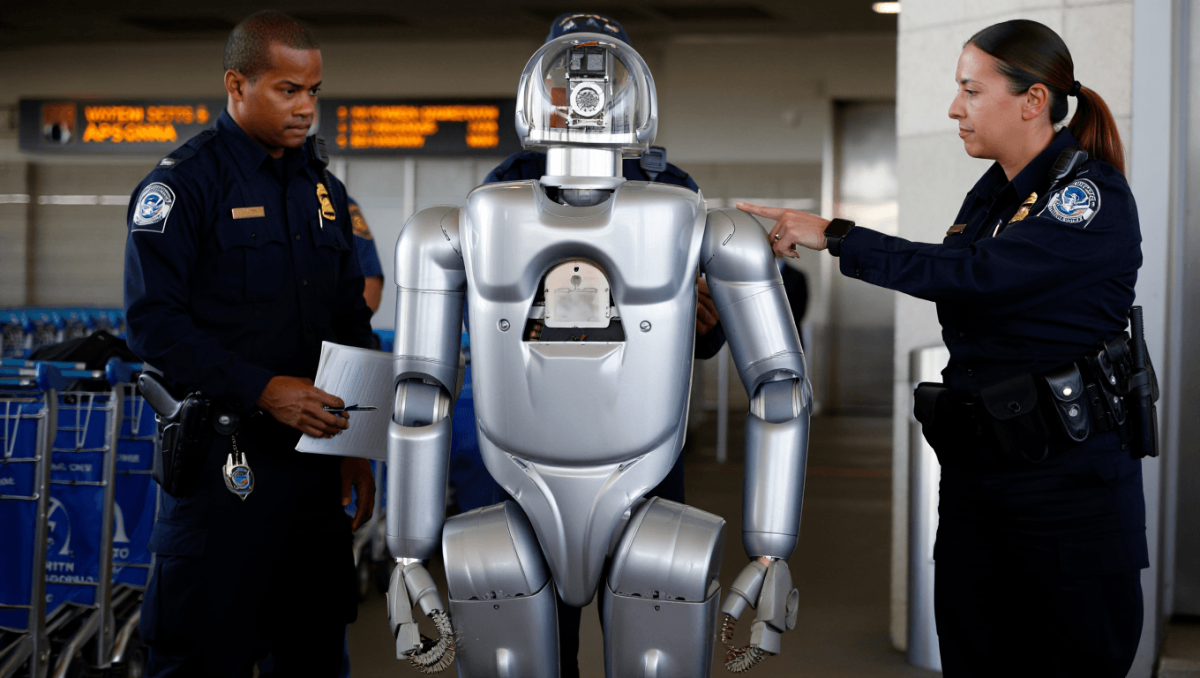
The Federal Communications Commission announced on Tuesday it will prohibit the import of certain foreign-made humanoid robots, citing risks to U.S. security and signaling increased scrutiny of advanced robotic systems from China. The move could reshape supply chains for consumer and industrial robotics and raise new questions about how the United States balances technological access with national-security concerns.
What the agency said
The FCC said its order bars entry of specified humanoid robots that contain radio, sensing or networking capabilities that could be exploited to collect or transmit sensitive information. Officials framed the action as a preventive step to limit potential channels for espionage or remote access to U.S. facilities and networks.
Christa Pike released from hospital after failed execution, attorneys say
Dolly Parton tribute drives Madonna Inn crowds: steakhouse unveils limited menu
The announcement identifies concerns about devices produced abroad and emphasizes that the restrictions focus on models with embedded communications and sensor arrays rather than on all robot hardware.
Why this matters now
Robotics are moving rapidly out of factories and into homes, hospitals, stores and offices. Devices that walk, gesture or interact with people often include cameras, microphones, GPS and wireless radios—components that make them useful but also create potential vectors for intelligence collection or cyber intrusions.
By targeting imports of connected humanoid robots, regulators are aiming to close a gap where hardware built overseas could introduce risks that are difficult to detect once products enter complex U.S. networks.
- Scope: Focused on humanoid platforms with integrated communications or sensors.
- Primary concern: Potential data collection, remote control, or covert access to networks.
- Geopolitical angle: The move is widely interpreted as aimed chiefly at Chinese manufacturers and suppliers.
- Enforcement: Import restrictions administered at ports of entry; details on exemptions or compliance procedures were not fully spelled out in the initial announcement.
Who could feel the impact
Manufacturers in East Asia that produce consumer-facing humanoid robots are likely to face the most immediate disruption. U.S. companies that rely on foreign components or finished robotic platforms may need to reconfigure procurement, redesign products to remove networking elements, or shift production to vetted suppliers.
Research labs and academic programs that import advanced humanoid testbeds could also see delays or increased compliance costs, complicating work that depends on cutting-edge hardware for studies in mobility, human-robot interaction and artificial intelligence.
Industry and legal fallout
Trade groups and technology firms typically challenge sweeping import restrictions, arguing they can stifle innovation and harm competitiveness. Legal challenges are likely, particularly if businesses contend that the FCC exceeded its statutory authority or that the order is overly broad.
At the same time, security analysts say the action reflects a broader trend: regulators are increasingly willing to use trade and import controls as tools to manage technological risk, not just to address telecom infrastructure but also to police the devices that connect to it.
What to watch next
Key developments to follow include:
- Further guidance from the FCC clarifying which models are barred and whether there will be carve-outs for research or medical use.
- Responses from affected manufacturers and potential legal challenges.
- Whether other agencies adopt parallel measures, which could expand the scope of restrictions beyond imports.
For consumers and businesses, the immediate consequence may be limited product availability and higher costs for humanoid platforms. Over the longer term, the order could accelerate efforts to source parts from allied countries or to develop domestic manufacturing for sensitive robotics components.
Regulators say protecting networks and sensitive information justifies the intervention. The next few weeks will show how quickly the industry adapts and whether policymakers refine the rule to narrow its reach or broaden it in response to additional security assessments.