Show summary Hide summary
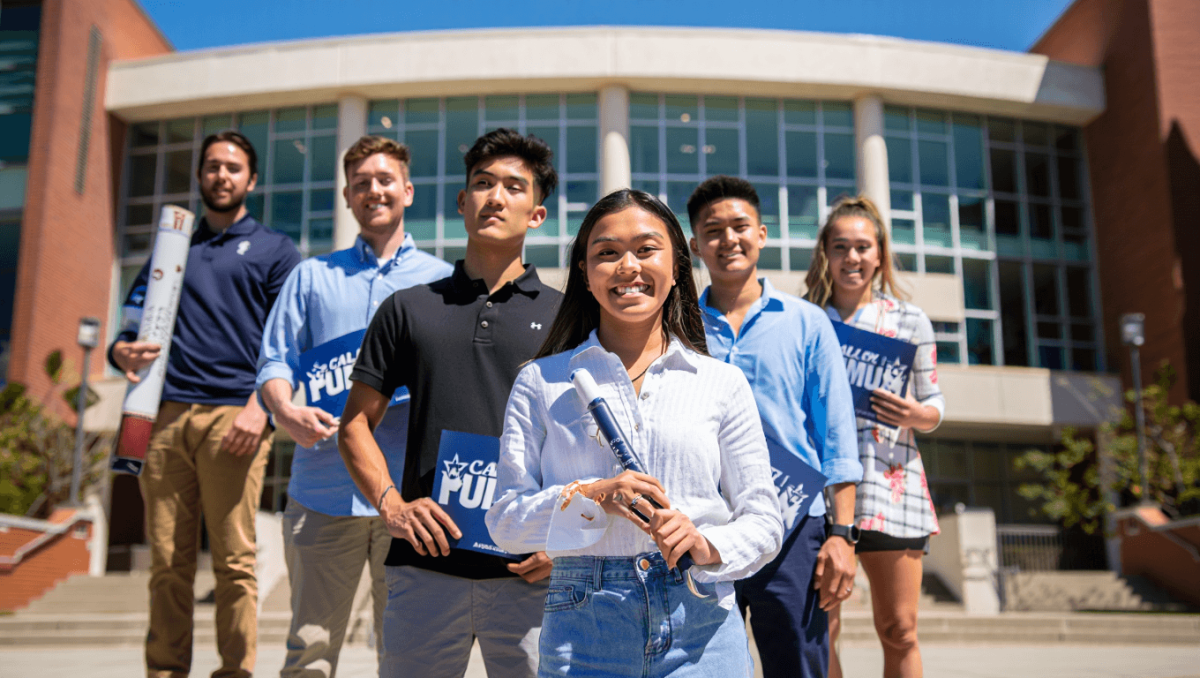
Cal Poly students will elect representatives to the Associated Students, Inc. Board of Directors and vote for ASI president from Tuesday, April 21 at 8 a.m. through Thursday, April 23 at 8 a.m. The outcomes will shape student programming, campus services and policy decisions that affect daily life on campus.
The ASI Board of Directors is a 24-member body composed of students elected from Cal Poly’s academic colleges. Separate from ASI’s executive staff, the board sets policy, approves funding and advances resolutions that influence everything from mental health services to campus transportation. Voting happens through the Cal Poly portal, and students may cast ballots only for representatives in their own college.
Below is a condensed look at the candidates running for college seats this year and the issues they emphasize, based on interviews held at media day. Read through to see how contenders plan to address pressing campus concerns—from semester conversion fallout to accessibility and mental health.
Christa Pike released from hospital after failed execution, attorneys say
Dolly Parton tribute drives Madonna Inn crowds: steakhouse unveils limited menu
Bailey College of Science and Mathematics
Sophia Gonzalez, a freshman in liberal studies and current member of ASI’s executive staff, is pushing for closer ties between ASI and campus cultural centers to make diversity support easier to find and use. Her leadership background includes high school ASB and campus community programming.
Ginger O’Grady, a microbiology freshman and ASI executive staff member, wants to boost transparency by running regular student polls and surveys so the board better reflects student priorities. She cites club and team involvement as the basis for her outreach experience.
College of Agriculture, Food and Environmental Sciences (CAFES)
Alli Aguiar, an agricultural communications freshman and former FFA chapter president, is campaigning to address aging facilities and to sell more Cal Poly-produced foods in dining halls so students can support campus-made products with dining dollars.
Jenesis De Jesus, studying environmental management and protection, emphasizes more dedicated common spaces for CAFES majors, improved internal college communication and easier access to campus markets for students without cars.
Liz Quintero, agricultural communications freshman and CAFES ambassador, is focused on preserving agricultural land for hands-on learning and representing both San Luis Obispo and Solano students during administrative transitions.
Olivia Short, an environmental management and protection junior and ASI Secretary of Health and Wellbeing, plans to expand teletherapy options and protect engineering-heavy CAFES majors from negative impacts of semester conversion.
College of Engineering
Jack Flath, an electrical engineering freshman, is campaigning for structured mentorship programs so underclassmen can get academic help and guidance on registration and career opportunities.
Diego Pardo, also an electrical engineering freshman, lists mental health supports and reforming advising services as top priorities after finding existing resources insufficient for certain registration and prerequisite challenges.
Anahi Ramos, a mechanical engineering freshman, wants more early hands-on lab exposure and to strengthen links between DEI programs and the College of Engineering to broaden participation in practical learning.
Nimisha Thakur, a sophomore in software engineering and current board member, aims to protect students’ ability to graduate on time by addressing course bottlenecks and representing engineering concerns to campus leadership.
Orfalea College of Business
Tiffany Chau, a junior studying business administration with a finance focus, emphasizes connecting students to ASI resources, supporting DEI work and easing housing concerns.
Tommy Fewel, a marketing-focused freshman, wants to raise awareness of ASI’s impact—such as services like the grocery shuttle—and improve transparency through feedback forums.
Sophie Gunter, a returning candidate and accounting junior, highlights her boardroom experience and wants to ensure student clubs receive funding and that OCOB students have more advisory access to the dean’s office.
Alan Ko, a freshman and first-generation student, plans to use the ASI website and campus channels to explain ASI initiatives and to address student concerns about AI’s effect on future careers.
Justin Szeto, an economics freshman, proposes clearer communications about student government and intentions to meet campus clubs directly to gather concerns.
College of Liberal Arts
Diego Castillo, a political science freshman, is campaigning to extend shuttle routes to nearby trails and beaches, expand transportation options and improve recreational facilities and dining hours.
Hudson Kammerer, a CLA junior and incumbent representative, is drafting a resolution to require clearer timelines and student notification for major campus changes—from construction to surveillance technology—arguing for formal transparency criteria.
Addison Mae Godfrey, a political science freshman, plans to host open forums, push for better basic facilities and expand research and study abroad opportunities for CLA students.
Elliott Halcon, a political science sophomore, is pursuing improved library hours during exam periods, better information about semester conversion and continued dialogue around campus surveillance practices.
Josiah Staley, a freshman on ASI’s executive staff, wants healthier dining options and greater outreach so CLA students know what services and opportunities exist for them.
College of Architecture and Environmental Design
Sam Katz, a sophomore in city and regional planning, is pressing for practical supports for CAED students—like lockers for studio supplies, more predictable studio temperatures and workload balance between major-related and general coursework.
Benjamin Muro, a regional planning freshman, is prioritizing safer biking infrastructure and longer dining hours, and says CAED’s close-knit classes will help him stay connected to student concerns.
Stone Ramage, currently serving as a CAED representative, is working on legislation to track the effects of large institutional changes—such as semester conversion and maritime integration—and wants to expand late-night food and transport options for students.
- When to vote: April 21, 8 a.m. – April 23, 8 a.m., via the Cal Poly portal.
- Who can vote: Students may select candidates only from their own college.
- What’s at stake: Board decisions affect campus services including dining, mental health resources, transportation and how major institutional transitions are implemented.
- How candidates plan to act: Common themes include improved communication, expanded mental health access, more hands-on learning, and transportation or dining changes aimed at students without cars.
Correction: This article was updated to fix the spelling of Sophie Gunter’s name.