Show summary Hide summary
Oklahoma City civil-rights leaders reacted with anger and resolve this week after the U.S. Supreme Court limited a key tool of the Voting Rights Act, a decision they say threatens the political influence of Black voters. Speakers at a Thursday news conference called for community protests and stepped-up voter engagement, arguing the ruling has immediate local consequences.
Local leaders push back
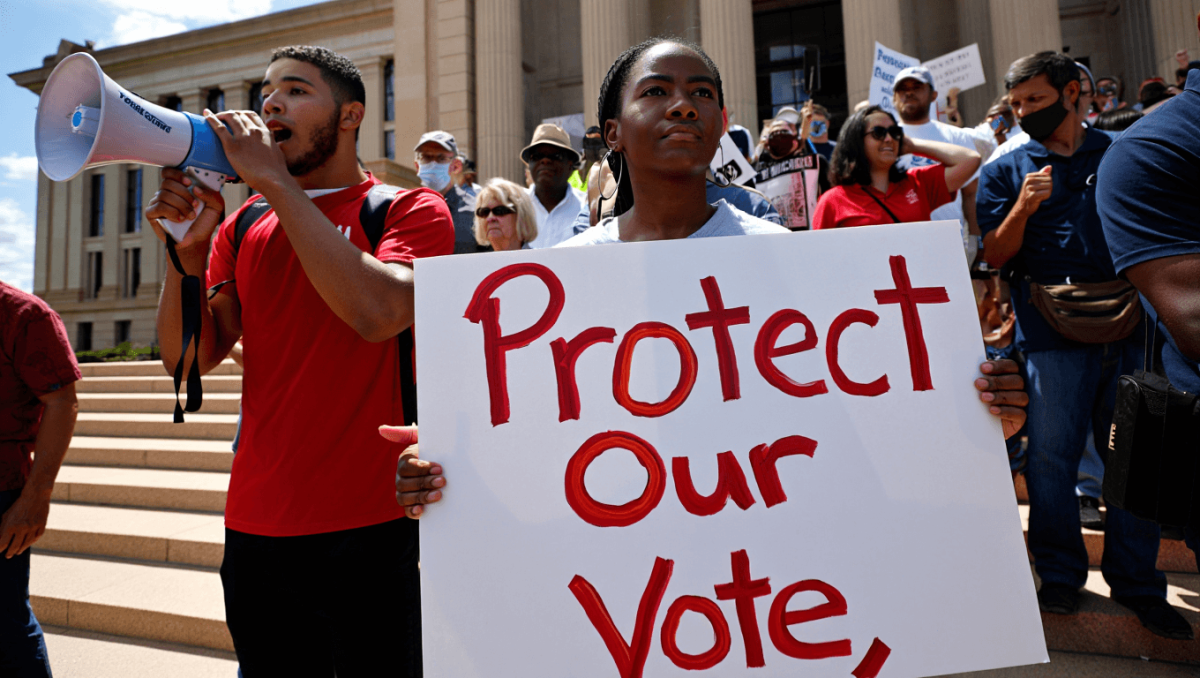
At the Freedom Center on April 30, longtime activist Marilyn Luper Hildreth — who took part in 1950s-era sit-ins organized by her mother, Clara Luper — said the ruling was painful but would not end the movement to protect voting access. She and other organizers announced a protest planned for Friday evening in front of the federal courthouse in downtown Oklahoma City.
Christa Pike released from hospital after failed execution, attorneys say
Dolly Parton tribute drives Madonna Inn crowds: steakhouse unveils limited menu
Garland Pruitt, president of the Oklahoma City NAACP, told reporters the decision signals a moment of reckoning for civil-rights advocates, and urged immediate action to counter what he called tactics that dilute minority voting power.
Who spoke and what they want
Speakers at the event included county and state officials as well as national civil-rights advocates. Participants stressed two themes: legal and political resistance, and mobilizing voters now.
- Organizers: Marilyn Luper Hildreth, Garland Pruitt, Commissioner Jason Lowe, Rep. Aletia Timmons, Tamya Cox‑Toure of the ACLU of Oklahoma, and community activist Jess Eddy.
- Immediate action: Protest scheduled for 4–6 p.m. Friday, May 1, at the federal courthouse, 200 NW 4th Street, Oklahoma City.
- Longer-term response: Increased voter registration drives, public education about redistricting, and potential legal challenges.
Tamya Cox‑Toure, executive director of the ACLU of Oklahoma, framed the ruling as a reversal of protections many civil-rights leaders had regarded as sacrosanct. She urged eligible voters across the state to turn out and use their ballots to safeguard representation.
Commissioner Jason Lowe said elected officials and community members must not be passive. “We can’t watch rights be eroded at speed,” he said, describing the decision as part of a broader pattern of court rulings that have narrowed federal voting protections.
Broader context and implications
Legal experts note the Supreme Court’s action follows a series of recent rulings that have reduced the reach of the Voting Rights Act. Congress has amended the law multiple times since 1965, but the court’s narrowing of its scope has shifted more responsibility to state and local governments — and to voters and advocacy groups — to defend access to the ballot.
Across the country, civil‑rights organizations have warned of consequences that include fewer opportunities to challenge maps and rules that may weaken minority voters’ influence. Some states have already adjusted election timetables and procedures in response to the ruling.
What this means for Oklahoma voters
The coalition in Oklahoma City laid out three practical steps residents can take now:
- Confirm registration status and polling locations.
- Participate in local forums and redistricting reviews.
- Support community organizing that monitors election administration.
Speakers emphasized that legal battles are likely to continue, but they framed civic engagement — not only courtroom fights — as the most immediate safeguard. Rep. Aletia Timmons said the Oklahoma Legislative Black Caucus would press for resources to help communities navigate upcoming elections.
Organizers expect Friday’s protest to be the first of several public responses in the weeks ahead as activists and elected officials evaluate both legal options and ground-level strategies to protect voting rights.