Show summary Hide summary
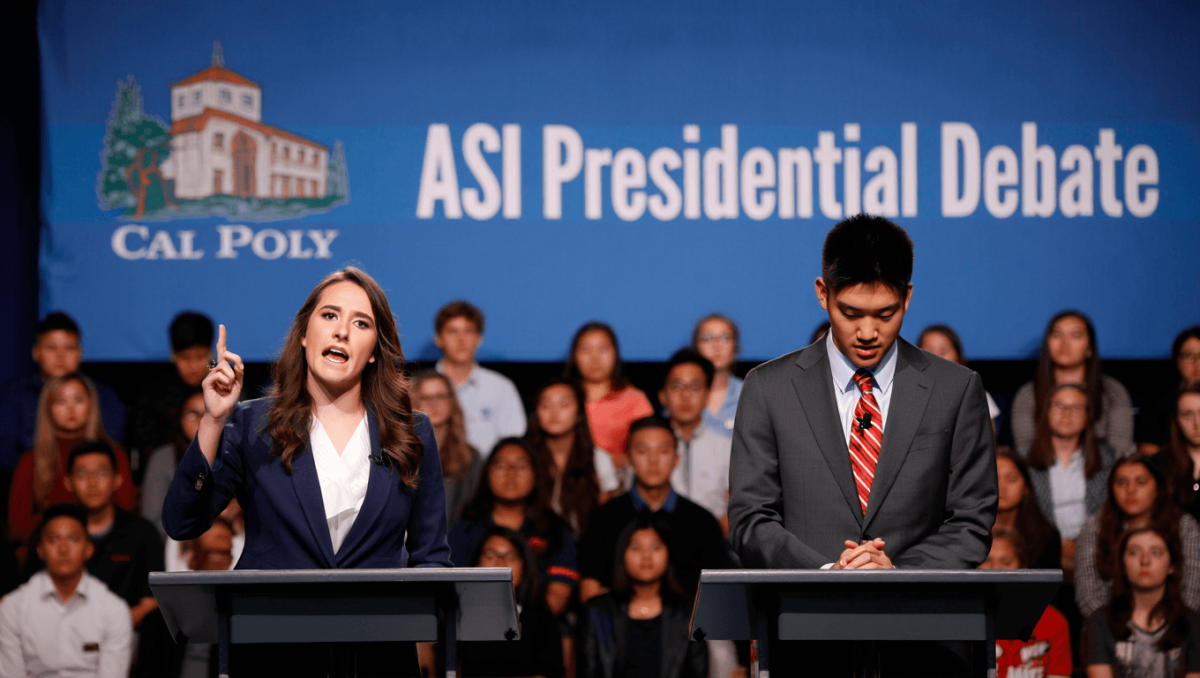
The student-body presidential debate at Cal Poly on April 16 sharpened the choices facing voters one week before polls open: two juniors offered sharply different routes to tackling costs, campus life and how ASI should represent students. What followed was a spirited exchange — and a reminder that the winner will inherit a role with real limits as well as responsibilities.
Key moments from the debate
Moderated by Mustang Media Group Editor-in-Chief Archana Pisupati and Mustang News News Editor Carly Heltzel, the forum drew a packed audience and frequent reactions as Tanner Schinderle and Caleb Shick outlined their plans. Technical hiccups early on — a brief microphone feedback — did little to slow the discussion.
Both candidates emphasized affordability, but diverged on methods and priorities. Schinderle leaned on his ASI experience and detailed proposals aimed at system-level changes. Shick positioned himself as an outsider ready to cut red tape for clubs and lower day-to-day student costs.
Christa Pike released from hospital after failed execution, attorneys say
Dolly Parton tribute drives Madonna Inn crowds: steakhouse unveils limited menu
What each candidate promised
- Tanner Schinderle (Political Science): Stressed improving accessibility, amplifying student voice, and practical affordability measures. Proposals included a pilot shuttle service for holiday travel and a proposed property-rental rating to push landlords toward better, more affordable options.
- Caleb Shick (Business Administration): Focused on reducing bureaucratic hurdles for student organizations, targeting unnecessary fees (like PolyCard expenses), and expanding free events to foster campus unity. He also spoke about learning quickly on the job and adapting to students’ needs.
Audience reaction and debate dynamics
Schinderle’s comments on inclusion and his closing remarks drew the loudest applause, suggesting strong in-person support for his emphasis on representation and institutional knowledge. Shick received steady, lighter applause, particularly when describing his financial priorities and club-focused platform.
At times the room thinned — some attendees left before the final statements — but most observers stayed for closing arguments and rebuttals, signaling lasting interest as voting approaches.
Clarifying the president’s authority
During a rebuttal, Schinderle stressed a key governance point: the ASI president cannot unilaterally cancel student-approved fees. He noted that many campus fees were set with prior student approval and that sweeping financial changes require broader processes, not executive fiat.
This exchange highlighted a practical constraint voters should weigh: campaign promises often require coalition-building and formal procedures to become policy.
Votes, logistics and next steps
Students will cast ballots through the Cal Poly portal beginning Tuesday, April 21 at 8 a.m.; voting closes Thursday, April 23 at 8 a.m. All currently enrolled students are eligible.
- Live coverage: Mustang News provided real-time updates from 10:30 a.m. to noon on debate day.
- Moderation: Representatives from Mustang Media Group and Mustang News co-led the forum; to avoid conflicts, editors involved in the debate planning recused themselves from any editorial endorsement review related to the election.
Takeaways for voters
- Practical vs. aspirational — Schinderle highlighted institutional solutions and long-term programs; Shick emphasized immediate reductions in friction and everyday costs.
- Student engagement — Both candidates pledged to center student input, but offered different mechanisms for doing so: grassroots outreach and club engagement versus streamlined student-facing services.
- Implementation matters — Several proposals will require coordination with campus committees, existing fee structures and outside landlords; the president’s ability to deliver depends on partnership-building.
With ballots opening in a matter of days, the debate left voters with clearer contrasts on style and substance. The next ASI president will need both a plan and the political skill to translate campaign ideas into campus policy.